- Premium Content It takes our newsroom weeks - if not months - to investigate and produce stories for our premium content. You can’t find them anywhere else.
 Nikita Puri · · 8 min read
What’s ailing Indonesia’s telehealth industry?
If her colleagues hadn’t directed her attention towards it, Saraswati Regina Putri may have never given telehealth a second thought.
But with Covid-19 cases still on the rise in Indonesia, the 26-year-old quality assurance supervisor turned to a healthtech platform called Halodoc.
Saraswati Regina, who works for a mineral water company in the small city of Binjai, North Sumatra, says wasn’t opposed to telehealth services before the pandemic, but she just wasn’t inclined to give it a shot. “I might have used online services to order medicines, but never to consult a doctor if not for Covid-19,” she says.
The pandemic has shined a light on telehealth companies, with Indonesian government even including them in the country’s Covid-19 taskforce. For instance, Halodoc was appointed as the government’s official telehealth partner earlier this year.
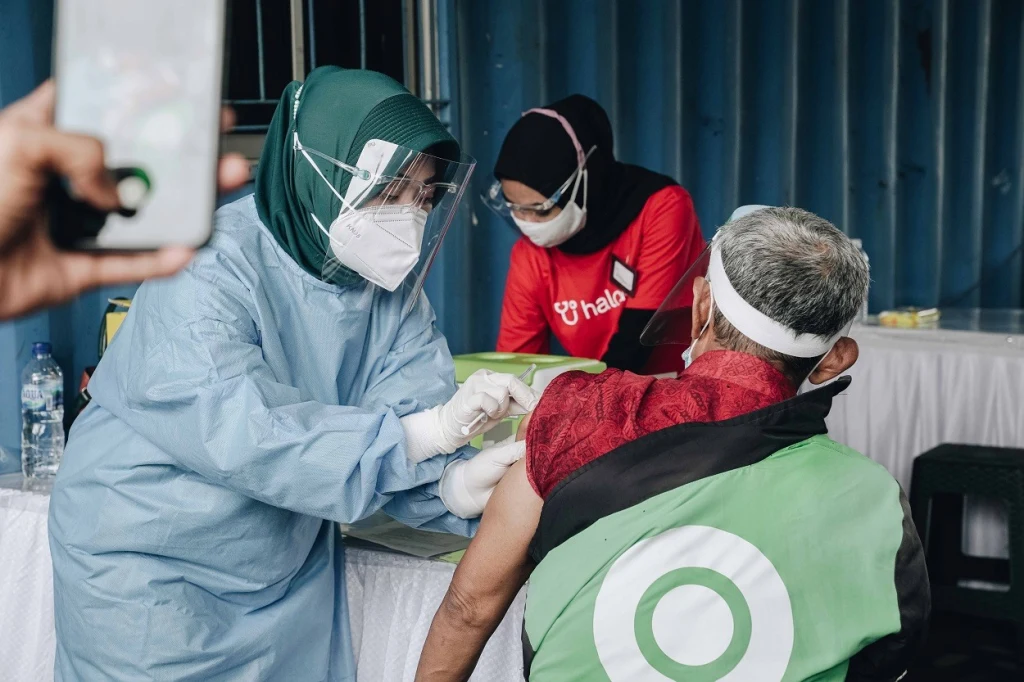
Vaccination drive in Indonesia / Photo credit: Gojek
Teaming up with the health ministry, the startup launched a drive-through vaccination service in March. Setting up in places such as Jakarta, Bogor, and Surabaya, the program primarily focuses on vaccinating the country’s elderly population.
Those without personal vehicles haven’t been left out: Halodoc partnered with Indonesian super app Gojek to arrange for rides at these vaccination service posts, so people don’t even need to step out of vehicles to get their shots.
A similar tie-up with the government exists between Grab and Good Doctor in other parts of Indonesia, such as Bali, Bandung, and Tangerang Selatan.
This is a big leap for a country known for the unnerving state of its healthcare: Indonesia only has four doctors and 12 hospital beds for every 10,000 people, according to a 2017 report by the World Health Organization.
It would be easy to assume that telemedicine companies would take off in the Southeast Asian archipelago as quickly as its counterparts in ecommerce or edtech have done in recent years, especially given the low doctor-to-patient numbers. But dated regulations, poor infrastructure, and general skepticism around online health consultations are some factors that have kept patients at bay.
Covid-19 did give the industry a boost. At the height of the pandemic, Halodoc’s monthly active users reached 20 million and its app downloads doubled, shares Alfonsius Timboel, the Jakarta-headquarted company’s chief product officer.
Similarly, Alodokter has also seen approximately 1.5 times higher traffic since the pandemic began. At present, the telehealth startup “has 30 million monthly active users, i.e, more than 11% of Indonesians use Alodokter at least once a month,” says co-founder and CEO Nathanael Faibis.
Telemedicine has seen popularity spikes in other countries, too.
But these upticks don’t always translate into stickiness, and the hurdles that the industry faces might just outlive the pandemic, which is expected to fast-track telemedicine adoption by five years.
Distinctive challenges
Betting on fledglings
Room for innovation
Stay ahead in Asia’s tech landscape
This is premium content. Subscribe to read the full story.
Telehealth isn’t developing as quickly as other internet industries in the country, and it’ll take more than a booster shot for it to grow.
We know this is not ideal. ⌛ Sign up in 20 seconds. Cancel anytime.
Our subscriber community includes professionals from these companies:





Stay updated on the go with our mobile app.
Get latest insights with smoother, more personalized experience through TIA mobile app.