
Moving from screen to voice. Photo credit: Sole Treadmill.
To the Western world, Tencent is best known for its all-encompassing social app WeChat and hefty gaming portfolio, which includes League of Legends and Clash of Clans. But behind the scenes, the Shenzhen-based tech firm is also advancing in a third, arguably more powerful arena: artificial intelligence.
The Chinese tech giant, worth US$346 billion, now has an Alexa-like voice assistant dubbed Xiaowei. Shown off last week at Tencent’s cloud computing conference after launching at the end of May, Xiaowei is equipped with all the usual bells and whistles: weather reports, traffic updates, music requests, news blurbs. There’s voice recognition and facial recognition – plus an SDK for hardware developers to plug into.
It’s nothing new in the realm of smart assistants – except that it’s backed by one of the largest and most influential tech companies in China.
“Tencent has a lot of data sources,” Mao Hua, head of Xiaowei, told reporters at the conference. “WeChat is simply one channel,” he said, listing Tencent’s music, news, and video platforms as other sources of data.
“The system is continuously improving.”
Hard sell
Voice assistants are not new in China. Chinese search engine Baidu unveiled a home robot at CES this year. Smaller companies are trying too – lots of them. However, none have been able to dominate their home market the way the Amazon Echo has in the US.
Xiaowei has one crucial advantage over its many competitors: the sprawling Tencent ecosystem.
“Amazon’s market so far has extended to the US, Canada, UK, Germany, and so forth. I see [Xiaowei] as Tencent trying to compete in that same market space,” says Michael Wang, co-founder of Platform 88, a Chinese hardware services firm that helps companies build and scale their products.
“With their platform, I think it’s pretty easy for them to get the reach they’re looking for,” he tells Tech in Asia.
Indeed, Tencent’s Xiaowei has one crucial advantage over its many competitors: the sprawling Tencent ecosystem. It owns stakes in ride-hailing, food delivery, education, and search engine companies. It has licensing deals across movies, music, sports, and literature. Plus, Tencent oversees two of the biggest social networks in China – WeChat alone has 938 million users active each month. All of that stuff can hook into Xiaowei – and be summoned by users with a voice command.
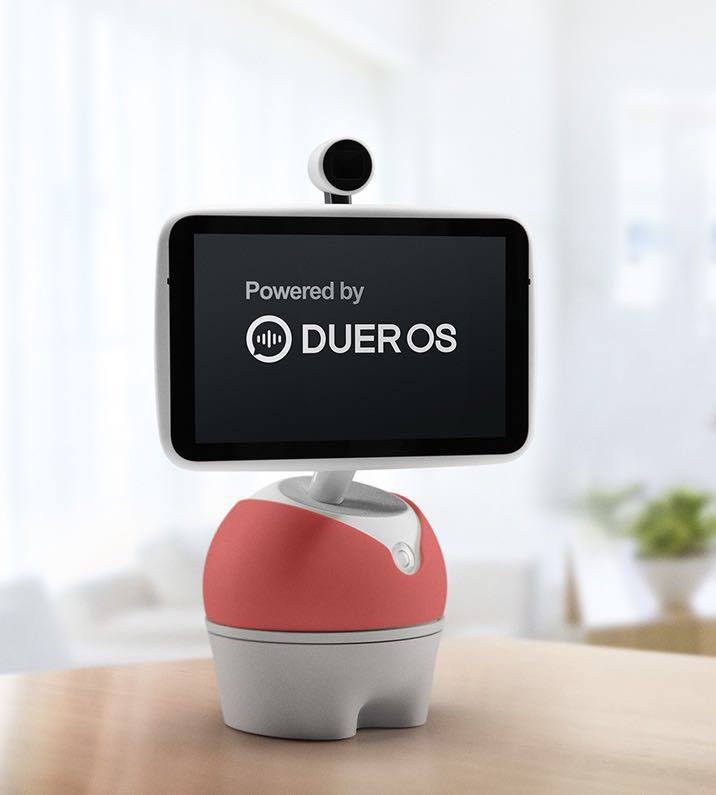
“Little Fish”, an Echo-like home assistant jointly made by Baidu and hardware company AiNemo. Photo credit: Baidu.
More data
That being said, Tencent is not focusing on building its own apps for Xiaowei. Like Alexa, Tencent’s voice assistant wants to be the AI-powered backend for third-party developers and content providers.





Stay updated on the go with our mobile app.
Get latest insights with smoother, more personalized experience through TIA mobile app.