 Karen Chiu · · 4 min read
Why it makes sense for Xiaomi to take on selfie king Meitu’s smartphones
Meitu is best known for its selfie apps. They’re so ingrained in the company’s identity, you’d be forgiven for not knowing that it also makes smartphones – which tells you how few units it sells. So perhaps it comes as no surprise that Meitu is handing this part of the business to a company more well-known for selling handsets: Xiaomi.
Under the 30-year deal announced this week, Xiaomi has the right to produce Meitu-branded smartphones. Xiaomi will bear the costs of hardware and system development, production, and marketing. Meitu will contribute what it’s best at doing: software like its image processing algorithm.
Meitu: Adapting to a shifting landscape
But Meitu’s shifting strategy reflects not just a reckoning of its strengths. It also points to its struggle in an increasingly cutthroat smartphone market.
Meitu’s handsets are pretty distinctive. Unlike the plain black rectangles favored by virtually every other smartphone maker, Meitu handsets tend to be curved at the top for a pretty logical reason — the selfie camera. Meitu smartphones have noticeably bigger cameras on the front than most other smartphone makers.
Those handsets once made up the bulk of Meitu’s profit. Before its 2016 Hong Kong IPO, its app business was actually losing money. But things have changed dramatically since then.
As smartphone sales in China plunged in the last year or so, Meitu, like other smaller players, found themselves grappling with a new reality. In the first half of this year, Meitu sold 37 percent fewer smartphones year-on-year. It’s a downward trend that Meitu doesn’t believe it could buck on its own.
“Given the intensity of competition of the smartphone market has further accelerated in the second half of 2018, it appears that our smartphone business is no longer profitable,” wrote Meitu in its latest announcement.
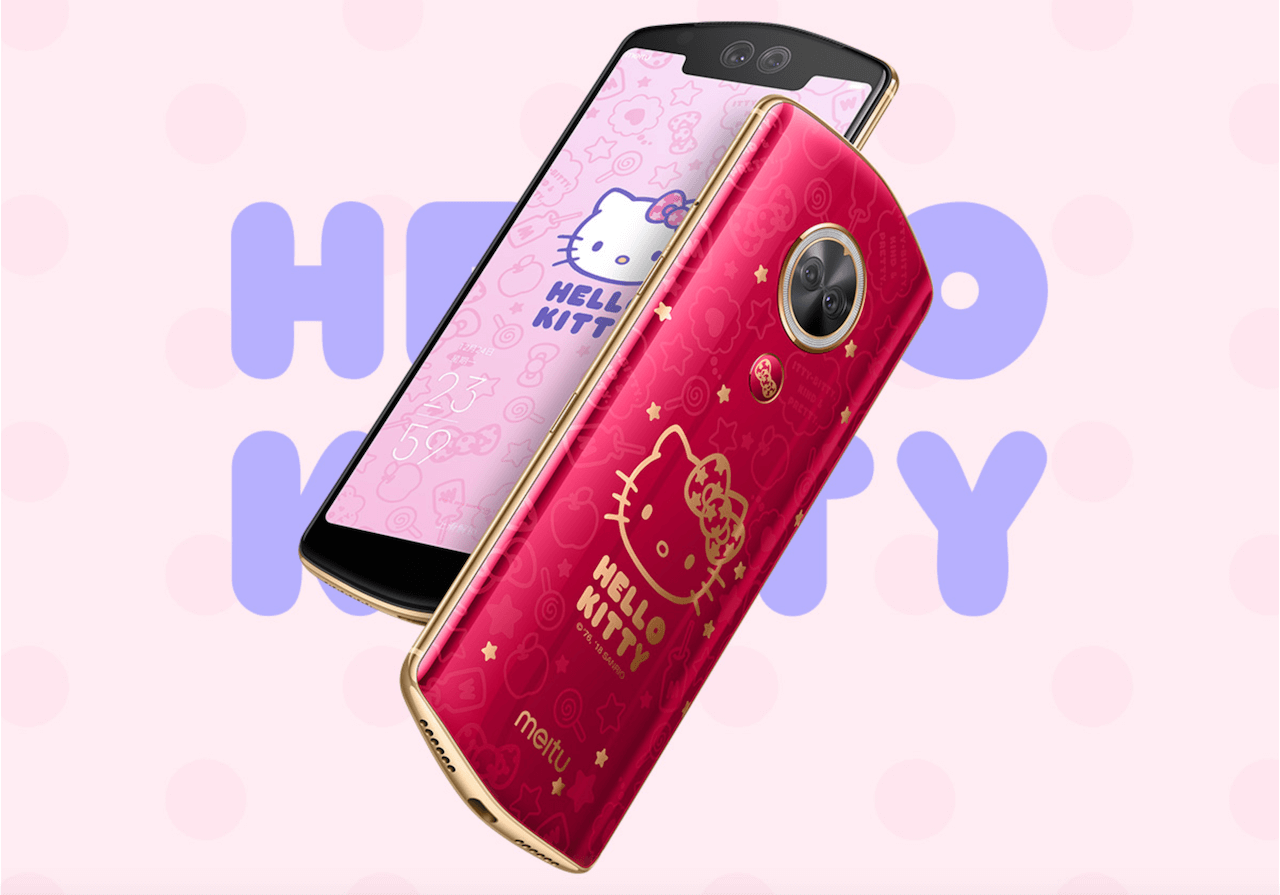
Meitu’s Hello Kitty-themed T9 smartphone / Image credit: Meitu
The number of smartphones that Meitu sold was never substantial to begin with. In the first six months this year, it sold a paltry sum of around 533,000 units. In the last five years, it sold a total of 3.5 million. IDC figures show that it ranked 16th in China’s smartphone market in the past quarter, with less than 1 percent share – a position it’s been hovering around since last year.
It doesn’t help that Meitu is finding it increasingly difficult to differentiate itself from rivals.
“Many of our competitors have launched smartphone products that are focused on selfies, a positioning that is similar to the Meitu smartphones,” it wrote in its financial report earlier this year.
While the smartphone game isn’t working out for Meitu, something else appears to be taking off. And that’s its internet business, which includes apps, ads, and its now-dead ecommerce platform. In this area, gross profit margin rose to over 40 percent in the first half of this year from around 16 percent a year ago.
“[The Chinese smartphone] market is mature enough that there will be pressure for consolidation in the upcoming year,” said IDC vice president Bryan Ma. “In this case, it lets Meitu focus on its core software, all while leveraging the scale and competencies of Xiaomi’s hardware business.”
The first Meitu-Xiaomi smartphone?
Copyright (c) 2018. South China Morning Post Publishers Ltd. All rights reserved.





Stay updated on the go with our mobile app.
Get latest insights with smoother, more personalized experience through TIA mobile app.









📅 Upcoming Events
22 October 2026
Payoneer x CSPN Summit 2026