- Insights This article was written by a TIA community member. Insights pieces undergo the same rigorous editorial process that newsroom-produced articles have.
 Daniel Song · · 4 min read
How founders can transition from doing everything into delegating well
This article is part of Tech in Asia’s partnership with Asia VC Cast hosted by Daniel Song where we publish the revised transcripts from the podcast’s interviews with inspiring entrepreneurs and experienced VCs. This is heavily revised from the show’s original transcript. For the full interview, go here.
For this episode, I interviewed Cocoon Capital’s founders William Klippgen and Michael Blakey.
Klippgen co-founded product comparison website Zoomit, which merged with Kelkoo and was eventually sold to Yahoo in 2004. Blakey has invested in over 25 companies and achieved six successful exits.
Founded in 2016, Singapore-based Cocoon Capital focuses on investing in seed or early-stage tech startups in Southeast Asia.
In this interview, we talk about the Asian market, how they evaluate teams, and their future plans.
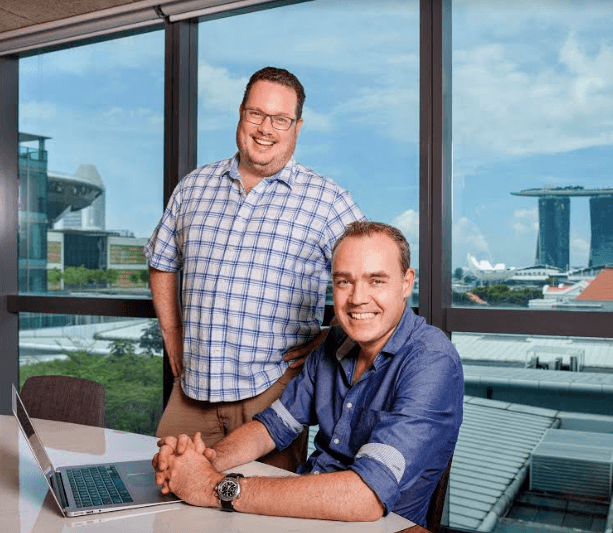
Michael Blakey (left) and Will Klippgen (right), co-founders of Cocoon Capital
What attracted you to Asia and what are the trends you’re interested in?
We both begun investing in the early 2000s and saw the opportunities rising in Asia as Will did his masters in Singapore and I (Michael) was attracted to the region through one of my portfolio accounts who had interest in Asia.
At that time, we saw a lot of businesses that were less mature than the ones in Europe and the US. Also, a lot of money was going to the consumer side and not much to the B2B side.
However, we expected that things would basically pan out in much the same way (i.e. people getting online, retail happening online, etc.).
Some of the areas that we are focused on now are logistics, deep tech, cleantech, medtech, and fintech, but not so much on the consumer side.
As an early-stage fund, our focus is investing in people. The difficult thing for us is not actually finding good ideas but finding strong teams. So, these are just the sectors that we naturally prefer more than others, but it goes down really onto finding strong teams, which is the most critical.
How do you evaluate startups?
We tend to like teams with complementary skills, where it’s not a big overlap. We also spend more time with founders than many investors before we invest. This is important because we’ll go through a pretty tough time together.
We also need founders with deep domain knowledge. We like people who know a lot about what they are starting up or who can learn very fast. Flexibility is also very important as founders need to learn new things beyond their primary expertise when running a company.
When it comes to the product, they have to explain what they’re going to build with the money we’ll give them. But that doesn’t mean we’ll force them to follow the exact plan later. It’s still important to give them the freedom to pivot and follow what the market wants.
What kind of support do you provide startups?
What’s your advice for founders who are transitioning from doing everything by themselves to delegating tasks?
What can people expect from Cocoon Capital next year?





Stay updated on the go with our mobile app.
Get latest insights with smoother, more personalized experience through TIA mobile app.








📅 Upcoming Events
22 October 2026
Payoneer x CSPN Summit 2026