Which cartoonist’s wife is the author of Sailor Moon? Which game map does Dota use? Who is the fleet admiral of the Marines in One Piece?
If you can answer these questions, then you might be able to register a full membership on one of China’s most popular video platforms. If not, well, you clearly don’t belong on Bilibili.
Bilibili has long prided itself for being China’s geek culture hotspot. Its main focus is ACG – which stands for anime, comics, and games – and is known for its trove of (mostly illegally acquired) content and for bullet chat, a distinctive type of user comments that fly over the screen.
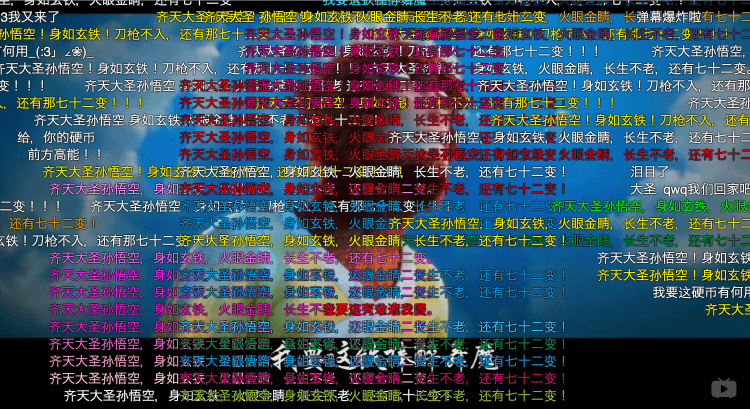
A screenshot of how bullet chat appears on Bilibili / Photo credit: Bilibili
But to enjoy many of these geeky goodies, one must pass a 100-question exam in 120 minutes, with questions that would make even the biggest anime and gaming fan balk.
Bilibili is the only community in China that doesn’t allow anyone to become a full member freely: you have to either pass the test or be invited by an existing full member. According to its chairman and CEO Chen Rui, it may be the largest test in the world, with around 43 million users passing it by the third quarter of 2018. In comparison, the gaokao – China’s notoriously difficult national college entrance exam – drew just under 9 million high schoolers last year.
Entering the video platform’s exclusive club is by no means an easy feat, despite help from search engines.
“I remember they were asking about Java and C++ and some very detailed questions about Chinese history,” said Lucy Lu, a Bilibili user who passed the exam several years ago.
The test covered several topics, including media, music, and animation. Lu remembers answering questions about what anime was produced in 1997 or guessing which movies spawned particular quotes.
And while search engines helped her, there was an easier way: buying answers from ecommerce platforms.
But why make people pass an exam in the first place?
“If we want to run a community well, it must not be driven by traffic but by word of mouth. Good things will spread through word of mouth, bad things will be resisted,” Chen told audiences at a conference in China last November.
But it might not just be word of mouth that motivated Bilibili to be picky about who it allows to get on the platform. Lu, for her part, believes that the exam was there mostly to keep Bilibili’s profile low. China has strict rules about what its citizens can watch online, censoring pornography, violence, and criticisms of the government. Her theory is that insanely difficult questions about the intricacies of online culture might have helped deter regulators snooping for copyright violations and other problematic content.
While that may have been true, these days the platform is becoming bigger and more mainstream. It’s no longer just a safe haven for millennials and Gen Z to watch pirated Japanese anime.





Stay updated on the go with our mobile app.
Get latest insights with smoother, more personalized experience through TIA mobile app.