- Premium Content It takes our newsroom weeks - if not months - to investigate and produce stories for our premium content. You can’t find them anywhere else.
 Elisa Valenta · · 5 min read
Trump tariffs push Indonesia to rethink local component rules
After getting hit with a 32% tariff from the US, Indonesia is trying to balance its national interests while staying open to foreign investors. Its first big move may come in tech – specifically, its requirements for locally sourced goods and services.
That rule had prompted the country’s iPhone 16 ban, which was lifted following Apple’s US$1 billion investment in the archipelago.
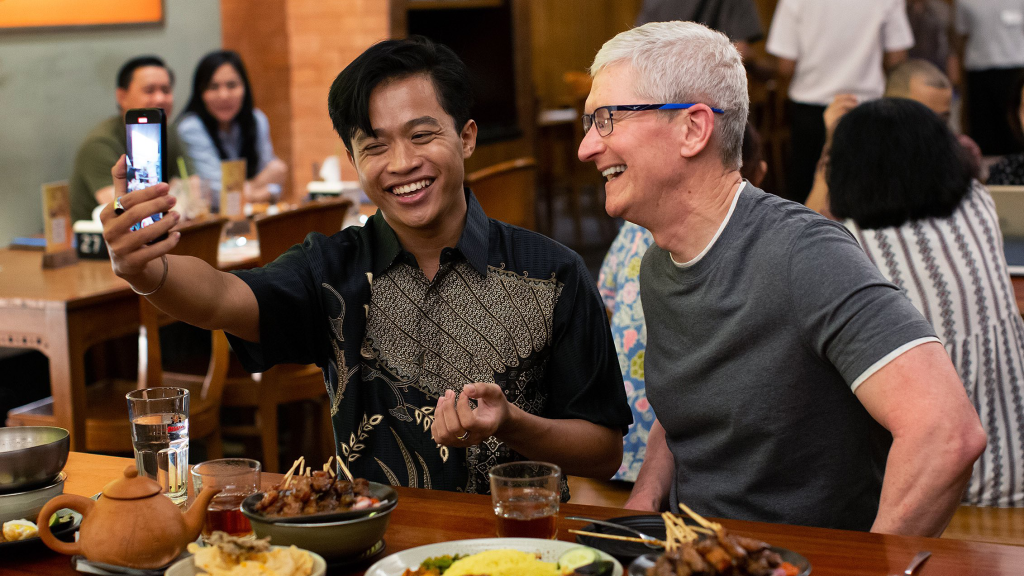
Apple CEO Tim Cook during his 2024 visit in Indonesia / Photo credit: Tim Cook’s X page
“What Indonesia is putting on the table could be quite appealing to the Trump administration, especially since many foreign technology companies – most recently Apple – have been running into roadblocks with Indonesia’s local content requirements,” Dedi Dinarto, lead Indonesia analyst and senior associate at strategic advisory firm Global Counsel, tells The Business Times.
Experts say that such protectionist regulations could stifle domestic productivity and competitiveness, in addition to impeding foreign investments. But the local content rule does aim to reduce reliance on imports while promoting domestic industries – something the country sorely needs.
Negotiations are ongoing. Airlangga Hartarto, the coordinating minister for economic affairs, flew to Washington on April 16, with his trip set to conclude on April 23. The minister had previously announced that Indonesia is ready to ease non-tariff barriers.
Courting investments: vision vs. reality
Indonesia’s local content policy has long been a barrier for foreign tech companies. But it came under fresh scrutiny in late 2024 when the government blocked Apple from launching the iPhone 16 locally.
The consumer electronics giant had failed to meet the regulation requiring 40% of smartphone components to be sourced locally. The ban has since been overturned after Apple committed to a US$1 billion investment to build an AirTag factory in Batam.
Apple is not the only tech giant to run afoul of this rule. Google faced the same stumbling block last October, leading to a ban for its Pixel phones – which is still in effect today.
Photo credit: Shutterstock
Introduced in the 1950s as part of the “Made in Indonesia” campaign, Indonesia’s content policy has been continually refined – particularly in strategic sectors such as energy and telecommunications – to boost local production and empower domestic industries.
It is also a strategic tool to draw substantial investments into the country’s machinery and electronics industry.
Over the past five years, investment in the sector has grown at an average rate of 35% annually, based on data from the Ministry of Investment. In 2023 alone, the industry attracted nearly US$1.8 billion – up a remarkable 70% from the year before.
Threats to local industry
Stay ahead in Asia’s tech landscape
This is premium content. Subscribe to read the full story.
The policy, which had prompted Indonesia’s iPhone 16 ban, is deemed unfriendly for foreign investors. But a rework could further weaken domestic industries.
We know this is not ideal. ⌛ Sign up in 20 seconds. Cancel anytime.
Our subscriber community includes professionals from these companies:





Stay updated on the go with our mobile app.
Get latest insights with smoother, more personalized experience through TIA mobile app.