 Samantha Cheh · · 6 min read
For this bicycle subscription firm, personalization coexists with data protection

Kids constantly outgrow things: clothes, shoes, books, toys, hobbies, and even bicycles.
“We started noticing that we kept buying new bikes that our kid would grow out of, and we didn’t know what to do with the old one,” recalls Roopesh Shah. That’s why in 2022 he co-founded Gro Club, a bicycle subscription startup in India.
The country produces a whopping 15 million bicycles every year, and a lot of them go to waste.

Photo credit: Memoryfor / Shutterstock
Gro Club’s bicycle subscription service provides customers with a fresh bike for every stage in a kid’s life. When their children inevitably outgrow their bikes, subscribers can simply reach out to Gro Club to return the units and upgrade to ones that meet their current needs. The returned bike is “regenerated”, receiving a comprehensive makeover before being sent out to another subscriber.
“We wanted to make high-quality products accessible to lots of people who would otherwise have fallen back on hand-me-downs or relied on poor quality unbranded products – all while reducing waste,” says Shah, who is also the CTO of the firm.
The personalization era
Since the Bangalore-based company’s founding, Gro Club has already garnered over 9,000 subscribers in the city alone.
To build on that success, the company knew it needed to embed more personalization into the user journey, especially since Gro Club’s business model is built on longstanding relationships with its customers. As such, it provides personalized advice to help customers figure out which bike is right for their child, as well as recommendations for the best accessories to go with their unit.
“It shouldn’t feel like they’re subscribing to a bike,” says Shah. “We want them to feel like they own it.”

Roopesh Shah, CTO of Gro Club / Photo credit: Gro Club
In recent years, personalization has steadily grown in popularity among customers and companies, says Harshana Ariyaratne, chief marketing officer at data and identity management solutions provider Affinidi.
Indeed, in a survey conducted by McKinsey, the findings show that 71% of customers have come to expect personalized recommendations and user experiences, while 76% expressed frustration when they don’t receive these personalized experiences.
“All these different platforms do pretty much the same thing, so what keeps your customers transacting on your platform is the experience,” Ariyaratne says. “Further, creating an ideal experience is how many companies effectively build trust with their customers, which is especially important when you’re dealing with parents and kids.”
Going passwordless
To meet the demands for greater personalization, companies are constantly collecting as much data on their customers as possible. However, because Gro Club was built as a platform for kids, data security was a major concern.
“We realized early on that privacy is a key feature that we needed to work on,” says Shah.
Gro Club began working with Affinidi to build privacy guardrails directly into its tech stack. It did this primarily by leveraging Affinidi Login, a passwordless authentication product that eschews traditional passwords.
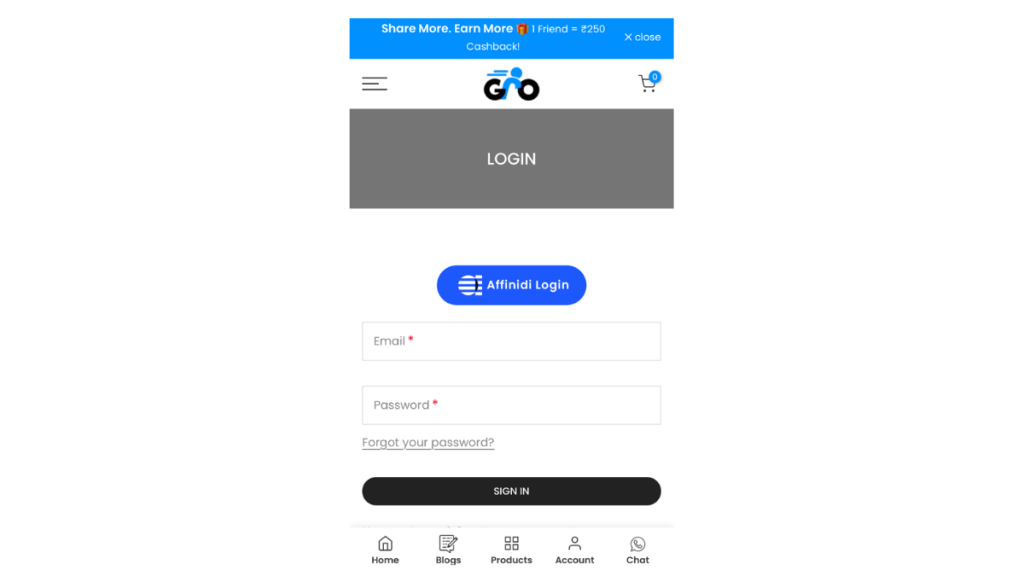
Affinidi Login on Gro Club’s platform / Photo credit: Gro Club
“Gro Club customers use the app to book a service or raise an issue. It doesn’t require them to create a profile. We send them a time-sensitive one-time password that authenticates them,” explains Shah.
Crucially, customers’ information is stored in a wallet on their device that’s inaccessible to anyone else. “We don’t store any of that data, which totally removes any chances of a breach happening,” the CTO notes.
The benefits of zero-party data
Aside from streamlining the customer experience, Affinidi’s solution helps companies like Gro Club approach customer data in a different way. Typically, Ariyaratne explains, businesses will store users’ data in their own servers, which has resulted in people’s “data being scattered across the internet.”
Depending on how it is collected, most of that data is known as first, second, or third-party data, which marketers are still heavily dependent on.

Harshana Ariyaratne, chief marketing officer at Affinidi / Photo credit: Affinidi
“Marketers have been doing this for 30 years – we try to collect as much data as possible to offer personalized experiences,” says Ariyaratne. “But we haven’t really succeeded because we’re still trying to guess what the customer wants rather than actually asking them what they need.”
A zero-party approach – where customers willingly share their preferences – flips that on its head. It places power back in the hands of consumers by letting them determine how much and what kind of data gets shared.
There’s a lot of business advantages in doing this. For one, this approach is more accurate because the data comes directly from customers.
Further, when customers feel like they have a say in what data gets used, they’re likely to trust a company more, which could lead to higher click-through and conversion rates.
Amid all these advantages, however, there remains concerns about how companies can collect information and operate effectively. After all, by restricting businesses’ access to customer data, it could potentially restrict their ability to provide a high level of personalization.
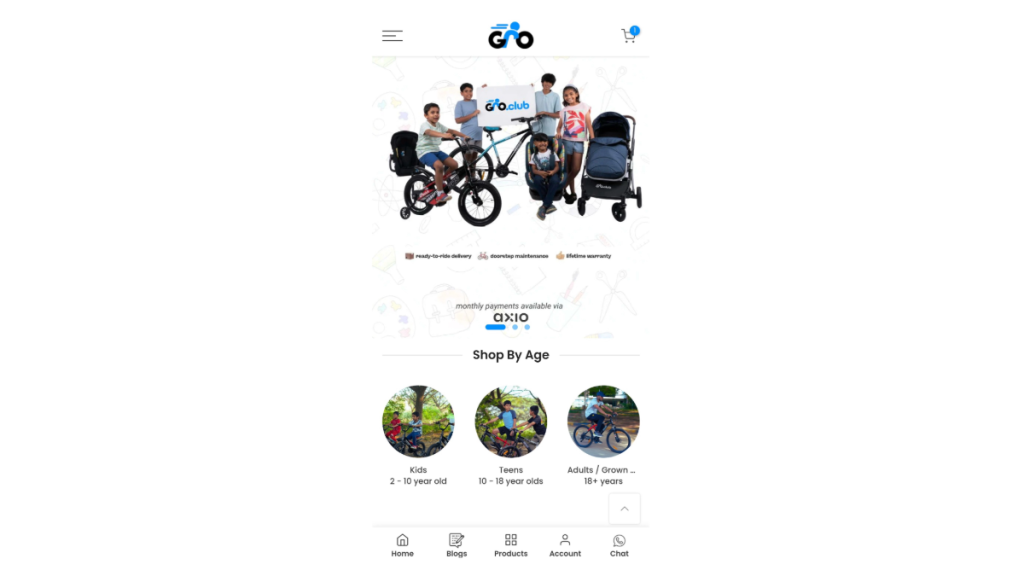
The Gro Club platform / Photo credit: Gro Club
However, Gro Club’s experience with Affinidi’s solution proves otherwise.
Let’s say, for instance, that a parent is looking to get a bicycle for their child. With Affinidi Vault, the company’s holistic identity management solution, parents can choose to share certain details with Gro Club, such as their child’s age or the kinds of terrain they may be cycling on. With just those small pieces of information, Gro Club can offer recommendations of specific tires or frame heights that would best suit the kid.
“The best part is that if users decide not to share the information, it doesn’t change anything,” says Shah. “We don’t restrict our service, we just default back to the vanilla way of doing things.”
A partnership of equals
When Gro Club first started using Affinidi’s solutions, customers were a little confused, says Shah, but there were many who were also pleasantly surprised.
“We got calls from customers asking about it, so we explained to them that this was optional but also more secure,” says Shah. “The moment the customer understands the weight of what Affinidi could do – that it was clearly showing them what data was being collected and asking permission for it – that’s when the penny drops.”
The Affinidi integration has expanded awareness among parents about how they can create even more security around their children’s data, fostering greater trust between Gro Club and its customers in the long run.

Photo credit: IndianFaces / Shutterstock
“Our customer lifecycle is measured in years, even over a decade, and subsequent purchases can be years apart,” Shah adds. “Affinidi is really helping us add huge increments of trust in those relationships.”
For Affinidi, working with Gro Club has also brought its own benefits.
“If you want to change a way of thinking at this scale, you need partners who will buy into the mission and who will help us learn as we build,” says Ariyaratne. “Working with Gro Club has given us the real-time customer feedback that we need to really deliver.”
The next move for Gro Club will be to take personalization one step further by figuring out how it can sweeten the deal for customers with promotions or offerings.
“It’s thrilling to be able to put something in front of the customer and get that instant reaction that we’ve met them exactly where they are,” Shah adds.
Affinidi is a technology company dedicated to changing how we think about data ownership. By placing control back into the hands of users, its solutions help companies create better user experiences.
Find out more about Affinidi on its website.
This content was produced by Tech in Asia Studios, which connects brands with Asia’s tech community. Learn more about partnering with Tech in Asia Studios.
Stay updated on the go with our mobile app.
Get latest insights with smoother, more personalized experience through TIA mobile app.
Recommended reads
 Indonesian AI startup goes global
 Forrest Li on scaling Sea, building smarter bots, and founder grit
 An AI assistant that joins sales calls and scores team skills
 Beyond the check: Why VCs need more than capital
 SGX’s CEO says it doesn’t need a unicorn to win
 SMEs want AI too, but not the kind Big Tech is selling
 Oatside’s alt-milk rise hits a profitable gear
 Alibaba’s financial health in 12 charts
 Asia’s telcos bundle AI into mobile plans. Will it pay off?
 M-Daq chases bigger clients as revenue falls, losses grow





Editing by Stefanie Yeo, Jonathan Chew, and Jaclyn Tiu
(And yes, we’re serious about ethics and transparency. More information here.)





