Miguel Cordon · · 2 min read
Why Carousell boycotted the 11.11 Singles Day sales event
Singapore-based online marketplace Carousell has decided to forego holding an 11.11 Singles Day sales event to further solidify its identity as a re-commerce company.
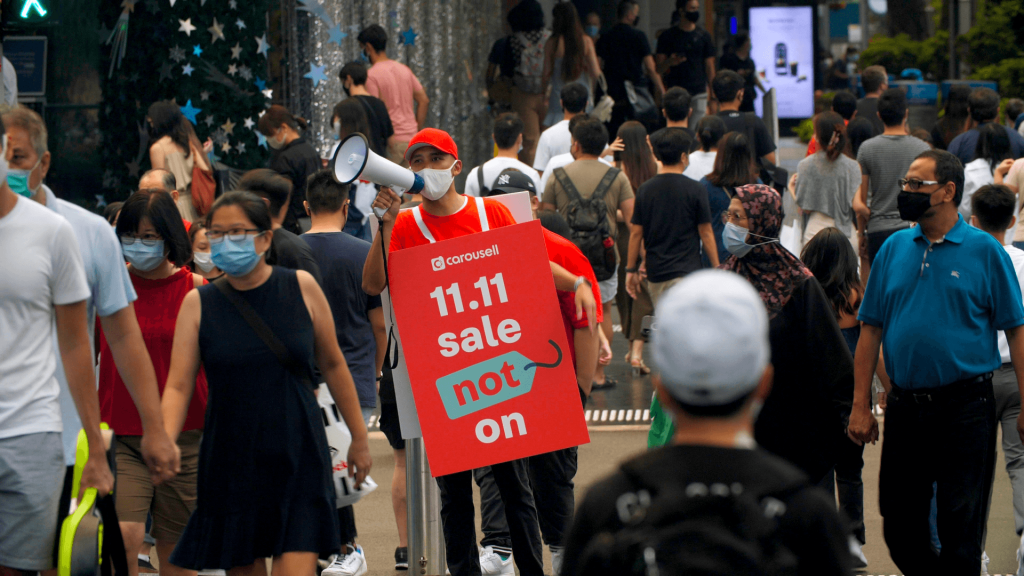
Photo credit: Carousell
As part of the initiative, the startup sent a Carousell representative to the streets of Singapore to promote its boycott of the event. Carousell said in a statement that it did so since it has Singles Day-like deals on its platform every day.
“Several of our movements aim to inspire a lifestyle where secondhand [would be] the first choice,” Carousell’s head of regional brand Cassandra Leong told Tech in Asia. “Just last year, we spearheaded a campaign that involved ‘reboxing’ in response to the viral trend of ‘unboxing,’ which perpetuates the cycle of buying new.”
Singles Day, originally known as Bachelors’ Day, is an unofficial holiday originating from China that goes hand in hand with major online shopping sales. Chinese ecommerce titan Alibaba said orders made during this year’s shopping festival already went beyond US$56 billion by Wednesday morning.
Carousell had also held similar events in the past, including its 11.11 FOMO flash sale in the Philippines during last year’s Singles Day. The company, however, declined to provide details on how these kinds of events performed financially.
“11.11 is an important date to most ecommerce sites, but as a classifieds marketplace, we want to achieve top-of-mind recall as a recommerce platform,” said Leong. Moving forward, Carousell looks to continue using its platform to spark a change in Southeast Asians’ long-term consumption patterns, the exec added.
Established in 2012, Carousell’s platform allows users to buy and sell products across various categories, including cars, gadgets, and fashion accessories. Late last year, Carousell merged with 701Search, which ran marketplaces Mudah in Malaysia, Cho Tot in Vietnam, and OneKyat in Myanmar.
See Also: Unpacking Carousell’s 2019 financial numbers
In September, the company announced it raised a total of US$80 million in a funding round from a consortium led by Korea’s Naver Corporation, which pushed its valuation to over US$900 million.
The company also did a secondary sale that saw its early backers cash out a portion of their shares, generating sizeable returns. They include investors such as Sequoia Capital, Rakuten Capital, Golden Gate Ventures, Quest Ventures, and 500 Durians, as well as angel investors such as 99.co founder and CEO Darius Cheung.
Edited by Collin Furtado
(And yes, we’re serious about ethics and transparency. More information here.)





Stay updated on the go with our mobile app.
Get latest insights with smoother, more personalized experience through TIA mobile app.