Thao Lam La · · 2 min read
Baidu gets green light to deploy fully autonomous taxis in Chongqing, Wuhan
Apollo Go, the driverless vehicle unit of Chinese search engine giant Baidu, has secured permission to operate fully autonomous commercial taxis on public roads in Chongqing and Wuhan.
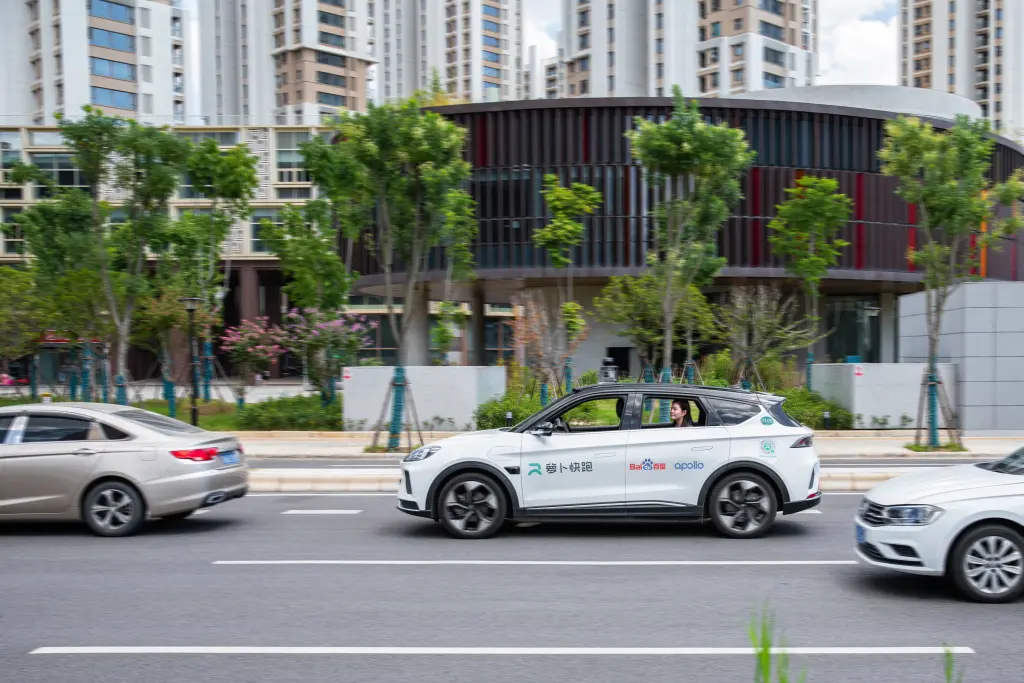
Baidu’s robotaxis will be allowed to operate completely without a human driver, a first in China. / Photo credit: Baidu
Baidu said the approval marks the first time a company in China is allowed to offer autonomous ride-hailing services without a human operator in the driver’s seat. Earlier this year, the firm got a license to offer self-driving services in Beijing, but this required a human driver present in the vehicle.
In Wuhan, the company will run its services from 9 a.m. to 5 p.m. in a 13-square-kilometer area of the city’s Economic and Technological Development Zone. In Chongqing, its taxis will operate from 9:30 a.m. to 4:30 p.m. in the city’s Yongchuan district, covering 30 square kilometers. The firm will deploy a fleet of five fifth-gen robotaxis to each city.
Baidu’s vehicles are equipped with multi-layer technologies such as redundancy monitoring, remote driving, and a safety operation system. These mechanisms are backed by the firm’s over 32 million kilometers of self-driving mileage.
The company said that as of March, it has over 1,500 global patents for autonomous driving. Its ride-hailing service has exceeded one million orders and has a presence in Tier 1 cities such as Beijing, Shanghai, Guangzhou, and Shenzhen.
Last month, Baidu unveiled its latest self-driving car model, Apollo RT6, which will be put into service by next year.
See also: Roadblocks stall Singapore’s driverless car dreams
Editing by Miguel Cordon and Lorenzo Kyle Subido
(And yes, we’re serious about ethics and transparency. More information here.)





Stay updated on the go with our mobile app.
Get latest insights with smoother, more personalized experience through TIA mobile app.