- Premium Content It takes our newsroom weeks - if not months - to investigate and produce stories for our premium content. You can’t find them anywhere else.
 Tay Tian Wen · · 8 min read
The rise, fall, and pivot of multichannel networks
“There was a lot of greed and mismanagement. Often, it was simply about pumping valuations to get the biggest exit,” says Mike Pusateri, founder and CEO of Bent Pixels, a Las Vegas-based digital media company that counts online celebrities and esports teams like Valkyrae, Team Liquid, and Faze Clan among its partners.
Pusateri’s description of multichannel networks (MCNs) in their heyday is a story that’s all too familiar among content creators and investors. MCNs like Maker Studios, Machinima, and Fullscreen – all based in the US – were once YouTube’s trusted gatekeepers, but now they’re synonymous with exploitation and failure and serve as a case study in hubris.
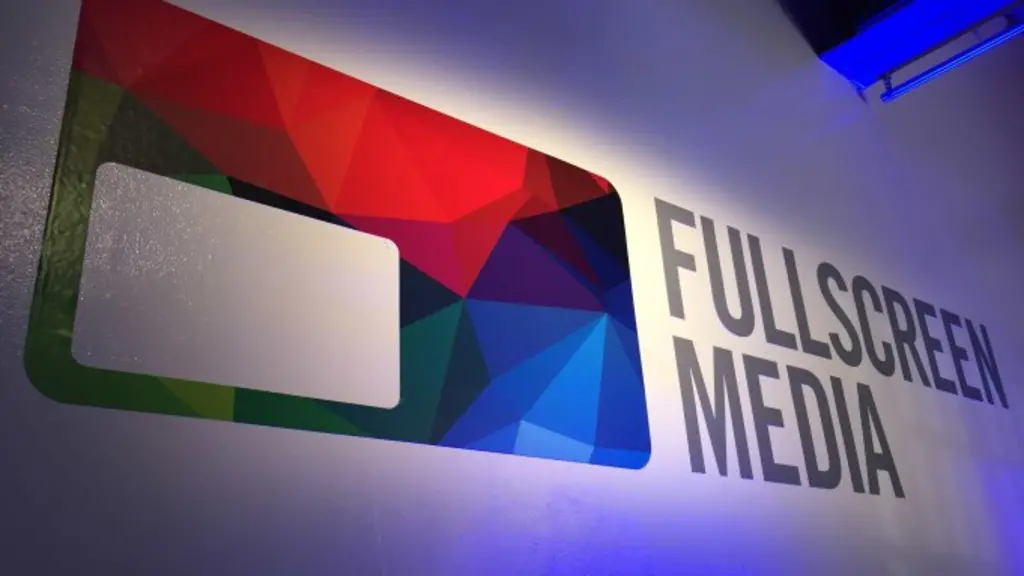
Fullscreen was one of the world’s largest MCNs / Photo credit: Variety
The pitch to creators is simple: Join an MCN, pay a fee, and earn more income from advertisements. Billions of dollars are made from YouTube’s global advertising revenue annually, and MCNs promise content creators a slice of that pie.
Between 2013 and 2015, record acquisitions of MCNs at eight- to nine-figure sums sweetened the deal. But as flaws in the business model began to show, MCNs struggled to turn a profit or worse, collapsed overnight, leaving thousands of creators to pick up the pieces.
In Southeast Asia, the networks that survived the fallout are betting big on new possibilities. The lesson learned: Create value for creators, or die trying. Nearly 50 million creators around the world are looking to monetize, and the burgeoning creator economy looks set to grow only bigger. For these networks, many opportunities to shape the future of content await.
All your views belong to us
The rise and fall of MCNs is inextricably tied to YouTube. The YouTube Partner Program was still nascent in the video platform’s early days, so moderating and reviewing applications for content monetization was difficult, given YouTube’s small team.
“The role of MCNs – early on, at least – was to step in and support YouTube with the management of creators,” shares Brian Tiong, founder of B-side, a Singapore-based digital media advisory. He also sits on the board of Hepmil Media Group, a Southeast Asian humor-focused company.
YouTube had partnered with MCNs like Machinima, Awesomeness TV, and Fullscreen, which essentially acted as middlemen for the platform, gathering and representing thousands of creators. In exchange for linking them up with advertisers, creators paid a percentage of their income to these third parties.
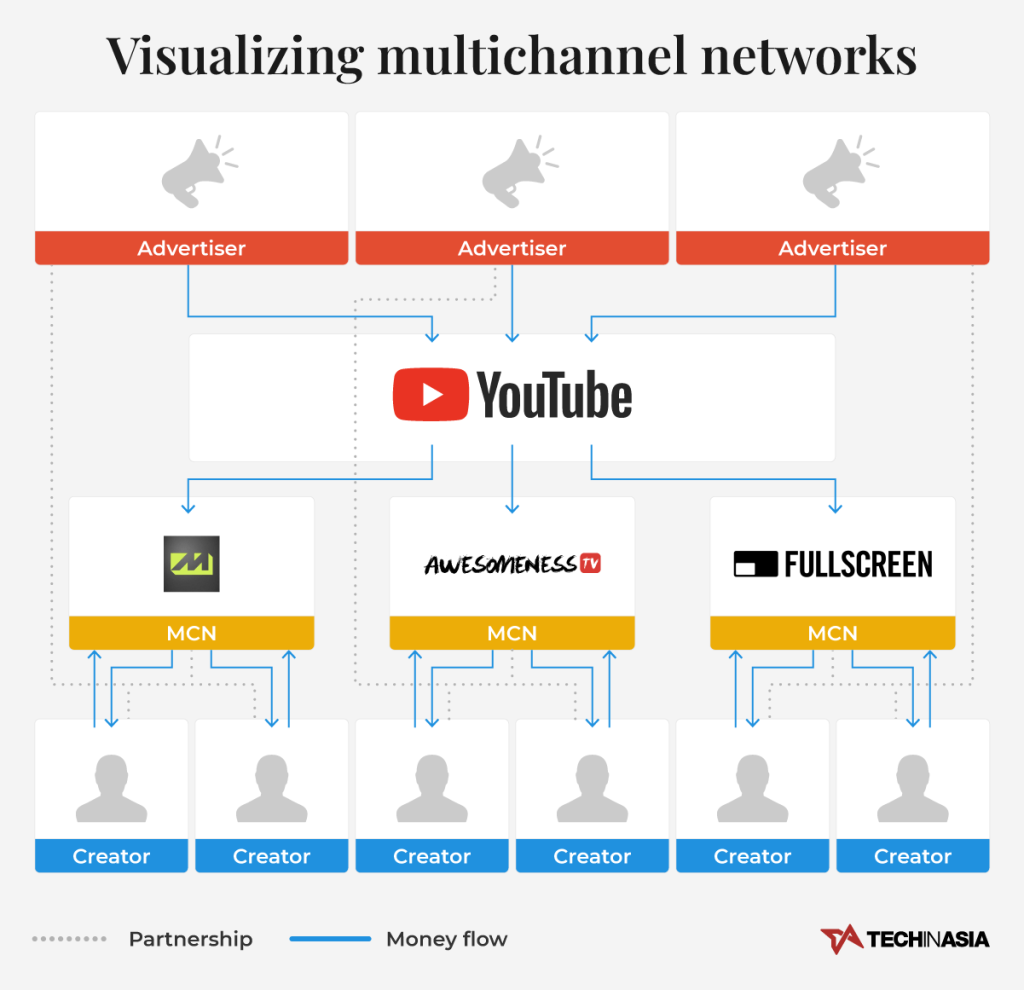
How brands and creators work with MCNs / Image credit: Timmy Loen
MCNs also held the key to making money off YouTube. “Prior to 2012, [content creators] couldn’t monetize on YouTube unless they were part of a MCN,” observes Eugene Choi, CEO of Collab Asia, a digital talent network and entertainment studio. Back then, YouTube also lacked the manpower to efficiently review applications for its partner program.
As such, MCNs not only brought channels under their wing to the video platform’s attention, but they also moved their clients up the waitlist. These benefits remain enticing to some creators today, given that YouTube still relies on human reviewers to sift through applications.
Yet for the average creator on YouTube, joining these networks often meant having to fork over hefty fees, which could go as high as 30% of a creator’s income, according to Tiong. Because revenue depended on the number of views a channel generated, only the biggest content creators received attention. Most of them paid exorbitant fees without getting any marketing and promotion, brand sponsorships, or other revenue-growing opportunities promised by MCNs.
Driving up valuations
Policy changes
Venturing into uncharted waters
Creators first, profits second
Apocalypse averted?
Stay ahead in Asia’s tech landscape
This is premium content. Subscribe to read the full story.
Multichannel networks used to be the gatekeepers of digital media platforms, but it’s creators who call the shots now.
We know this is not ideal. ⌛ Sign up in 20 seconds. Cancel anytime.
Our subscriber community includes professionals from these companies:





Stay updated on the go with our mobile app.
Get latest insights with smoother, more personalized experience through TIA mobile app.