 Rita Liao · · 6 min read
China leans on Alibaba and Tencent to digitize public services

Photo credit: sam74100 / 123RF
On January 15, a public hearing took place in the southern Chinese metropolis of Shenzhen. Instead of having to jump through the usual bureaucratic hoops, participants dialed in virtually – via China’s most popular social app, WeChat. In the past, they would have to submit a signup form via email or in person, wait a few days for approval, and then turn up in person at the designated venue on the day of the hearing.
“Now you sign up on the WeChat official account of the Shenzhen Legislative Affairs Office,” says a participant, referring to the government agency’s WeChat equivalent of a Facebook Page. “And you would get a notification regarding your signup status. When the time arrives, you enter a live chat room through the official account and start typing in your views.”
A “smarter” government
In the past few years, China’s big tech firms have been changing people’s everyday routines. Tasks that used to be done purely offline – shopping, cab hailing, restaurant queuing, personal banking – are now achievable via a few taps on a smartphone.
[The government and WeChat] are working together to build a smooth experience in public services, which can lessen the burden on the government’s offline job.
Anyone who has run errands at a government office in China is familiar with the drill. You wait for a few hours before being called to the counter, only to be turned away because you are missing a document – which wasn’t listed as a requirement on the government’s rarely updated website, of course.
Having witnessed the boom of the internet industry, Beijing has started urging local governments at all levels to expand the repertoire of internet services offered to the public sector, such as paying for utility bills, applying for a visa, or scheduling a doctor’s appointment. The move is part of a larger national plan called “Internet Plus,” designed to integrate all industries, including traditional ones, through the information technology.
As Li Keqiang – the Chinese premier and brain behind “Internet Plus” – remarked in 2016, the program will be implemented “so that the public and businesses need to make fewer visits to government departments to get things done, find procedures simpler, and find the service satisfactory.”
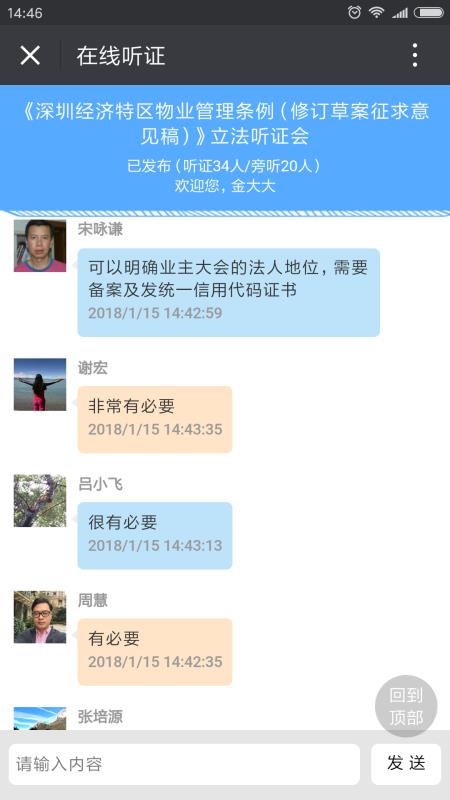
A public hearing was held on WeChat on Shenzhen’s property management law / Image credit: Tech in Asia
But building software infrastructure for 1.4 billion people and training them for these new platforms can be laborious and costly. As such, the government is using existing services from some of China’s most formidable tech companies, who command not only vigorous computing power but also a gargantuan user base.
“[The government and WeChat] are working together to build a smooth experience in public services, which can lessen the burden on the government’s offline job,” said Gu Haijun, director of WeChat Open Platform, at the messaging juggernaut’s annual event in January.
One of the services that the government is piggybacking off is electronic transactions. In China, that means working with Alibaba’s payment affiliate Alipay and Tencent’s Caifutong, which manages WeChat’s digital wallet. Together, they control 94.1 percent of China’s mobile payment market, according to iResearch.
In response to the government’s call, the payment duo has been on a feverish quest to bring public services onto their platforms. While Alipay has a larger market share in payments, WeChat has an edge in social because the government can use public accounts to talk to citizens, send them push notifications, and redirect them to external links. By the end of 2016, over one third of Chinese netizens have used some kind of online government services, most of which are offered by WeChat and Alipay, according to a report from China Internet Network Information Center (CNNIC).
A tricky business arena





Stay updated on the go with our mobile app.
Get latest insights with smoother, more personalized experience through TIA mobile app.











📅 Upcoming Events
22 October 2026
Payoneer x CSPN Summit 2026