Jum Balea · · 6 min read
Lazada CEO: The secret sauce that will help us win Southeast Asia

Lazada boss Max Bittner feels no pressure from parent Alibaba to become profitable. The aim now is to grow the opportunity. “Southeast Asia, for them, is hugely exciting. They see as big an opportunity as China and my mandate is to win the market,” said the CEO during a fireside chat at Tech in Asia Jakarta 2017.
Winning involves having massive ammunition in the ecommerce war that has seen players spend huge sums to lure customers to their sites and gain market share. Thanks to Alibaba’s deep pockets, “we match [our competitors] a lot because we can,” Bittner said.
Shopee – Lazada’s closest rival and part of publicly listed Sea – “will have a harder time continuously raising money,” he argued. “At some point, public market investors expect improvements in profitability. The luxury of being us is we’re not exposed to that scrutiny.”
But more than the spending power, he believes their ability to differentiate themselves from competitors is crucial. Lazada is doing this by building out its infrastructure.
The store started out doing direct sales to consumers from its own warehouses – thus, the moniker “the Amazon of Southeast Asia”. In 2013, it added a marketplace for merchants, using its assets to offer merchants fulfillment, which includes things like warehousing, packaging, and shipping. The marketplace has grown to account for a significant part of spending on Lazada.
Lazada has 15 warehouses across Southeast Asia where it’s trying to put a vast array of products, according to Bittner. Of those, three are located in Indonesia, and two more will be launched in the 250 million-strong market by the end of the year. Bittner says the firm is also expanding its last-mile delivery services as “we really believe in the integrated value chain.”
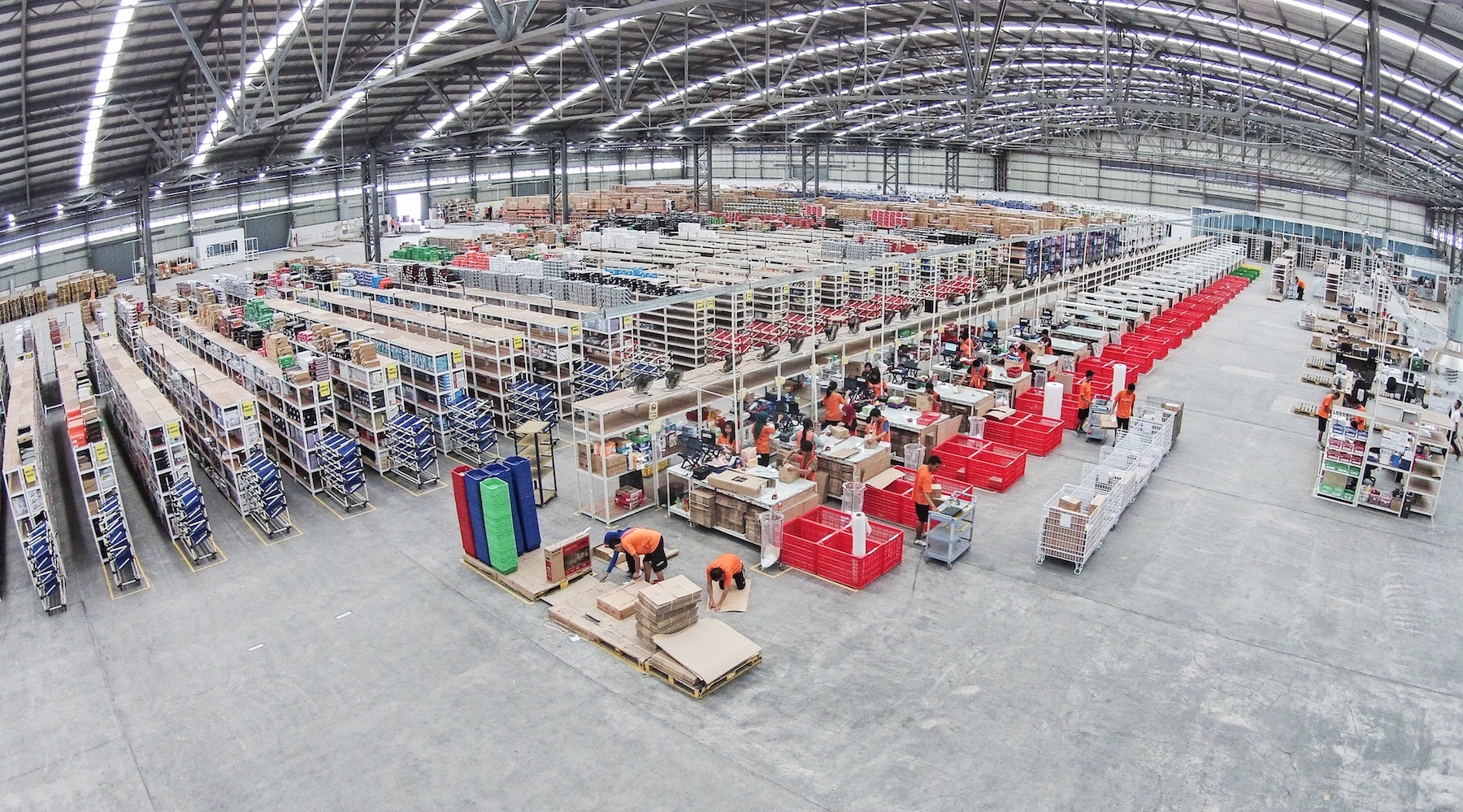
Photo credit: Lazada.
Bittner is angling for what he calls the three Cs. “Capacity – it’s how much volume you push through the system at any given time. Cost – we want to make it cheaper. And capability – which is really the distinguishing factor.”
“Not everyone wants the same things. Some people are okay to wait, some people want it very fast, some people want a certain delivery window like what we do in Singapore with Redmart […] Whether it’s bulky like a fridge that you need delivered or a small thing that’s cheap, it’s about building that whole portfolio of capability,” he explained.
Clashing models
Shopee does things differently. Sea president Nick Nash believes that creating a marketplace purely for merchants not only requires lower costs, it is ideally suited to the rather basic level of logistics development in Southeast Asia.
“Our sellers are highly distributed and decentralized across the region, rather than having to rely on one or a small number of mega-warehouses in larger cities […] The very practical result is a more efficient path from seller to buyer as opposed to the potentially longer transit times under a hub-and-spoke model.”
In industry jargon, it’s the battle between “asset-light” (Shopee) and “asset-heavy” (Lazada) models.
Following Alibaba
A formidable backer





Stay updated on the go with our mobile app.
Get latest insights with smoother, more personalized experience through TIA mobile app.