- Premium Content It takes our newsroom weeks - if not months - to investigate and produce stories for our premium content. You can’t find them anywhere else.
 Jofie Yordan · · 6 min read
Anatomy of a comeback: Can TikTok resurrect its ecommerce biz in Indonesia?
Thu Huong Le contributed to this report.
More than a month has passed since TikTok Shop was abruptly banned from Indonesia, but TikTok CEO Shou Zi Chew still seems oddly quiet about the issue.
Chew, who’s based in Singapore, hasn’t posted anything on social media to date about the closure of his company’s ecommerce business in Indonesia. The CEO reportedly requested a meeting with Indonesian President Joko “Jokowi” Widodo earlier this month, but that didn’t materialize.
Image credit: Timmy Loen
In a last-ditch effort in late September, TikTok sent a team from Singapore to Jakarta. At that point, however, the rescue attempt was too late.
For now, questions around TikTok’s ability to resurrect its ecommerce venture in Indonesia and its readiness to navigate intricate local regulations to avoid future regulatory missteps continue to abound.
Where’s the big boss?
TikTok, whose parent firm is Chinese tech titan ByteDance, established its global headquarters in Singapore in 2020. But despite setting up shop in Southeast Asia, the short-video platform has not appointed country directors or CEOs for each of its markets in the region.
This approach seemed to work, but that was before TikTok Shop launched in Indonesia in 2021 and other Southeast Asian countries in early 2022.
When Indonesian regulators moved swiftly to ban TikTok’s ecommerce business, the company scrambled to respond even though warning signs had been brewing since July, as Tech in Asia previously detailed in this report.
A Financial Times article published in late October suggested that most of TikTok’s ecommerce decisions are made by executives in China. However, a spokesperson for the company’s Indonesia unit denied this, telling Tech in Asia that TikTok Shop’s decision-makers are mostly based in their respective markets.
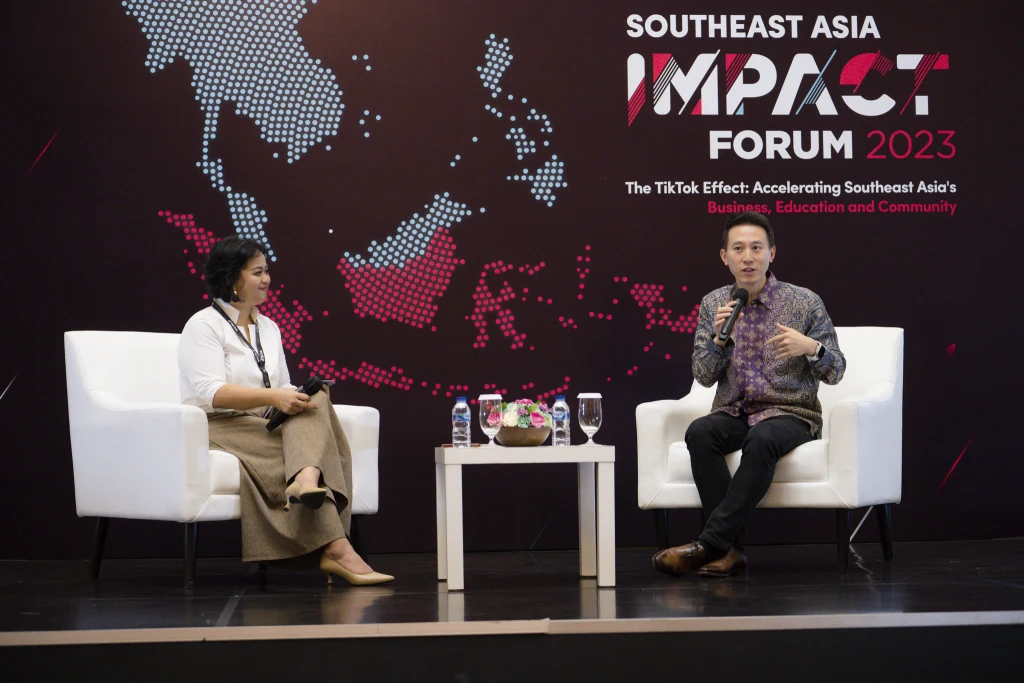
TikTok CEO Shou Zi Chew (right) at a Jakarta forum in June / Photo credit: TikTok Indonesia
Yanuar Nugroho, founder of think tank Nalar Institute and former deputy chief of staff to President Jokowi, believes that it’s insufficient for “someone from abroad” to send a letter to the president or ministers when problems arise. “In Indonesian culture, such requests won’t be entertained,” he adds.
Having high-ranking leadership on the ground demonstrates that the company is “genuinely serious and committed” to doing business in the country, stresses Matheace Ramaputra, a public policy consultant of think tank Indonesia Law and Development Facility.
Too powerful to care?
Indonesia comeback via GoTo?
Stay ahead in Asia’s tech landscape
This is premium content. Subscribe to read the full story.
Questions around TikTok Shop’s prospects of returning to its largest market in Southeast Asia continue to abound.
We know this is not ideal. ⌛ Sign up in 20 seconds. Cancel anytime.
Our subscriber community includes professionals from these companies:





Stay updated on the go with our mobile app.
Get latest insights with smoother, more personalized experience through TIA mobile app.