- Premium Content It takes our newsroom weeks - if not months - to investigate and produce stories for our premium content. You can’t find them anywhere else.
 Terence Lee · · 12 min read
An analysis of Gojek and Grab’s valuations and profitability prospects
Lyft and Uber have been underperforming on the stock market, with investors injecting a dose of reality into the US ride-hailers by slashing their valuations.
In Southeast Asia, heads naturally turn towards Grab and Gojek and the implications that those trade debuts have on the two regional unicorns.

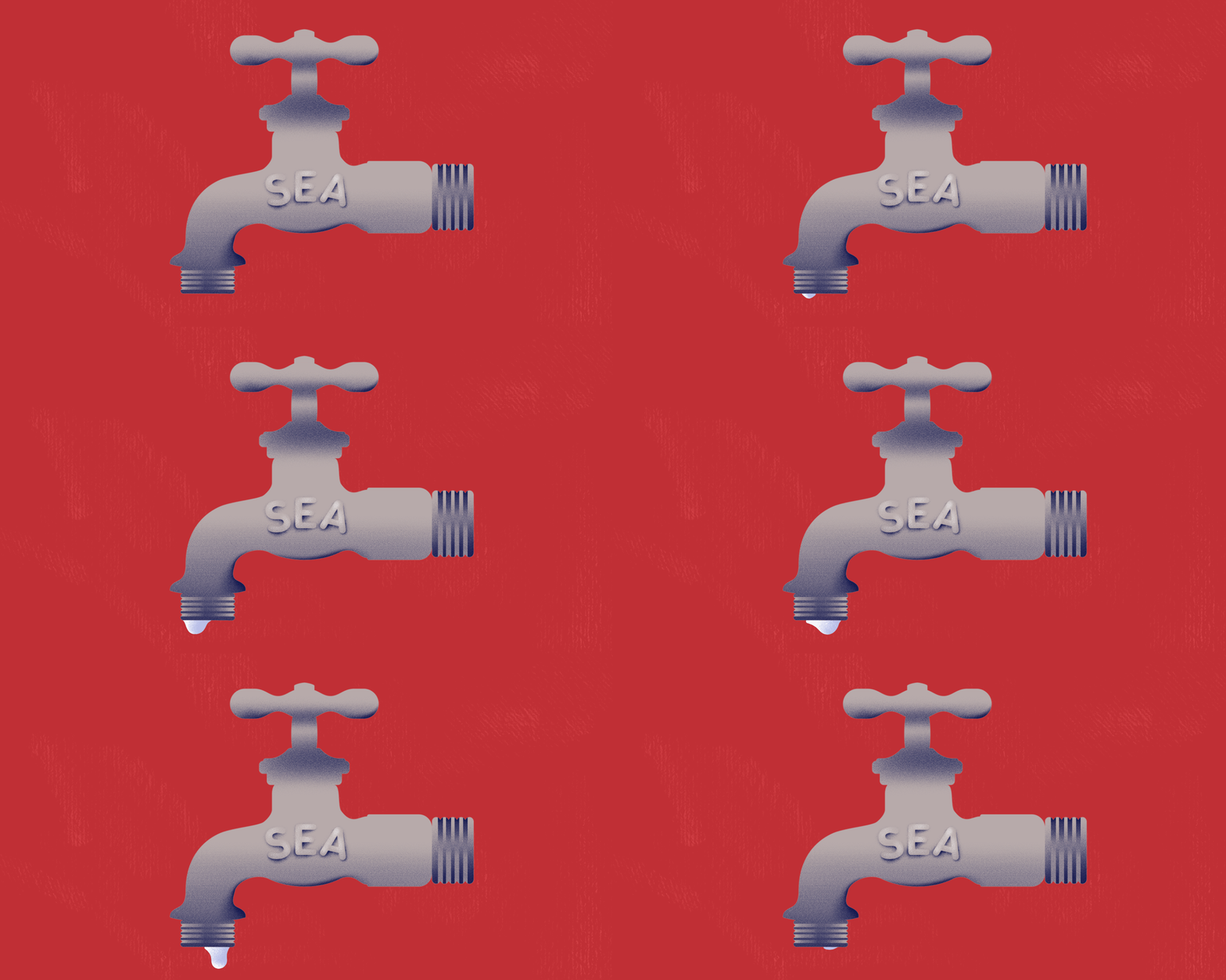
Illustration: Centaine Lim
Some media outlets and analysts are casting a pall on Gojek and Grab’s future initial public offerings. This conclusion, however, is premature: we still don’t know how Uber and Lyft will ultimately perform. Grab and Gojek’s public listings are still several years down the road (if they even decide to list), and both are fundamentally different from the US transportation apps.
While Grab and Gojek face unique challenges, Uber and Lyft’s experiences could still be relevant – but perhaps in a limited manner.
Grab and Gojek’s fundraising might be somewhat affected
Uber is trading at below US$41 per share. This means late-stage investors are suffering a paper loss, as the company’s series G-1 round was priced at US$48.77 per share. Lyft’s stock price isn’t doing so well, either – it’s trading well below the IPO price.
Investors looking to buy or sell a piece of Gojek and Grab may follow these stock prices closely.
The two super apps are still corralling investors. In February, Gojek was reportedly seeking as much as US$2 billion. Grab said in April that it aims to haul in another US$2 billion this year. It’s also seeking backers for Grab Financial, its financial services and payments arm.
The US IPOs could affect ongoing negotiations between the Asian super apps and their prospective backers. And depending on where the prices land eventually, they could have an impact on Grab and Gojek’s future fundraising efforts and their potential IPOs, too.
Uber and Lyft’s weak listings could cause some investors to think twice about their Southeast Asian counterparts’ current valuations. This hesitation, in turn, could affect Gojek and Grab’s ability to demand higher prices – a substantial chunk of their user activity still comes from ride-hailing, which is a difficult business to profit from.
Lyft’s market capitalization of US$16.6 billion, for example, is just slightly higher than Grab’s valuation of US$14 billion, even though its revenue of US$2.15 billion is more than double Grab’s in 2018. Gojek hasn’t disclosed revenue figures. Granted, Lyft isn’t an apple-to-apple comparison – as I’ll explain later.
The additional capital will matter. It gives the Southeast Asian unicorns the ability to spend more on sales and marketing. More importantly, it buys them time to lock in their users and hence reduce the need to spend money to acquire them and grow market share.
That said, the super app vision will compel some investors
For Grab and Gojek, there’s a tension between their present and their future. While these companies started in ride-hailing, their destination will look completely different.
Their current valuations rest on the dream of becoming Southeast Asia’s leading super apps. That’s the dream investors are buying into.
Actually, Uber and Lyft validates the super app strategy
Does food delivery improve Gojek and Grab’s chances of becoming profitable?
What about payments and finance?
The only path
Stay ahead in Asia’s tech landscape
This is premium content. Subscribe to read the full story.
Some media outlets and analysts are casting a pall on Gojek and Grab’s future initial public offerings. This conclusion is premature.
We know this is not ideal. ⌛ Sign up in 20 seconds. Cancel anytime.
Our subscriber community includes professionals from these companies:





Stay updated on the go with our mobile app.
Get latest insights with smoother, more personalized experience through TIA mobile app.







📅 Upcoming Events
22 October 2026
Payoneer x CSPN Summit 2026