Luckin Coffee’s fortunes have changed in a flash. Founded in 2017, the Starbucks rival became a unicorn within a year, and in April 2019, it’s valuation ballooned to nearly US$3 billion.
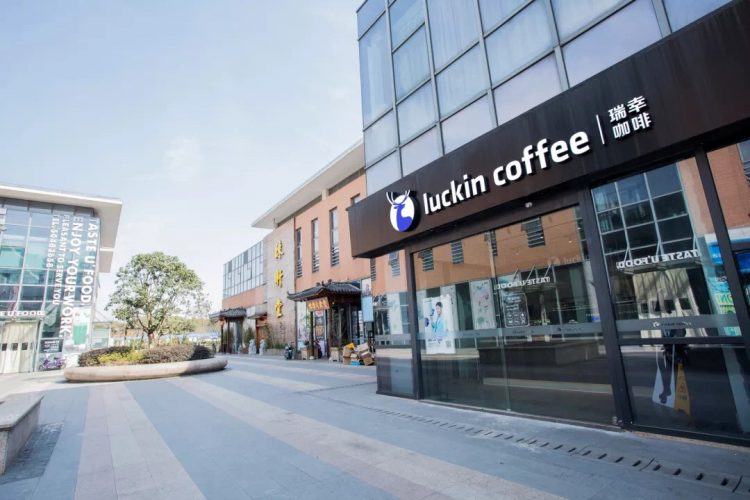
Photo credit: Luckin Coffee
In less than three years after its founding, Luckin filed for an initial public offering in the US. But the coffee chain’s shares and market value have since dipped, as its management team was found to have committed financial fraud.
Here’s a timeline of what happened.
An instant coffee chain success
July 2018: About nine months after it opened its first store in Beijing, Luckin secured US$200 million in a series A round and reached a valuation of US$1 billion. Singapore’s state fund GIC put in money at this stage.
The coffee wars heat up a few months later. Luckin announced a partnership with Chinese tech giant Tencent to tap into WeChat’s massive user base and co-develop offline retail payments tech. Starbucks, meanwhile, had tied up with Tencent rival Alibaba’s Ele.me for deliveries.
December 2018: Luckin snapped up another US$200 million in its series B round from some existing investors. It was valued at US$2.2 billion.
April 2019: The coffee chain secured US$150 million from investors including global asset manager BlackRock.
With a valuation of US$2.9 billion and an ambitious plan to open 2,500 new cafes, Luckin filed for an IPO in the US, intending to trade on Nasdaq.
May 2019: Luckin’s shares soared on its first trading day on May 17. The coffee chain priced its IPO at US$17 per share for an intended US$4 billion market value, but the opening trade surged to US$25 per share. Shares closed at US$20.38 apiece.
January 2020: The Chinese company raised US$865 million in a post-IPO offering to fuel its expansion plans. At this point, Luckin claimed that it was the biggest coffee chain in China with more than 4,500 outlets, surpassing Starbucks’ 3,600 stores.
Too good to be true
February 2020: This is where things took a turn. Due diligence-based investment firm Muddy Waters Research said they would “short” Luckin’s stock after it received an anonymous 89-page report containing allegations of inflated numbers on items sold per store, among other things. Luckin denied the allegations.
April 2020: Luckin’s shares plunged by as much as 80% as the company announced an internal probe into its alleged fabricated revenue. This wiped out almost US$5 billion from the company’s market value.
May 2020: Luckin fired co-founder and CEO Jenny Qian and chief operating officer Jian Liu as evidence “sheds more light on the fabricated transactions,” the company said. Jinyi Guo, a board director and senior vice president at Luckin, was appointed as acting CEO.
Booted out





Stay updated on the go with our mobile app.
Get latest insights with smoother, more personalized experience through TIA mobile app.












📅 Upcoming Events
22 October 2026
Payoneer x CSPN Summit 2026