Kylee McIntyre · · 4 min read
The Whatsapp-inspired, Facebook-investor funded app tackling India’s doctor shortage
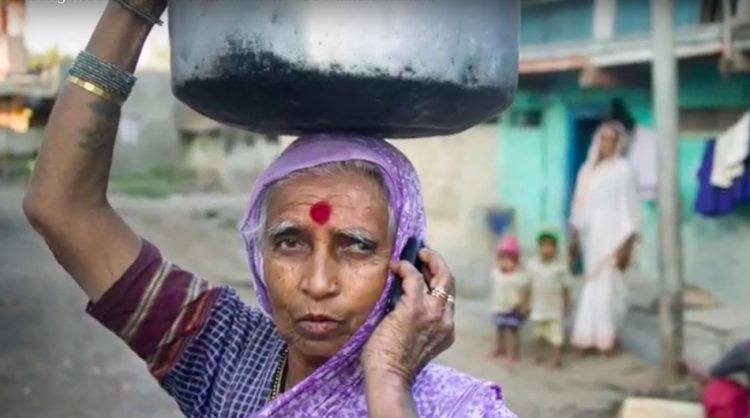
Photo credit: Klozest.
A problem beyond India’s low doctor-to-patient ratio is the distribution of those doctors. Most, particularly specialists, congregate in bigger cities and get seen by patients in the surrounding areas. Only 19 percent of specialists are available in community health centers across India, and most fall well below the country’s requirement for specialists. Community health centers are located in smaller towns and help patients in the area decide if they need to visit a larger, better-equipped city facility.
Satish Kannan was working for Philips Healthcare when he saw how inconvenient it was for patients in the small towns to report to clinics in big cities. This often involved them shelling out large amounts of money. “What the person does is sell everything they have and then have money for an operation,” Satish explains.
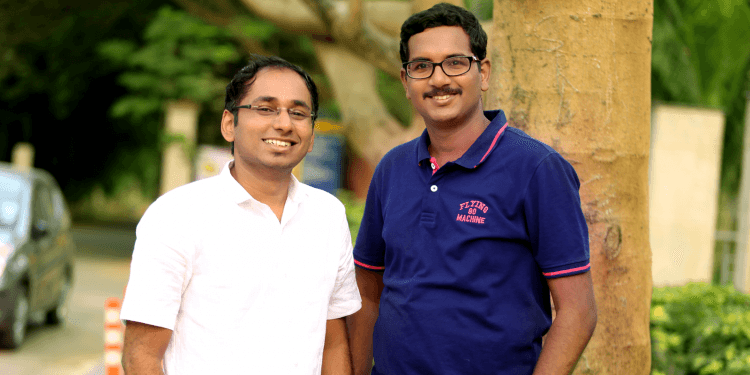
Satish (CEO) and Enbasekar (CTO). Photo credit: DocsApp.
The other thing he noticed was how often patients were using Facebook and Whatsapp, particularly the latter, to communicate with their doctors post-appointment. Residents of small towns would be able to send over their test results, and they’d only need to make a return trip if there was a big problem.
If patients could connect with their doctors post-procedure, what was to say that they couldn’t connect that way beforehand?
The IIT-Madras grad’s company, DocsApp, co-founded with fellow IIT-Madras alum Enbasekar D (CTO), joins startups like Practo, DocDoc, and Medinfi in helping patients find physicians. However, the app’s main focus is specialists, and it lets patients chat with doctors and get consultations.
In May last year, the startup scored funding from two of Facebook’s early investors and Rebright Partners, an investment firm with bases in Tokyo and Singapore. It’s served over 600,000 people in India in 3,000 locations.
See: Facebook’s early investors back an app connecting you to specialist docs in 30 minutes
The doctor connection
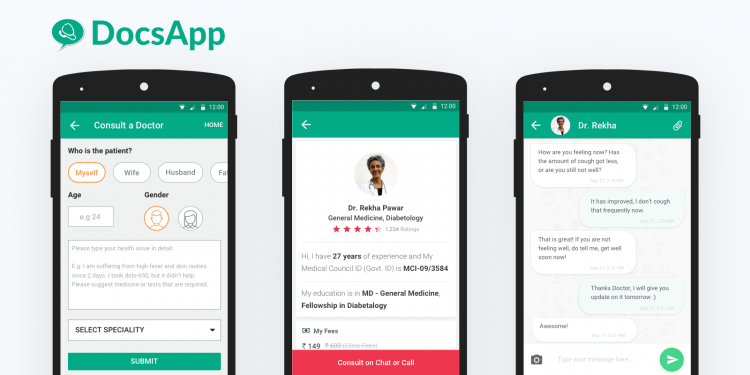
A glimpse into the app’s process. Photo credit: DocsApp.
DocsApp’s name is directly inspired by WhatsApp. As long as you have a chat screen on your phone, you can input your problems and location, find a doctor, and ask questions. A user can pay for his or her own appointment over mobile. If treatment requires a physical visit, the user’s money is refunded.
Satish whips out his smartphone and takes me through the process. He opens the app and types in that he’s having stomach pain. Users can also pre-identify which type of specialty they need – an obstetrician or a psychiatrist, for example. The system’s chat can ask a few additional automated questions – in Satish’s case, it asks if he has a fever. When he says no, it shows him a doctor profile, which he can accept or reject.
Upgrades





Stay updated on the go with our mobile app.
Get latest insights with smoother, more personalized experience through TIA mobile app.