
Photo credit: Tech in Asia.
Well, that was fast. Just two months after launching, WeChat’s mini programs – embedded apps that don’t need to be installed or downloaded – are off to a shaky start.
A sobering report on WeChat’s instant apps, detailing user traction and developer sentiment one month after launch, shows neither app developers nor users think favorably of them so far. Less than 10 percent of developers said they would continue developing mini programs, and only 11.5 percent of users said they would continue using mini programs instead of returning to an equivalent app. Nearly 70 percent of developers aren’t considering mini programs in the short-term or have given up on them entirely.
According to iiMedia Research, the publisher of the study, users were primarily disappointed with the limited choices and features of mini programs, leading many to see them as a one-time experience instead of a useful tool.
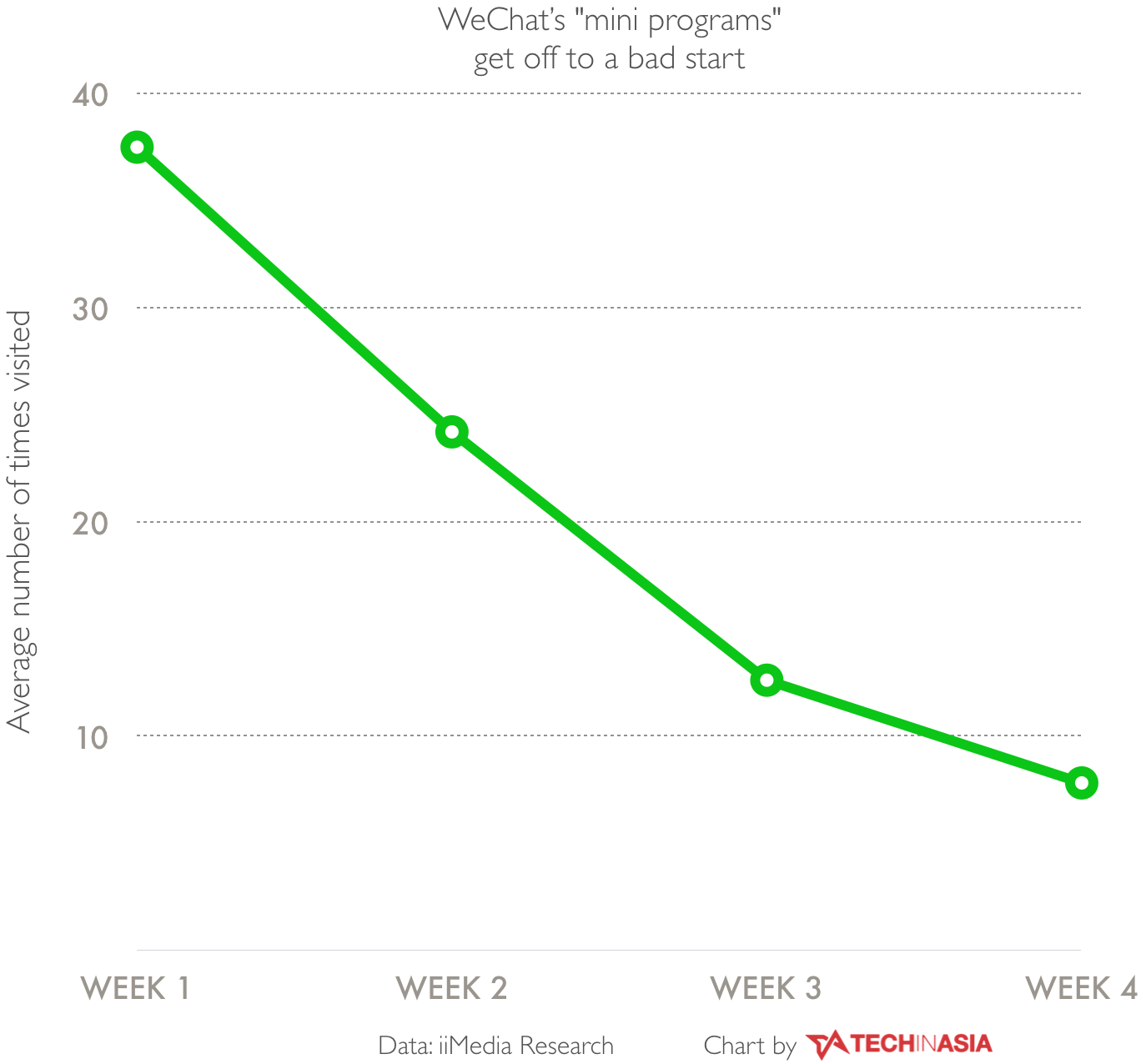
As weeks went by after the launch, the average number of times users visited mini programs decreased sharply.
With over 800 million monthly active users, WeChat is one of the most dominant and time-sucking apps in the country. The all-in-one app offers a smorgasbord of services – ride-hailing, movie ticketing, and mobile payments – which, in turn, have drawn brands, content creators, and freelancers, eager to capitalize on the Chinese social messaging app’s many sales channels and massive user base.
As WeChat’s latest feature, mini programs were anticipated as the next generation of apps, perhaps even a threat to the app store paradigm. However, as the report suggests, the hype around WeChat’s latest feature has fallen short of expectations.
“The biggest problem is that it’s so hard to open and find for new users or even old users,” George Borrelli, founder of Hangzhou Plus, tells Tech in Asia. “There’s no really easy way for users to go and open it. You can’t just have a link or just a QR code – you have to teach them how to open it, how to search for it on WeChat.”
When you’re doing an application or a website or anything like that, the biggest thing is promoting it and getting it out there.
George developed the mini program for his startup, an events and listings platform for expats in Hangzhou. Though the mini program started off with thousands of users on its first day, a week later, traction leveled out to only about a hundred visits a day. The main barrier, he says, are the tight restrictions around sharing and promoting mini programs.
“When you’re doing an application or a website or anything like that, the biggest thing is promoting it and getting it out there aside from it being useful,” he says. “But if we can’t get a good conversion rate just because it’s so hard, it’s not going to be anything that really people take and go with.”
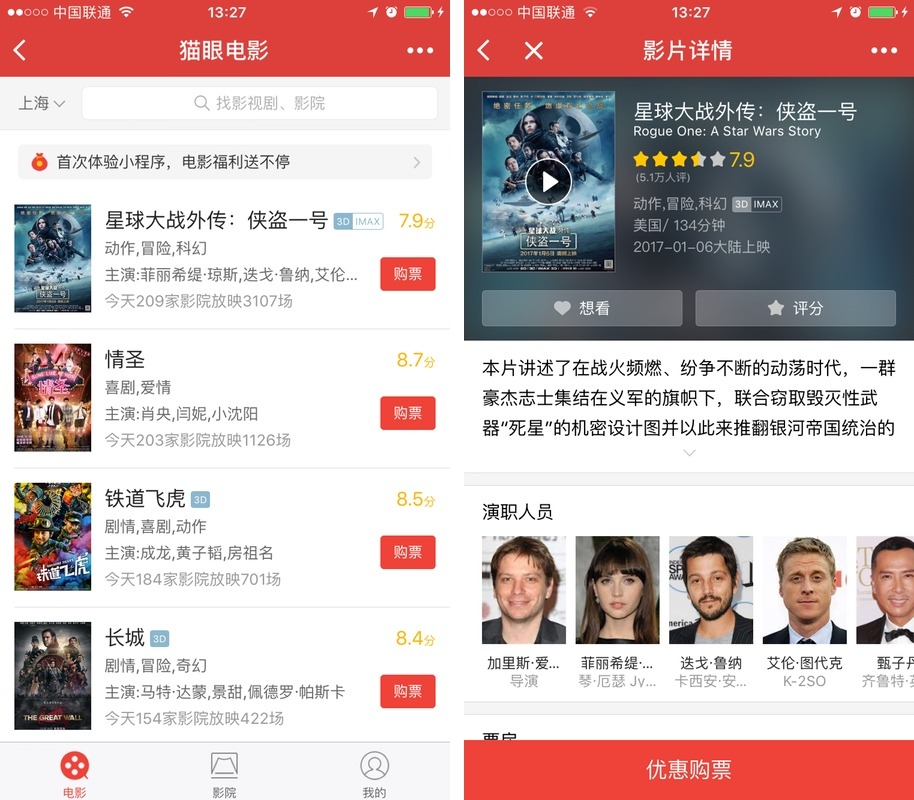
Buying movie tickets through a mini program. Photo credit: Tech in Asia.
Not commercial enough?





Stay updated on the go with our mobile app.
Get latest insights with smoother, more personalized experience through TIA mobile app.