 Paul Bischoff · · 3 min read
Alibaba-backed Quixey wants to set the standard for the future of search in China
Quixey, the US-based search engine for apps that Alibaba (NYSE:BABA) invested $50 million into, announced today it has partnered with the Chinese ecommerce titan to launch deep mobile search in China.
That means a few things: first, Quixey will now take over mobile search on YunOS, the Alibaba-made Android skin that comes installed on millions of phones sold in China. YunOS will act as a sort of pilot program before Quixey expands to two other Alibaba properties, and possibly much further if it succeeds.
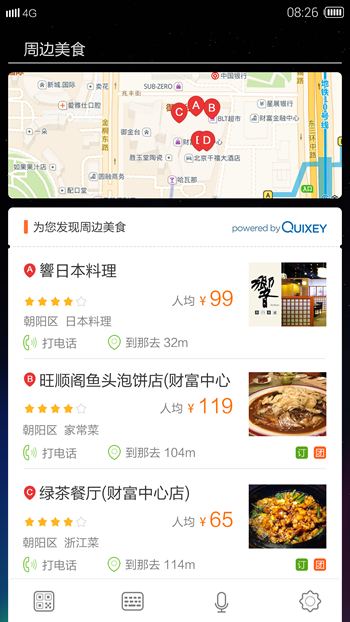
Secondly, Quixey has launched AppURL 2.0, a sort of SEO standard for developers to make their apps’ functions, features, and content more searchable. Traditional web search is unable to reach content locked within native apps, which is where the company says people spend 86 percent of their time when using smartphones. Quixey aims to go deeper into those apps beyond app names and keywords. Functional Search lets users find apps based on what they do, and deep search finds content – food reviews, posts on social media, product listings, etc – buried in those apps.
To do that will require a broad campaign by Quixey and Alibaba to get developers on board and make AppURL the status quo. The company claims first-mover advantage, and COO Guru Gowrappan said the Chinese developer community is already very well-educated. All of Alibaba’s partner companies – such as UCWeb, Youku, and Umeng – will integrate AppURL into their products to get the ball rolling. Quixey’s technology will also help support and power Alibaba’s other recent mobile search effort, called Shenma, jointly developed with UCWeb. Quixey has launched a global development program that will include tools and educational resources to make it easier for developers to expose their apps.
Quixey is far from the only player in deep mobile search, however. Most notably, Google has also been working on its own version of the technology. Gowrappan dismissed the global search giant as a threat.
“I would say we are about two years ahead in terms of technology and our product thinking,” Gowrappan tells Tech in Asia. “I think they are still approaching search and deep search and mobile search in an old web way.”
For now, the market remains fragmented, and because mobile deep search is still in a nascent stage, it will probably take some years before it consolidates in the same way that search engine optimization (SEO) has on the web.
When asked if Quixey will be able to search for content in WeChat – a medium that’s growing very popular in China for consuming media – Gowrappan replied, “It’s not happening right now, but where we are going we should be able to do that really well.”
Tech in Asia voiced concerns that Tencent (HKG:0700), the maker of WeChat and major rival to Alibaba, could block Quixey searches. Gowrappan admitted this is possible, but said it would not be to Tencent’s benefit. “I think people who try to block and close the ecosystem fail,” he said. “When you close, you’re not driving user engagement.”
Sogou, a Tencent-backed search engine, earlier this year enabled users to search for content within WeChat, but the results when tested by Tech in Asia were mediocre at best.
Editing by Steven Millward
(And yes, we’re serious about ethics and transparency. More information here.)





Stay updated on the go with our mobile app.
Get latest insights with smoother, more personalized experience through TIA mobile app.








📅 Upcoming Events
22 October 2026
Payoneer x CSPN Summit 2026