 Rebecca Liew · · 5 min read
How this AI platform is creating a better experience for merchants and online shoppers

Your payment was declined.
It’s a familiar message you’ve likely received at some point while trying to make an online purchase.
According to Galit Shani-Michel, vice president of payments at ecommerce fraud prevention firm Forter, one in 10 transactions get declined at the checkout stage as a result of suspected fraud or risk.
“Transactions go through multiple stages, from the merchant, gateway, processor and acquirer, to the issuer, and then back,” Shani-Michel explains. “At every stage, each party is responsible for making a risk assessment to decide whether a transaction is legitimate.”

Photo credit: Christin Hume via Unsplash
The trouble begins when a legitimate purchase gets declined. New shoppers often bear the brunt of this problem: They’re five to seven times more likely to face a decline than returning users due to a lack of data on their purchase history. This of course doesn’t bode well for merchants, who risk losing business for every transaction that doesn’t go through.
Transaction hurdles
In 2020, over 40 million users in Southeast Asia went online for the first time – 4x the number in 2019 – as a result of the pandemic. And the ecommerce sector in particular is growing: Of new users, 49% cited online shopping as a safer alternative and predicted that they would continue shopping online after the pandemic. While this is good news for merchants, the online checkout process – which includes a number of steps – remains a source of frustration because of the disjointed experience it often creates for shoppers, according to Shani-Michel.
This could affect whether a customer follows through on a purchase, says the executive. For example, many platforms incorporate 3D Secure (3DS) – an additional step involving a one-time password (OTP) authentication at the payment processing stage.
“3DS 2.0 was meant to offer merchants and consumers a better, more sophisticated experience,” Shani-Michel explains. “But even if a merchant has a good fraud system that understands a shopper is legitimate, a bank may suspect otherwise and stop the transaction in its tracks.”

Photo credit: George JMC Little via 123rf
The same is true for customers who face gateway timeouts while attempting to key in their OTP. In such instances, 75% of these consumers do not return, sometimes owing to associations of their negative experiences with the ecommerce site.
Plugging the gaps
What probably doesn’t help in these situations is that merchants themselves are struggling to scale their systems as consumer demand increases amid the ecommerce boom.
The gaps in ecommerce are no small issue: In March 2020, the cart abandonment rate stood at 88%, as revealed in a survey of 500 global brands.
The Southeast Asian market is no different. Travel restrictions, movement restrictions, and disrupted supply chains have brought about shifts in consumer behavior – and with it, intensified competition for a frictionless customer experience.
Merchants must now ensure that their platforms meet the growing needs of online shoppers, from a seamless user journey to a smooth checkout process. But given how siloed user data is at every stage of the payment and purchase process, discerning actual fraud from a legitimate purchase requires more than a keen eye.
A solution to the convoluted checkout process lies in employing an AI-powered payment orchestration solution – one that centralizes and digests data in one comprehensive and fully integrated system.
The Forter Smart Routing solution was developed for this reason. Its ability to detect suspicious transactions before the payment stage is built on machine-learning, allowing it to analyze over a billion identities in nanoseconds.
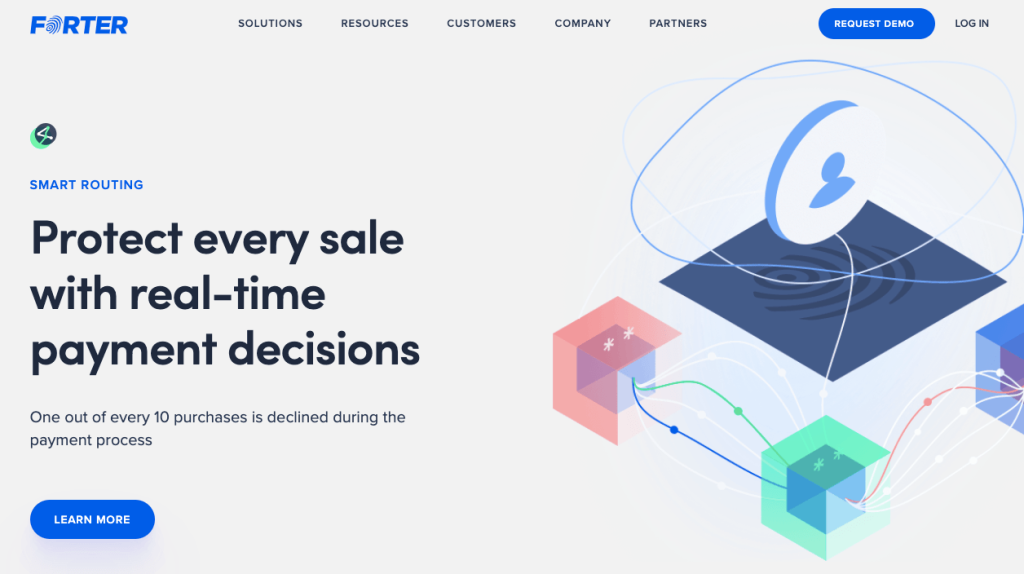
The Forter Smart Routing system aims to eliminate revenue leakage. / Photo credit: Forter
“Most fraud prevention systems employ a rule-based engine. Rules are inherently reactive in nature and are designed to prevent a fraudulent transaction that occurred in the past from going through again, shares Mamta Gupta, director of Asia-Pacific marketing at Forter. “And while they can be effective at stopping fraud, they also prevent a lot of good customers from completing the transaction, costing retailers significant revenue.”
Forter’s solution is rooted in an ecosystem of trust, says Shani-Michel. “In the moments leading up to the checkout stage, we draw from a user’s behavior, such as past purchases.”
For instance, a transaction by a shopper accessing an online watch store for the first time and trying to purchase an expensive timepiece in a matter of minutes would most likely be declined. That’s owing to the segregated data on the shopper’s history between the merchant and bank and the suspicious behavior of making a high-value purchase so quickly.
This wouldn’t happen with Forter’s software, Gupta says. “It’s likely the shopper has transacted with other merchants across Forter’s networks and has therefore previously shared unique shopping behaviors. If that’s the case, we would know if they are legitimate or bad actors. This reflects the power of Forter’s Global Network.”
Building trust
Forter’s system is agnostic, and routes a transaction to one of the merchants’ several processors or acquirers at the checkout stage to increase the chances of a successful purchase. This in turn prevents false payment declines and has boosted revenue for merchants by up to 5%.
“The payment process is a really important part of the customer experience,” says Shani-Michel. “It’s what brings them back to a site and helps them feel much safer when shopping online.”
On the other end of the spectrum, the accuracy of Forter’s smart routing system is measured based on whether merchants in its network get chargebacks from supposedly legitimate transactions.
A chargeback occurs when a stolen credit card is used to shop online and the authentic card owner disputes the transaction. Such instances of fraud are costly to the merchant, who ends up bearing the heavy cost of the added fees.
“In addition to this, the cost of certain payment methods can go up to 10% for merchants,” Shani-Michel adds. “At the end of the day, we aren’t the payment processors, but we can help businesses reduce costs by up to 5% because of smarter routing decisions.”
It’s through this ecosystem of trust that Forter hopes to create a better experience for both merchants and consumers.
“With smart routing, we help build trust,” Shani-Michel notes. “If we approve a legitimate transaction, we want our entire ecosystem to understand that the consumer is trustworthy.”
Forter is a fraud prevention company whose mission is to build trust in ecommerce by eliminating fraud for online merchants and marketplaces. The firm recently raised US$300 million in its series F round, taking its post-money valuation to US$3 billion. Find out more about Forter Smart Routing and its benefits here.
This content was produced by Tech in Asia Studios, which connects brands with Asia’s tech community. Learn more about partnering with Tech in Asia Studios.
Stay updated on the go with our mobile app.
Get latest insights with smoother, more personalized experience through TIA mobile app.
Recommended reads
 Indonesian AI startup goes global
 Forrest Li on scaling Sea, building smarter bots, and founder grit
 An AI assistant that joins sales calls and scores team skills
 Beyond the check: Why VCs need more than capital
 SGX’s CEO says it doesn’t need a unicorn to win
 SMEs want AI too, but not the kind Big Tech is selling
 Oatside’s alt-milk rise hits a profitable gear
 Alibaba’s financial health in 12 charts
 Asia’s telcos bundle AI into mobile plans. Will it pay off?
 M-Daq chases bigger clients as revenue falls, losses grow





Editing by Nathaniel Fetalvero and Jaclyn Tiu
(And yes, we’re serious about ethics and transparency. More information here.)





