- Premium Content It takes our newsroom weeks - if not months - to investigate and produce stories for our premium content. You can’t find them anywhere else.
 Glenn Kaonang · · 6 min read
Why Xpeng’s wildest tech isn’t coming to Southeast Asia just yet
Xpeng co-founder and CEO He Xiaopeng proudly declared at a recent event in Hong Kong that his company “made history” by topping China’s electric vehicle startup sales charts in the first quarter of this year, beating other emerging brands such as Xiaomi, Li Auto, and Nio.
Founded in 2014, Xpeng has become one of China’s top automakers in terms of international EV sales. It aims to double its global reach to 60 countries this year.
But it isn’t just gunning for the EV crown. In an almost two-hour presentation, Xiaopeng laid out a bigger ambition: to lead the next wave of mobility, from autonomous driving to flying cars and humanoid robots. (Disclaimer: Xpeng sponsored Tech in Asia’s attendance to the event.)
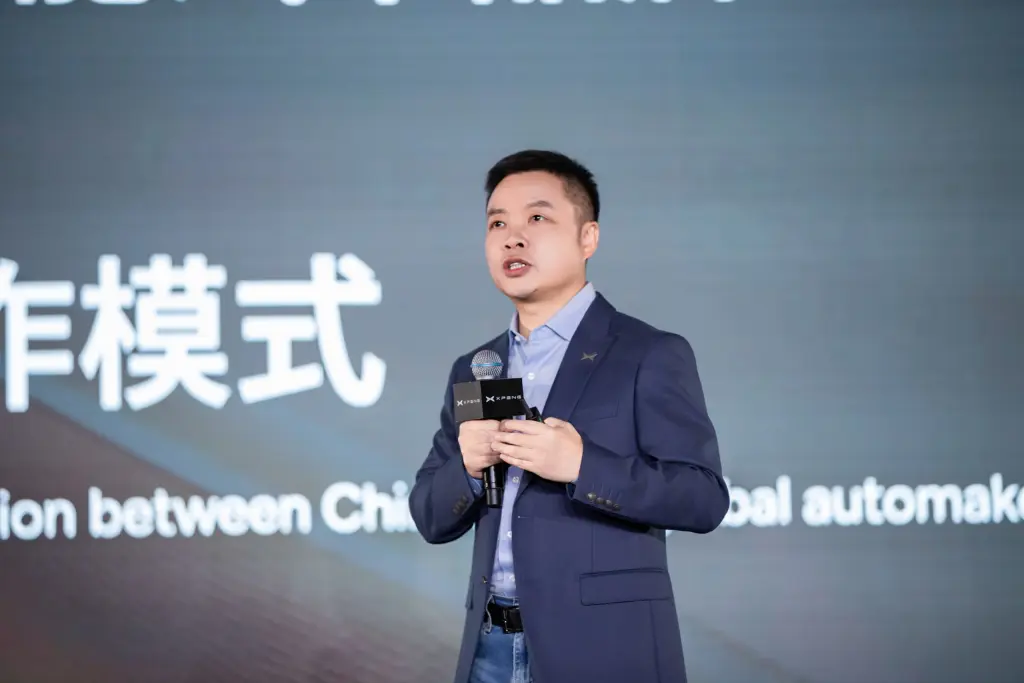
Xpeng co-founder and CEO He Xiaopeng/ Photo credit: Xpeng
However, much of Xpeng’s moonshot tech is still grounded. Its humanoid robots are still being tested internally, and those much-hyped flying cars won’t be seen outside of its home market anytime soon.
Even its most market-ready tech – an in-house AI chip powering its autonomous driving system – will initially be limited to the Chinese market.
Xpeng may be building the future of mobility, but it’ll take a while for that future to arrive in regions such as Southeast Asia.
Assembly lines go sci-fi
During the company’s earnings call last month, Xpeng vice chairman and president Brian Gu said that humanoid robots could eventually become a market “even bigger than EVs.”
It’s a bold remark, considering that the firm made the bulk of its US$5.6 billion revenue last year from selling EVs and only started dabbling in humanoid robots five years ago.
The company unveiled its first humanoid robot, Iron, last November. Touted as the “most human-like robot,” Iron is currently being deployed in Xpeng’s factory in Guangzhou, where a dedicated robotics lab is putting it through its paces on production line tasks.

Iron features Xpeng’s in-house AI chip, Turing, that will also be available in its future cars. / Photo credit: Xpeng
Flying cars, but not too far please
AI brain for the EV wheel?
Stay ahead in Asia’s tech landscape
This is premium content. Subscribe to read the full story.
We explain why Xpeng’s bets on self-driving tech, flying cars, and robots are mostly limited to the Chinese market for now.
We know this is not ideal. ⌛ Sign up in 20 seconds. Cancel anytime.
Our subscriber community includes professionals from these companies:





Stay updated on the go with our mobile app.
Get latest insights with smoother, more personalized experience through TIA mobile app.