 Grace Priscilla Teo · · 5 min read
Tech giants must distribute AI wealth or face a public rejection
This article summarizes an episode of Sourcery’s video series featuring Hemant Taneja, CEO and managing director at General Catalyst.
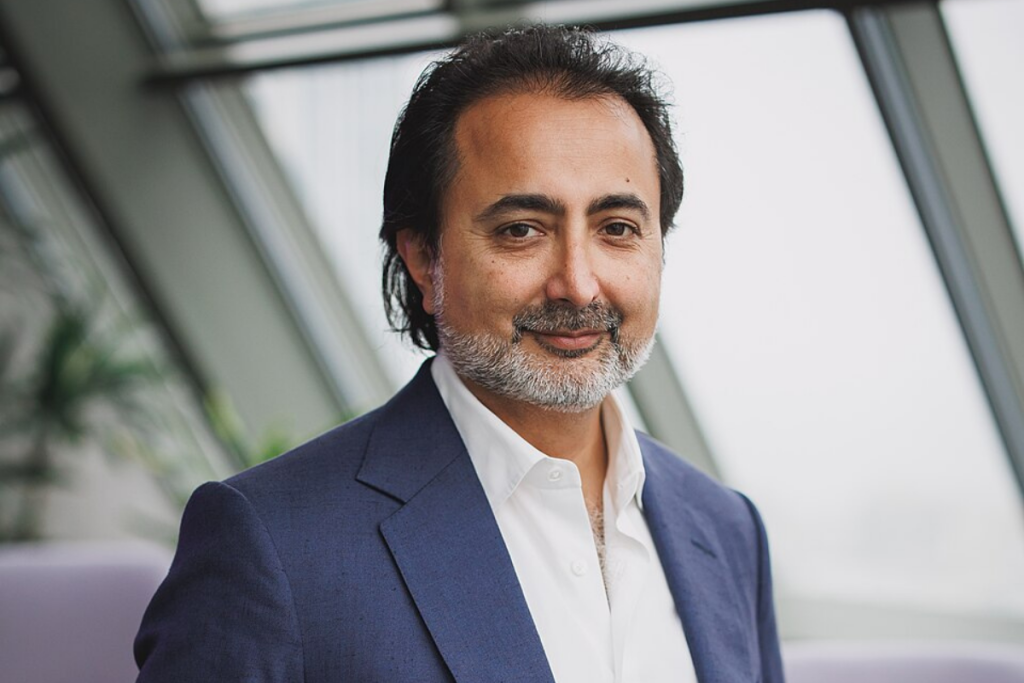
General Catalyst CEO Hemant Taneja / Photo credit: Hemant Taneja
Hemant Taneja, CEO and managing director at General Catalyst, argues that the traditional playbook for buying and scaling software companies is dead. AI is eroding the long-term advantages that once made these deals profitable, forcing venture capital to rethink company size, public trust, and wealth distribution.
The danger of massive wealth concentration
The first step in this necessary rethink is acknowledging the societal impact of rapid scaling. Fast growth changes how companies accumulate power. Taneja warns that markets and governments are losing patience with a winner-takes-all economy, pushing leaders to figure out how value is shared.
This impatience is driven by how quickly modern tech giants expand. The financial scale is reaching unprecedented levels, pulling massive wealth into the hands of a few top companies.
Taneja notes the shock of seeing Nvidia add a trillion dollars of market value in just 100 days. He describes this as a “natural gravitational pull” where all scale is concentrated in a handful of corporate giants, a pattern he believes is not sustainable.
Distributing the financial upside
To prevent this unsustainable future, companies must actively change their financial models. If technology companies refuse to share the wealth they create, public backlash will become an existential business risk.
Taneja argues that leaders must prioritize inclusive growth to survive. He warns that while AI brings massive advantages, “if it concentrates opportunity in the hands of very few, then it also brings instability in the end because society is going to reject that.”
Embedding technology into legacy systems
Sharing this wealth requires tech companies to integrate more deeply with the broader economy rather than simply disrupting it. Technology companies will fail if they simply try to replace the rest of the economy from the outside.
Taneja insists that builders must place their engineers within regulated industries to change how work gets done. To solve this, General Catalyst buys physical businesses, like Summa Health in Ohio, to test software on the ground.
He explains they deploy their funded startups directly into these community hospitals to figure out how to transform them into an “AI-native hospital, to drive abundance, and to actually be economically viable.”
Abandoning tech hubris to earn trust
Successfully deploying software in these real environments requires a complete attitude shift. Tech leaders cannot treat older industries with contempt and expect to win their business. Teams that build alongside legacy companies earn trust and survive slow buying processes.
Taneja emphasizes, “This idea that the rest of the world is dumb and we’re just going to replace them is pure hubris. I just don’t think it’s the way the industries and the world want to do business with us.”
Redefining the venture capital model
Earning this level of trust across legacy industries demands that investors change how they support their own startups. The traditional investment model lacks the operational skills required to help companies survive after writing the initial check.
Managing public anger and leadership failures
Navigating government rules and national security





Stay updated on the go with our mobile app.
Get latest insights with smoother, more personalized experience through TIA mobile app.










📅 Upcoming Events
22 October 2026
Payoneer x CSPN Summit 2026