- Insights This article was written by a TIA community member. Insights pieces undergo the same rigorous editorial process that newsroom-produced articles have.
 Jonathan Ng · · 6 min read
How to break into robotics without an engineering degree
“Hospitals save lives. I save hospitals.”
That’s my go-to answer whenever people ask what I do in robotics. It’s usually met with laughter or with raised eyebrows, which is fair because I’m not a doctor, and I don’t build robots myself.
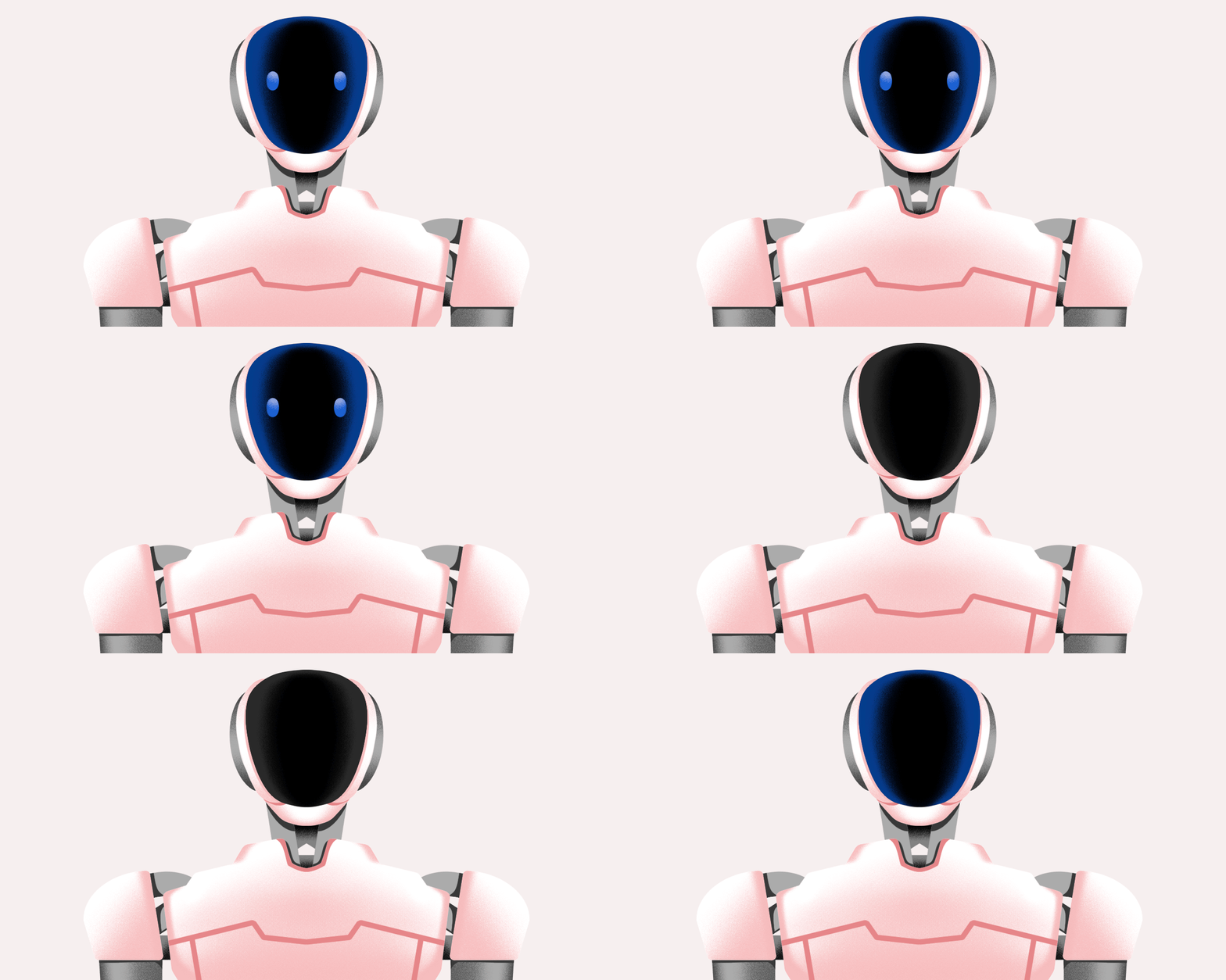
Image credit: Timmy Loen
As a business development manager at Otsaw, I help hospitals run more efficiently through robotics. My colleagues and I form the logistical backbone of the health facility by automating intra-hospital logistics robots to haul food, linen, surgical tools, waste, samples, and supplies.
The stakes are real. In countries like the US and Japan, hospitals are going bankrupt – not from the lack of patients but from the costs of complex operations combined with chronic manpower shortages.
How to break into the field
Robotics isn’t a closed hub of engineers anymore. What matters most for anyone venturing into the field is how fast they can learn the language of problems and solve them.
Engineering roles remain critical, of course. However, you can still carve out a career in robotics without high-level technical skills.
Specifically, you can explore areas like implementation, product, partnerships, strategy, operations, and workflow design – specializations that rely far more on how well you understand problems, people, and processes than how good you are at coding.
See also: Neptune’s rising: AI robots help ships save fuel, cut emissions
At the core of it, I love solving problems. Long before working in robotics, I was already that person: writing letters to The Straits Times about addressing jaywalking, improving tray return systems, and building my own Covid-19 chatbot.
That same drive for practical solutions led me to robotics. A defining moment came during my national service, where I supported an autonomous tech project with the Republic of Singapore Air Force.
The scale and complexity of that work not only revealed the capabilities of advanced systems but also emphasized that robotics isn’t just about engineering – it’s about understanding the environment where tech operates, the people it serves, and the problems it’s meant to solve.
That perspective guided my path to Otsaw. I started in marketing and later transitioned into business development, opening new international markets and industries.
Demands of the job
A day in the life
Career growth and the long game
First things first
Stay ahead in Asia’s tech landscape
This is premium content. Subscribe to read the full story.
Contrary to popular belief, you can launch a career in robotics even if you’re not an engineer. This piece shares how.
We know this is not ideal. ⌛ Sign up in 20 seconds. Cancel anytime.
Our subscriber community includes professionals from these companies:





Stay updated on the go with our mobile app.
Get latest insights with smoother, more personalized experience through TIA mobile app.