- Premium Content It takes our newsroom weeks - if not months - to investigate and produce stories for our premium content. You can’t find them anywhere else.
 Terence Lee · · 7 min read
The state of the super-app race in Southeast Asia
A new report by advisory firm ABI Research is putting Grab ahead of Gojek by a wide margin in Southeast Asia’s ride-hailing race.
It also mentions that Grab is leading in the region’s key battlegrounds of Singapore, Indonesia, Vietnam, and Thailand in terms of the number of trips.
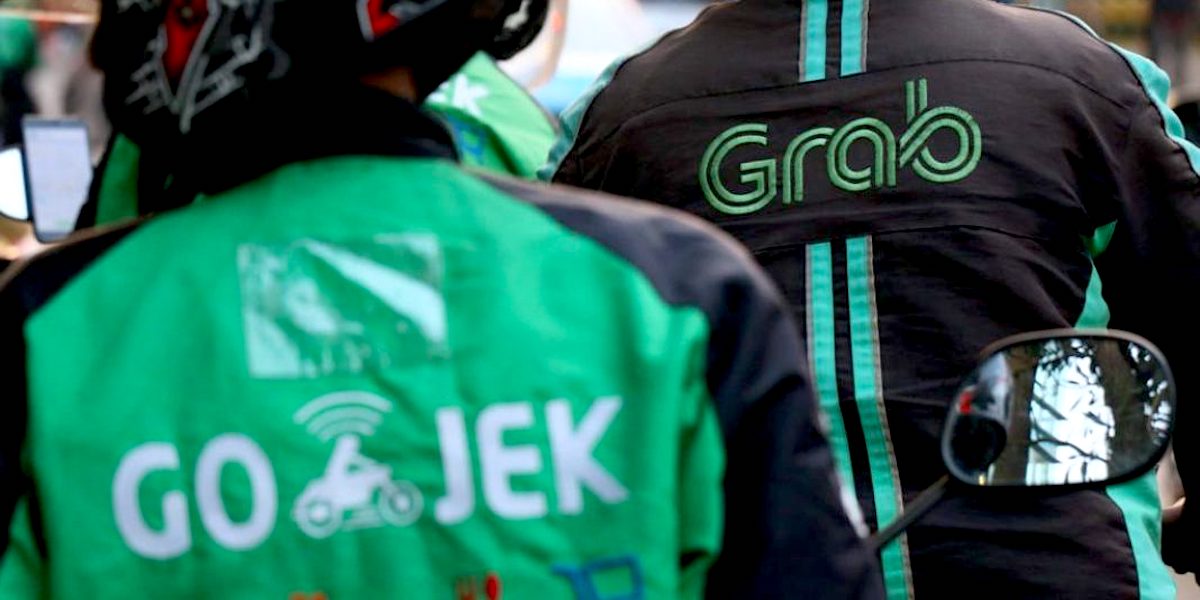
Photo credit: The Low Down
Does the data reflect reality? Unsurprisingly, sources that Tech in Asia spoke to are divided about it, depending on which firm they’re aligned with.
But there’s one thing that people from both camps can agree on: In hindsight, the super-app strategy appears to be the right move.
Ride-hailing’s growth is slowing
ABI’s data suggests that ride-hailing as an industry is reaching maturity, as shown by slowing growth.
Ride-hailing across Asia Pacific only grew 6.23% year-on-year, if we annualize H1 2019’s figures. In contrast, Grab’s cumulative number of rides went from 1 billion to 2 billion between October 2017 and July 2018, or a period of about nine months. It jumped to 3 billion about six months later.
There’s still robust pockets of growth of Southeast Asia, however. Vietnam, the region’s second-largest market for ride-hailing after Indonesia, is expected to grow 37% this year. Thailand, meanwhile, is set to expand by 69%.
But the overall trend is clear: ride-hailing growth is decelerating. Call it a validation of the super-app strategy. “It is our opinion that providing additional on-demand mobility services such as food and parcel delivery will be essential to differentiation and profitability [for ride-hailing services],” James Hodgson, principal analyst at ABI, tells Tech in Asia.
See: An analysis of Gojek and Grab’s valuations and profitability prospects
The super apps themselves echo this sentiment.
In an interview with the Nikkei Asian Review, Gojek co-founder and CEO Nadiem Makarim said that becoming a profitable ride-hailing business is an “optimistic” scenario, and that a more realistic goal would be for the segment to break even.
The Indonesian company has been trumpeting its growth in other areas. Gojek president Andre Soelistyo said at a Bloomberg event in September that the firm’s food delivery business is almost double the size of its transportation arm. It’s also claiming to have 70% of the food delivery market share in Indonesia.
Grab has been taking a similar tack. It told Bloomberg that its daily food delivery volume has doubled in the first six months of 2019.
What’s next for Gojek’s international expansion?
Does ride-hailing market share really matter?
How big is the food delivery business right now?
Bits and bobs
Stay ahead in Asia’s tech landscape
This is premium content. Subscribe to read the full story.
Grab is ahead of Gojek by a wide margin in Southeast Asia’s ride-hailing race, according to new data. However, that segment is unprofitable and its growth is slowing.
We know this is not ideal. ⌛ Sign up in 20 seconds. Cancel anytime.
Our subscriber community includes professionals from these companies:





Stay updated on the go with our mobile app.
Get latest insights with smoother, more personalized experience through TIA mobile app.