- Premium Content It takes our newsroom weeks - if not months - to investigate and produce stories for our premium content. You can’t find them anywhere else.
 Sarah-Ann Yong · · 7 min read
Are ‘smart’ vending machines the future of retail?
Most Singaporeans are probably familiar with the name Kalms.
It began life as a record store more than 50 years ago, until it shifted to being a gift shop in the early ‘90s. Since then, Kalms has become a well-known retailer of soft toys and greeting cards.
However, the unfortunate combination of high rental costs, manpower shortages, and stagnating sales margins amid the rise of ecommerce has led to the slow but sure death of its brick-and-mortar stores.
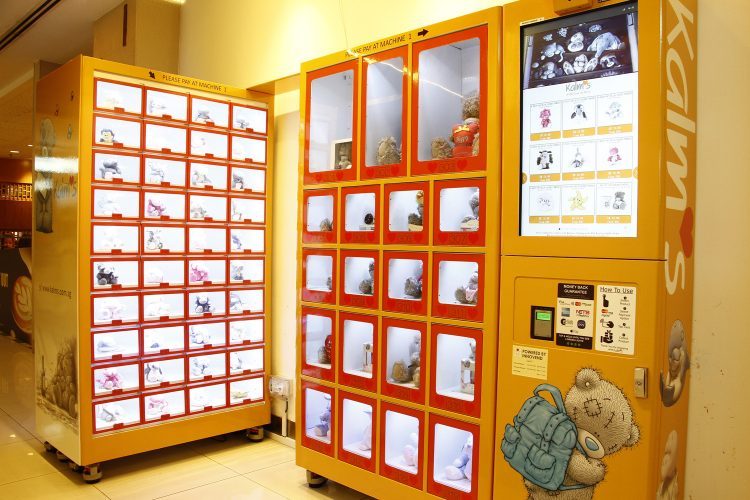
Photo credit: Kalms
But the homegrown brand is reinventing itself once again under new ownership.
“There has never been a more exciting time to be at the intersection of retail and technology,” says Kalms CEO Azan Tengku tells Tech in Asia.
Extreme makeover
Tengku, who was part of a group that bought Kalms in July 2016, has a background is in finance. He started off writing equity research reports on Wall Street before moving to Bloomberg, where he would, later on, manage the company’s Southeast Asian research team in Singapore.
That experience would later pay off, helping him identify a gap in the retail market. Tengku observed how stores are being killed by soaring rental rates and how ecommerce sites still don’t provide instant gratification. As such, vending machines are a middle ground.
Compared to full-fledged retail shops, vending machines rack up less rental and manpower costs and have up to 70% lower operating expenses while still being available 24/7.
According to Shiying Gan, Kalms’ corporate finance director, the rental cost of a space ranges from US$180 to US$370 a month, which is around 80% cheaper than a storefront rental.
In comparison, the cost per machine is around US$9,500 to US$13,000, with operating expenses amounting to around US$730 to US$1,460 per month. On average, each machine has achieved 30% return on investment.
Vending machines make sense in cities where space is limited, rent is expensive, and labor is costly and hard to find – Japan is a good example.
Meanwhile, vending machines sales in Singapore are expected to reach US$67.2 million in 2017, marking a 3% growth from the previous year. Sales is expected to surpass US$72 million by 2020, according to research firm Euromonitor International.

Next-generation vending business
Riding the vending craze
Data collection operation
Stay ahead in Asia’s tech landscape
This is premium content. Subscribe to read the full story.
‘Smart’ vending machines are invading Singapore. The company behind this is a familiar name.
We know this is not ideal. ⌛ Sign up in 20 seconds. Cancel anytime.
Our subscriber community includes professionals from these companies:





Stay updated on the go with our mobile app.
Get latest insights with smoother, more personalized experience through TIA mobile app.