Michael Tegos · · 4 min read
There’s some serious money going into VR right now, but is it worth it?
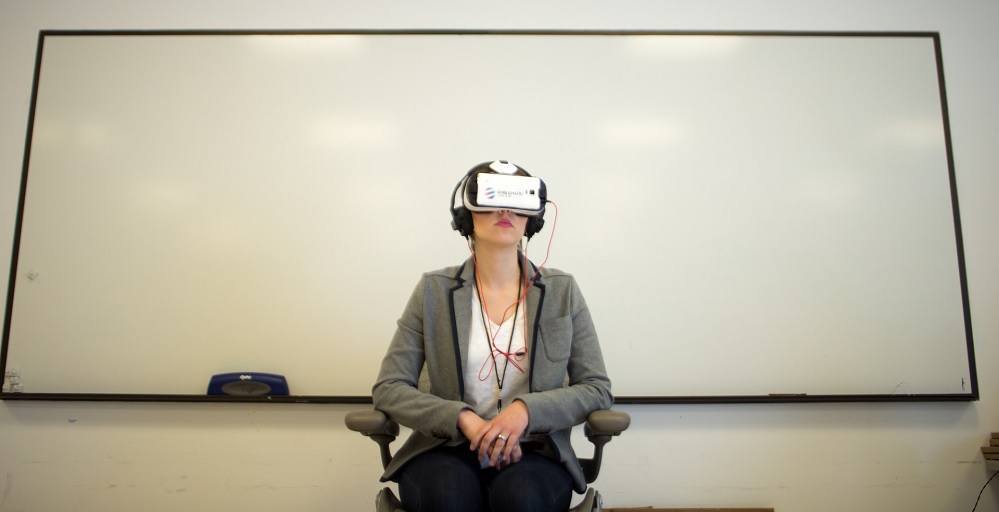
Photo credit: Knight Center for Journalism in the Americas
So they say this virtual reality thing is going to be a big deal. And there’s serious money being thrown toward developing this new digital space where we’re supposed to spend much of our online existence in the next few years. But are investors right to be so enthusiastic?
The 800-pound-gorilla of this is, of course, Facebook’s acquisition of virtual reality (VR) startup and modern pioneer Oculus VR for US$2 billion in 2014. In one fell swoop, Facebook’s interest turned the whole VR movement from a niche tech curio to a legitimate industry with extraordinary potential.
The social network isn’t the only party throwing a bunch of cash into VR, just the largest. Japanese mobile gaming powerhouse DeNA got into investing in seed- and growth-stage VR companies earlier this year. Most recently, compatriot mobile game developer Colopl announced it’s starting a US$50 million fund to support companies developing VR games and apps. And then there are players like Presence Capital, an aptly named venture capital firm formed especially for investing in companies working on virtual and augmented reality (AR), with its own US$10 million fund.
Virtual hopes
Thing is, all this takes place in anticipation of VR being a huge commercial success and adopted by millions of users. But so far, we haven’t seen much evidence of that happening. It’s the end of 2015 and all high-profile VR projects, including the Oculus Rift, HTC and Valve’s Vive, and Sony’s PlayStation VR, haven’t come close to releasing yet. Plus, there’s little indication of how much they’re going to cost, and not much of a clear picture when it comes to their applications. There are a few demos available, some upcoming titles, and not much else.
See: Creative Technology makes first move into virtual reality in fight to regain relevance
It’s impossible to not think of earlier tech darlings like 3D, which fizzled out when no one could sell enough 3D-capable devices because no one made particularly compelling content for them – because no one bought enough of them to make it worthwhile. And let’s not forget this is the second coming of VR technology – the first one never quite managed to get off the ground.
Not just for games
If VR is to achieve mainstream success, it has to be sold as more than another gaming machine. When Facebook dropped the Oculus acquisition bomb, Mark Zuckerberg said that gaming in VR was only the beginning. “After games, we’re going to make Oculus a platform for many other experiences. Imagine enjoying a courtside seat at a game, studying in a classroom of students and teachers all over the world or consulting with a doctor face-to-face — just by putting on goggles in your home. This is really a new communication platform.”
If VR is to achieve mainstream success, it has to be sold as more than another gaming machine.
That’s all well and good, but there hasn’t been much on this since then – besides games, very little information has reached the public about these kinds of experiences that promise to make the platform a necessity, rather than a novelty (not that people haven’t been thinking, um, outside the box).
The new fund from Japan’s Colopl’s is probably good news for game developers, and CEO Naruatsu Baba states that this way the company “can help VR expand beyond video games into other fields, and ultimately provide new experiences unlike anything human beings have seen before.” But it’s still asking developers to build those experiences for an as yet uncertain audience and a heavily fragmented platform base.
Game developers have also identified significant challenges in making content for VR. The uniqueness of the medium requires some serious rethinking of development and design conventions. For example, game designers who are used to conveying narrative through movie-like cutscenes now realize they can’t take camera control away from the player, since the camera is supposed to be the player’s own eyes into the virtual world.
Designers of other types of experiences are likely to face similar challenges as well. And as has happened with other technologies in the past, the only way to refine those experiences is to get them into the audience’s hands and continue iterating as people use them. Which brings the whole thing back to the initial challenge: getting people to use VR devices in the first place.
Plug in through your phone





Stay updated on the go with our mobile app.
Get latest insights with smoother, more personalized experience through TIA mobile app.