Today, I found myself on the Amazon China page for the CT-510, Lenovo-backed Eedoo’s $600 home entertainment system, reading the reviews. They are not pretty. Here’s a clip from the most highly-rated review on the site:
What is $600? With that you could buy a 300 liter fridge, a 32-inch Sharp HDTV, approximately one ton of chicken eggs, or a decent desktop computer. So what does the CT-510 give me [for that price]? Limited apps, only Kinect-style [motion] games, karaoke, and the pitiless mocking of Xbox 360 players.
The thing is, before it became expensive and dropped the gaming focus, the CT-510 (then called the eBox, and following that the iSec) was supposed to be a real game console. It’s not clear why Eedoo shifted the device’s focus — that game consoles are technically illegal in China may have had something to do with it — but whatever the reason, that hole is still empty. And I think someone else should step in and fill it.
I imagine the legal issues with that could be dealt with, especially by any of the major tech companies that already have established relationships with the government. Yes, game consoles are illegal, but let’s not forget that microblogs were de-facto illegal for a while too, and we all know how that turned out. Moreover, a domestic game console could help spur economic growth and support a whole new ecosystem of developers. It also wouldn’t necessarily mean allowing foreign players into the market; while I personally think the government ought to allow that, it wouldn’t have to. There is certainly plenty of precedent for that kind of protectionism, especially in the tech sector.
Let’s just say someone can get the government to sign off on allowing them to build a game console. How can they then avoid the pitfalls that turned the iSec into an overpriced DVD player? By focusing on the idea of the console as a platform.
What Would it Look Like?
In China’s current market, there’s no way to sell a traditional $60 console game. There is simply too much piracy; most players will just pick up the $1 pirated version for PC that’s being sold under every overpass in the city instead. So a Chinese console can’t be focused on games like that unless they’re exclusive to the platform; if they aren’t, players will just play the games on PC. But if they are exclusive, they’ll have to be pretty damn amazing to lure gamers onto a new and more expensive platform.
A better approach would be to look at the console sort of like Xiaomi’s set-top box. It would be a way for gamers to access already existing content on their TV screens. Most Chinese homes have a TV, but many don’t have a computer, so if the console could be priced cheaply enough, plenty of gamers would likely be interested. Even gamers who have PCs already might be interested if they happen to own a TV screen larger than their monitor (when it comes to gaming, bigger is often better, or at least more awesome).
So what will they play? The easiest and cheapest solution would be web games, of which there are thousands and thousands. Most of these run right in the browser, and it shouldn’t be too difficult to translate the console’s gamepad input into something the games can understand. But web games are just the beginning, and frankly, it’s not going to be all that compelling to play web games on a TV. The graphics don’t tend to be all that impressive, and some of them really require a keyboard and mouse (although ideally the console would have a USB port for keyboard and mouse support).
Web games are great, but cloud games would be the real bread and butter of the Chinese game console. For a subscription fee, or perhaps even an hourly fee like internet cafes, users could select from a wide variety of on-demand games that they play through the internet. The games run on servers operated by the console company and only video is streamed to the console, meaning that gamers can play high-end games with advanced HD graphics even though their consoles don’t have the expensive hardware required to run those games.
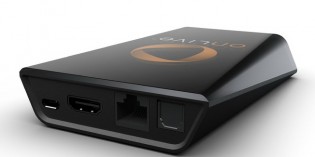
Minus the support for browser games, I’m basically describing a Chinese OnLive service, and I think it could really work in China. Although it sounds very internet-intensive, OnLive actually only requires a 3-5 Mbps internet connection, and those speeds should definitely be attainable in most Chinese cities. Even if this console went into development tomorrow, I feel certain that by the time it was released, average broadband speeds would be well above the minimum requirements anyway.
Oh, and motion games? Can ’em. Most Chinese apartments are too small to be treated like gyms, and there simply isn’t room to be jumping all over the place. Moreover, developing or buying proprietary motion-sensing tech is expensive, and then you need to have games custom-developed to work with it, which isn’t cheap either. The console I’ve laid out here would be pretty cheap to design and build because it doesn’t actually require much; just an internet connection, a browser with flash, java, and HTML5 support, a platform to stream the on-demand games, and maybe a simple OS for some apps if there’s extra money in the budget.





Stay updated on the go with our mobile app.
Get latest insights with smoother, more personalized experience through TIA mobile app.