Terence Lee · · 5 min read
Think underwater internet is impossible? This Singapore startup is proving people wrong
Human beings are, first and foremost, land creatures. We spend most of our time above water, and if we stay submerged for too long, our skin gets wrinkly, our oxygen depletes, and we die. Because of that, most of our technologies work when dry. Smartphones break down after a few seconds in the toilet bowl. Cars drive on roads, not out at sea. In fact, our entire cellular and wi-fi infrastructure works only on land, even though most of the world is blue.
But that isn’t stopping a startup called Subnero from bringing the internet into the deeper and darker parts of the earth. Take a selfie at a depth of one kilometer and post it on Instagram? Yes, it’s possible.
Why would anyone want the technology though? It turns out that there’s plenty of important business going on underwater.
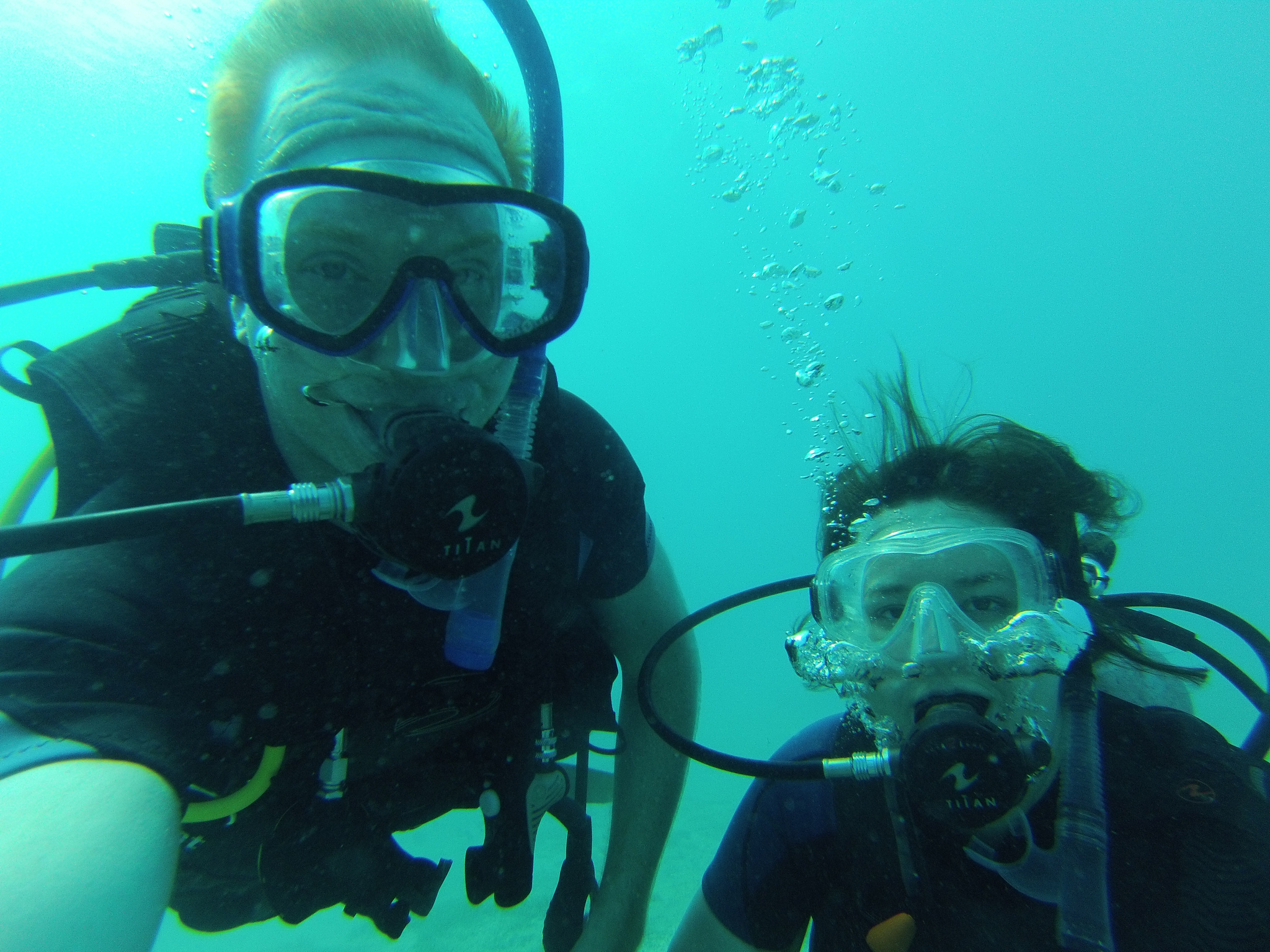
Submarines – military and commercial, manned and autonomous – need to talk to one another and with the surface world. Divers enter the waters for a variety of reasons, including research, recreational, and economic. Oil and gas companies drill for black gold at depths of beyond 5,000 feet. If you’re in the waters for an extended period of time, you need to find your bearings. And no, GPS doesn’t work underwater.
Yet, despite the money that can be made from plowing in the oceans, communicating there is ridiculously difficult and expensive.
The weird zone

Left to Right: Manu Ignatius, Shanmugam Mpl, Tian Chang Ong
Radio waves do not work underwater, so sound waves have been the de facto standard in those areas.
“Water is not like air or land. There are a lot of reflections,” explains Tian Chang Ong, Singapore-based Subnero’s business development manager and mechanical engineer.
“If there’s a temperature gradient, the sound will reflect in the middle of the water. You would hear something at the top, you won’t hear anything, and suddenly you hear it again. It gets trapped in zones in the water. Also the speed of sound changes with temperature, salinity, and pressure.”
The weird nature of the seas is causing transmitters and receivers to become slow, unreliable, and expensive. Sound travels 200,000 times slower than radio waves. Today’s technology moves a message from point A to point B in a straight line, but the temperamental waters can alter its trajectory and cause a lot of downtime. That’s for stationary things. Syncing up moving objects is even tougher.
“There’s no reliable way for drones to communicate with each other. They can’t really move properly into swarm robotics underwater yet, that’s because it’s so hard to talk over over the distance of a kilometer. If you want your robots to be a couple of meters away that’s fine. But if you want to look for something underwater, you’d want a big net,” says Shanmugam Mpl (Shan), the lead hardware engineer.
One solution would be to bring the drones to the surface, transmit a message, and submerge again. But that isn’t practical if you’re studying marine life at a depth of six kilometers.
Internet at the speed of sound





Stay updated on the go with our mobile app.
Get latest insights with smoother, more personalized experience through TIA mobile app.