 Shoeb Kagda · · 3 min read
Indonesia’s EV battery bet benefiting from regional supply chain shift: report
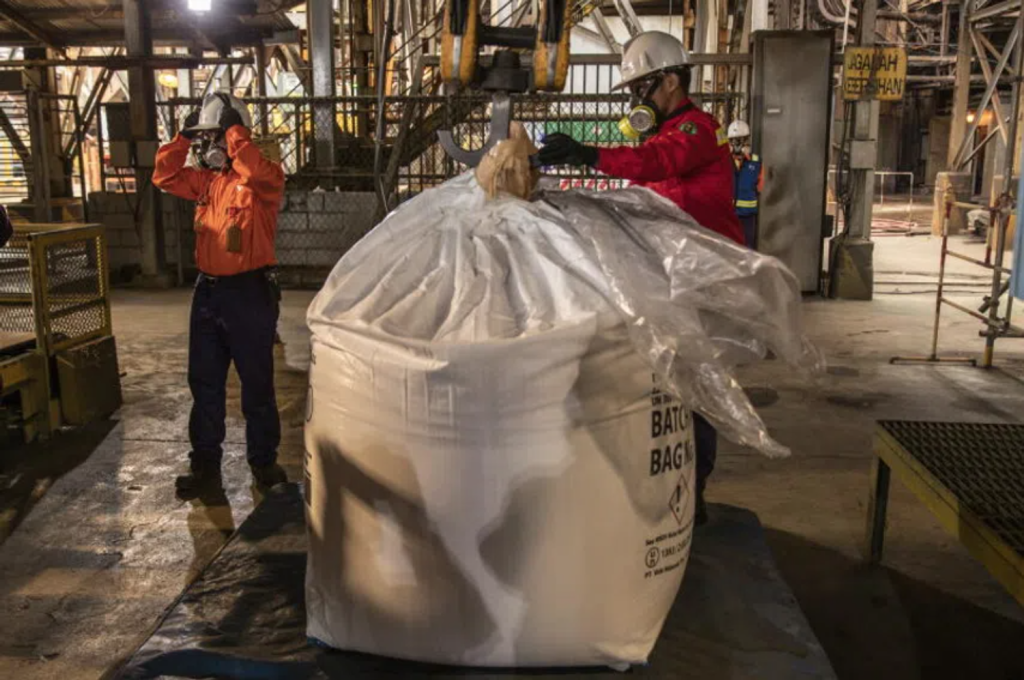
Indonesia has one of the largest deposits of nickel, a key mineral in the production of batteries for electric vehicles. / Photo credit: EPA-EFE
Indonesia’s big bet on manufacturing batteries for electric vehicles (EVs) is paying off as the country sees a boom in foreign direct investments in its manufacturing sector.
According to a recent report by property and management consulting firm JLL, foreign direct investment (FDI) in the industry has grown from less than US$2 billion in 2011 to over US$20 billion in 2023. This was driven by tax breaks and government incentives for battery-based EVs as well as the country allowing 100% foreign ownership caused FDI initiatives.
Indonesia has one of the largest deposits of nickel, a key mineral in the production of batteries for EVs, and the government has rolled out numerous incentives to achieve its ambition of becoming a major global player in the EV supply chain.
“EVs and battery supply chain are putting the spotlight on Indonesia,” said Michael Ignatiadis, head of manufacturing strategy for Asia Pacific at JLL. He added: “From mining to recycling, this is a big driver of investments into Indonesia.”
He pointed out, however, that the sector is still dynamic. “A rebalancing of the global manufacturing footprint is shifting the supply chain from China to Southeast Asia, but I foresee this could change quickly if Europe collaborates with Chinese EV companies.”
For the time being, Indonesia – along with its neighbors Vietnam, Thailand, the Philippines, Malaysia, and Singapore (as well as India) – stands to gain from this rebalancing.
The JLL report notes that the driving force behind this trend is not only the need for supply chain diversification but also the strong fundamentals of the region – this includes a large population and labor pool as well as favorable costs and incentives.
Recently, Chinese EV manufacturer Neta Auto agreed to make Indonesia its production base for right hand drive cars for export. Neta vice president Zhou Jiang said the company is committed to meeting the locally sourced component requirement of 60% in accordance with Indonesian regulations.
The country has ambitions to produce 600,000 EVs by 2030, said Industry Minister Agus Kartasasmita.
Apart from EVs, Chinese manufacturers are also investing in textiles, base metals, chemicals and pharmaceuticals, and food.
Indonesia recorded 204.4 trillion rupiah (S$16.9 billion) in FDI in the first quarter of 2024, said Investment Minister Bahlil Lahadalia.
“The growing FDI shows that the global investment community trusts Indonesia under the leadership of President Joko Widodo,” he told reporters earlier this year.
The ministry noted that 55% of total FDI in the first quarter went to the manufacturing sector, with infrastructure and services accounting for 31.7%.





Stay updated on the go with our mobile app.
Get latest insights with smoother, more personalized experience through TIA mobile app.













📅 Upcoming Events
22 October 2026
Payoneer x CSPN Summit 2026