Meghna Rao · · 4 min read
This startup is using emojis to disrupt online groceries in India
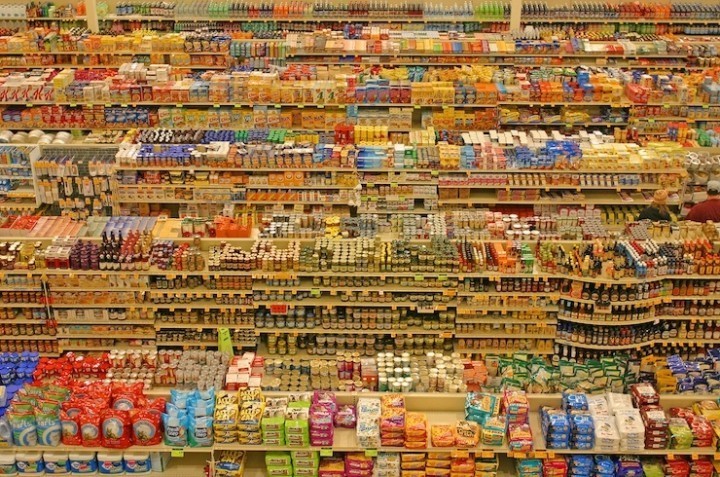
Photo credit: Wikipedia
In hindsight, the maddening rush in 2015 towards grocery delivery startups in India made a lot of sense. The beautiful – but abstract – vision of a customer swiping his finger a few times in order to have groceries summoned to his doorstep was infectious. The sector seemed ripe with potential – until the big, bad logistics monster once again reared its ugly head. Planning pickups, warehousing, and deliveries was much more difficult than people thought it would be. Would startups stock inventory in warehouses or pick them up from stores? If they did pick up from stores, how would they ensure successful partnerships that would neither overestimate their own sales or coincide with that of offline customers?
While some grocery delivery startups have managed to make the most of the chaos – Big Basket, Grofers, and ZopNow to name a few – the founder of Divum Labs, Vaideeswaran Sethuraman, explains that there’s still a long way to go. According to him, the inherently consumer-facing world of grocery delivery startups has wasted too much time focusing on its operational aspects.

Photo credit: Kerala Tourism
Logistics in India can be tough.
Perhaps this is why he waited for the crowd to clear before launching Terraa. Until now, Divum has focused on building apps and cloud-based solutions for other startups and has worked with the likes of Mahindra Tata’s Babyoye and travel portal Makemytrip. Terraa is its first foray into the product space.
So far, Terraa has managed to successfully tackle the major problems that typically afflict grocery delivery startups in India. It has tied up with Gojavas, a logistics management company with connectivity to over 300 cities. This means that aspects like pickup, drop off, and collecting cash on delivery will be entirely handled by Gojavas. “While we’ve also tied up a bank and a payment wallet, we realized that this cash economy would require handling cash on delivery seamlessly,” says Vaideeswaran.
Its first grocery stores – virtual warehouses, as Vaideeswaran calls them – are sourced through their partnership with Reliance Fresh, a chain that currently has 453 stores across the country. “In any city, we have at least 50 stores,” he explains. “Let’s say you order groceries. We already have four to eight stores to choose from to give you what you want, depending on the stock and availability.”
Gamification, social shopping, and chat
So… if not logistics or procurement, what’s left to focus on? “Marketing and bringing the best product to our consumers,” Vaideeswaran says. “Conventionally, grocery shopping has so many aspects to it,” he explains. “Families go to stores together. That’s an inherently social thing. Think of loyalty to a certain store, or the exciting feeling of getting rewards or discounts. That’s gamification. Our question was: why can’t we bring these aspects to an app?”
In my opinion, the Terraa app is the startup’s crown jewel. It’s equipped with a chat-like interface where users can select “prodicons”, or easy to load, emoticon-esque pictures of groceries that are carefully hand-drawn by Terraa’s design team.
“The only prodicons that aren’t hand drawn are the fruits and vegetables,” says Vaideeswaran. “We know that customers like to see real photos of their produce. We’ve only made an exception for the lemons.”
The chatbox acts like a shopping basket that collects and stores these prodicons. Because Terraa focuses deeply on customer data, Vaideeswaran explains that a user’s grocery experience becomes streamlined. “We use analytics and past data to figure out what you might want to order next. Every once in a while, we suggest products that the user might want next inside the chatbox.”
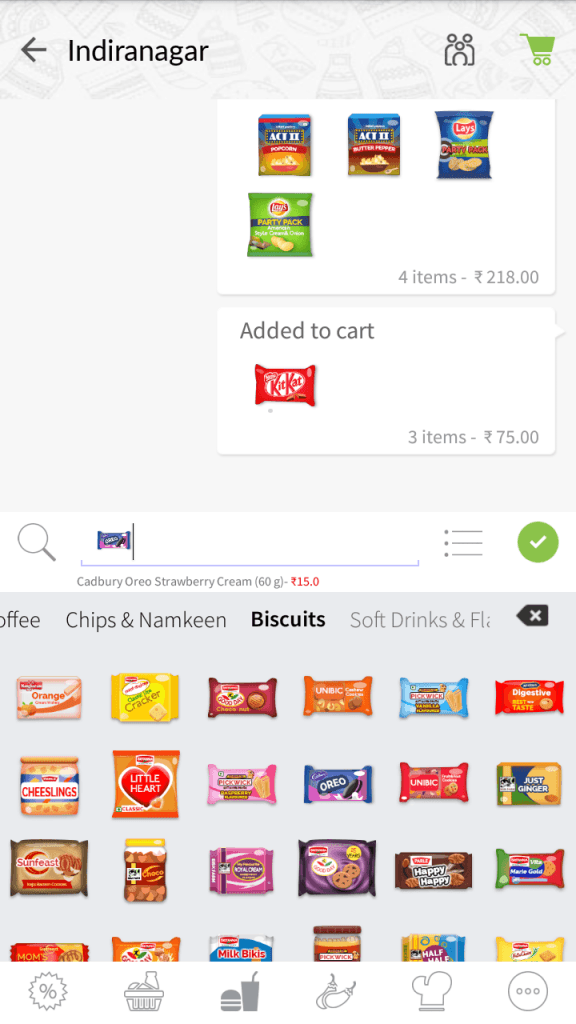
I’m using prodicons to order a balanced meal.
Keep it moving





Stay updated on the go with our mobile app.
Get latest insights with smoother, more personalized experience through TIA mobile app.