Causes of startup failures are aplenty. Product-market misfit, awful founding team breakups, spending too fast and furious, bad hiring decisions, too little branding, too much branding, lack of drive, the list goes on and on.
Most of these failures are acceptable because if you are a first-time entrepreneur and your startup dies, you gain lessons learnt through your inexperience.
But there is a class of failure that really might impact the startup negatively with far-reaching consequences – signing an unfair term sheet.

Image Source: Quickmeme
Startup founders are usually overwhelmed with joy when they finally meet people who understands them and offers them a lending hand in exchange for a term sheet. Term sheets can be anywhere between a few pages in length to being something out of a musty statute library.
Disclaimer: Not all term sheets are created equal – some term sheets are more equal than others – and this article doesn’t cover all grounds (nor am I legally trained so feel free to correct me where I am wrong – open to learn new things always). I’m simply sharing my past experiences dealing with term sheets through my 6 years of dabbling with both traditional businesses and tech startups.
My main reference material will be from YCombinator’s Simple Agreement for Future Equity (SAFE) agreement,which can be accessed here. SAFE is intended to replace convertible notes in most cases, and we think it addresses many of the problems with convertible notes while preserving their flexibility.
Check for notions of “Purchase Amount”
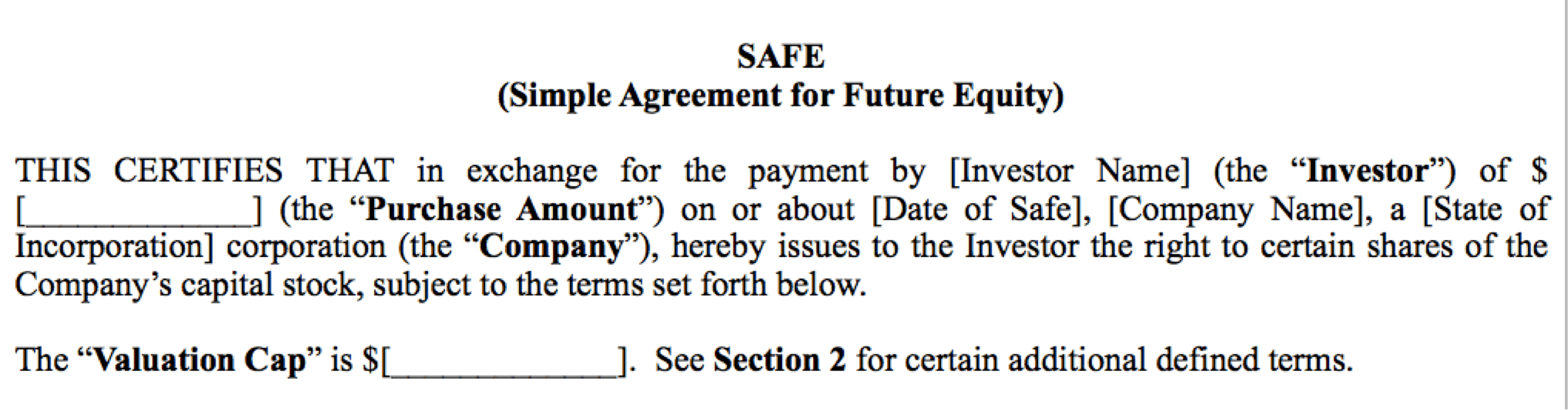
YC Safe Agreement – Cap
The above is the default YC SAFE – there are 3 more variations of it but all of them have a Purchase Amount.
I spoke to some of my YC friends back in the Valley regarding the notion of Purchase Amount and the general consensus was that Purchase Amount is money put inside the business in exchange for a certain percentage of the company. The basis of bolding on the monetary value of Purchase Amount is summarised as follows:
- Put money where mouth is. Nothing speaks more than cash in an early stage startup from an interested investor.
- Network equity and advisory should be icings rather than the core.
- If you put money into something – wouldn’t you try to use all your resources in the world to grow it as an investor? (echo-ing point 2)
- Percentage equity without cash injection is extremely rare – at most 1-2% maximum if the person is tier 1 top-notch well-known investor (subject to interpretation on this notion, but I’m inclined to think people like Jack Ma giving advise to Aisa Mijeno, but then again – a small 5 digit token in something that you believe in would probably be nothing for these group of people anyway.
#1 Tip: Prioritise first things first – Put money where the mouth is. Business is money on the table.
Check for share types – do investors or founders get paid first?
Check for fair liquidation clauses





Stay updated on the go with our mobile app.
Get latest insights with smoother, more personalized experience through TIA mobile app.