Steven Millward · · 3 min read
China zooms closer to driverless future as Baidu hits the road with autonomous car
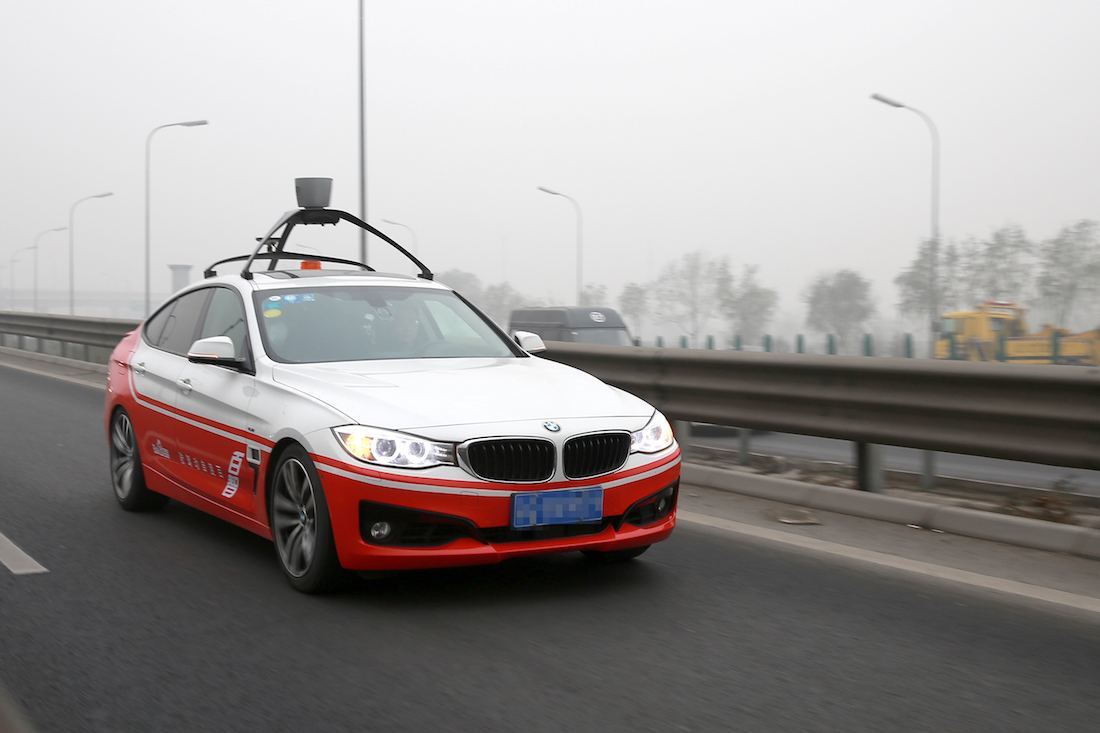
Baidu, China’s top search engine company, said last year that it had started working on driverless car technology – and today we got to see for the first time what it’s building as Baidu’s autonomous car hit the streets.
The car is a modified BMW 3 Series Gran Turismo that Baidu is now testing on public roads, using a 30-kilometer test drive route that begins and loops back to Baidu’s Beijing HQ. It includes one of the Chinese capital’s notoriously busy ring roads. The route was mapped out by “highly automated driving (HAD) maps” in readiness for the tests.
“The car demonstrated full autonomy on the entirety of the route and successfully executed driving actions including making right turns, left turns and U-turns, decelerating when detecting vehicles ahead, changing lanes, passing other cars, and merging into traffic from on-ramps and exiting from off-ramps. The car speed peaked at 100 kph during the test runs,” said Baidu in a statement.
Baidu says its autonomous car “is the first in China to have demonstrated full autonomy under mixed road conditions,” marking a major milestone for both the company and China’s evolution towards the driverless vehicle future.
“We’ve tested the car at night and day, as well as in medium rain, and – since this is Beijing – in smog of course. The models we’ll develop next year will have even more sensors, and we believe it will be able to handle all weather and road conditions,” a Baidu spokesperson tells Tech in Asia (update: added in this quote).
Flexing the AutoBrain
While Google built its own cutesy car for its self-driving program, Baidu instead renewed its friendship with BMW, which was first revealed in September last year when the Chinese tech giant said that it will work with the Munich-based automaker to develop an autonomous car specifically for the Chinese market. But that won’t see the light of day for a while.
But this autonomous car is entirely Baidu’s work, dubbed the Baidu AutoBrain project. It stems from the firm’s augmented reality-focused Institute of Deep Learning.
“On this project [BMW] provided the two vehicles as well as the interface. They also provided us with a trained driver, which is important for situations when the system hands off from autonomous back to human control,” explains a Baidu representative to Tech in Asia.
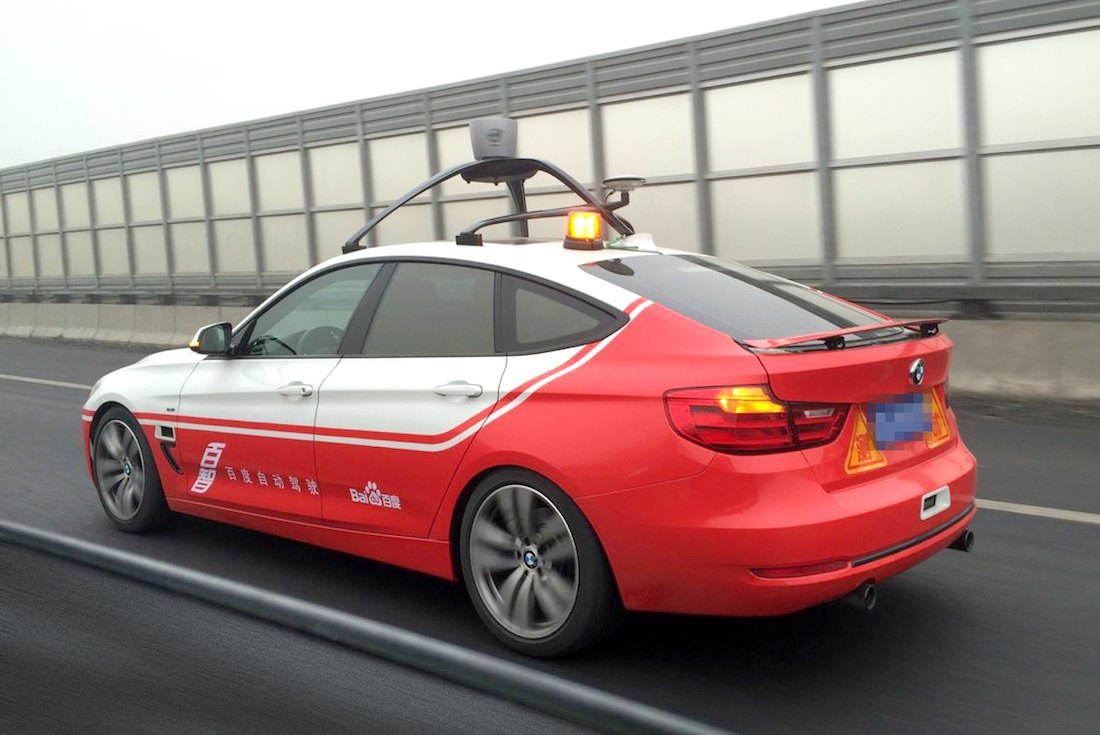
A large part of Baidu AutoBrain is mapping for HAD vehicles. “Baidu’s self-developed HAD maps record 3D road data to within a few centimeters of accuracy of vehicle positioning. With Baidu’s leading object recognition and environment perception technology, the car can detect, recognize, and follow other vehicles with high accuracy; recognize road lanes; and accurately gauge distance and velocity,” explains the statement.
Baidu eventually sees that other vehicles can help build its mapping for driverless cars. “For example, a bus that runs the same fixed route will be able to fit a very reliable model for that route, training computer vision and other deep learning systems through repetition, and further expanding the number of routes mapped by HAD mapping,” the company says.
“Within five to ten years, the majority of China’s roadways could be mapped with HAD mapping.”





Stay updated on the go with our mobile app.
Get latest insights with smoother, more personalized experience through TIA mobile app.