Derryn Wong · · 3 min read
Singapore to trial battery swapping, mobile charging for electric heavy goods vehicles
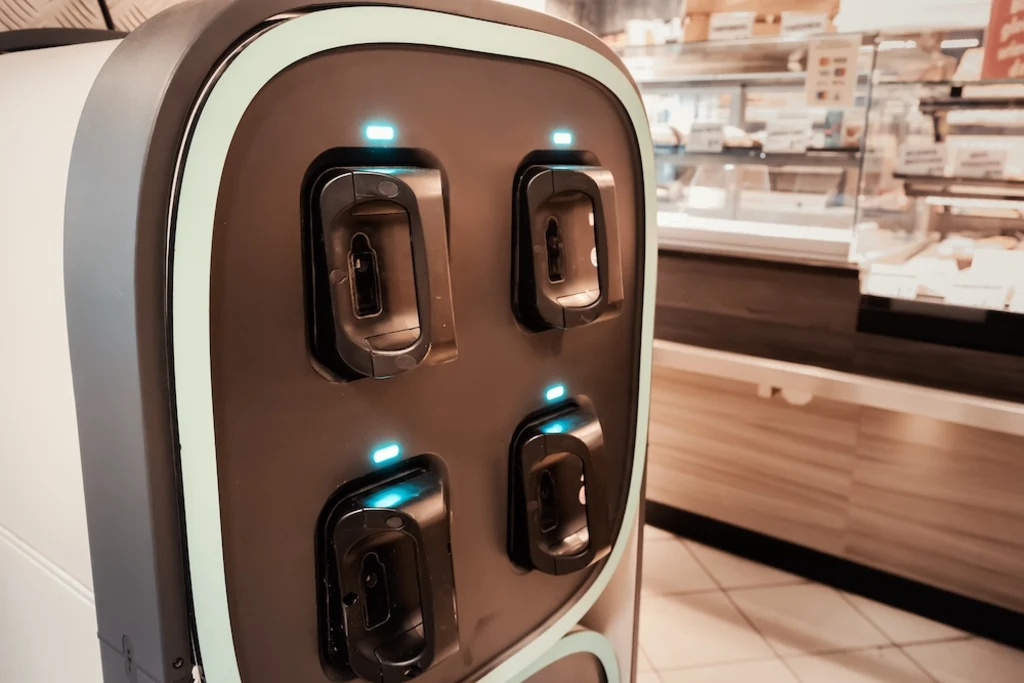
A battery-swapping station for an electric scooter / Photo credit: Shutterstock
Singapore will begin trials for battery charging and swapping and mobile charging systems for electric heavy goods vehicles (e-HGVs) in the second half of 2024, said the Land Transport Authority (LTA) on Tuesday.
“Insights from these trials will allow LTA to understand technical, operational, and safety requirements of such technologies and to consider incorporating them in upcoming Technical Reference 25 review to improve our electric vehicle charging infrastructure in Singapore,” Amy Khor, senior minister of state for sustainability and the environment, as well as transport, said in a social media post.
Technical Reference 25 (TR25) is Singapore’s national EV charging standard established in 2010. All new charging technologies – such as battery swapping and mobile charging – would need to be ratified in TR25 before widespread or commercial adoption.
There will be four sandbox trials and they will run for four years.
Port operator PSA Corporation will operate one battery-charging and battery-swapping station at its Pasir Panjang port terminal, serving six terminal electric prime movers and two on-road electric inter-gateway hauliers.
A consortium formed by Strides Frontiers – a business arm of public transport operator SMRT – and EcoSwift will operate a battery-charging and battery-swapping station in Tuas. The consortium will partner with local logistics firms to provide e-HGV battery-swapping services for up to 10 vehicles.
Vehicles and a battery-swapping station from Chinese commercial vehicle manufacturer Sany, which has appointed EcoSwift as its official distributor in Singapore, will be used in the trial.
Two entities that already provide mobile EV charging services to passenger EVs will also participate in the trial.
Power-Up Tech will provide up to 10 sets of mobile charging equipment with one charger each, to support the charging of electric vehicles including vans, trucks, and buses.
Beecharge Innovation Group will deploy up to eight sets of mobile charging equipment to support shared EV providers and commercial fleet operators.
Battery swapping involves EVs changing to a fully charged battery at a swapping station, which takes far less time than conventional plug-in charging.
In mobile charging, a charger is brought to a vehicle for on-the-spot charging.
“E-HGVs are very large and require larger batteries which take a longer time to charge. Mobile charging for e-HGVs could help companies reduce downtime, especially if they face infrastructure constraints or don’t have enough space or access to chargers,” said Michael Chin, CEO of Power-Up Tech.





Stay updated on the go with our mobile app.
Get latest insights with smoother, more personalized experience through TIA mobile app.