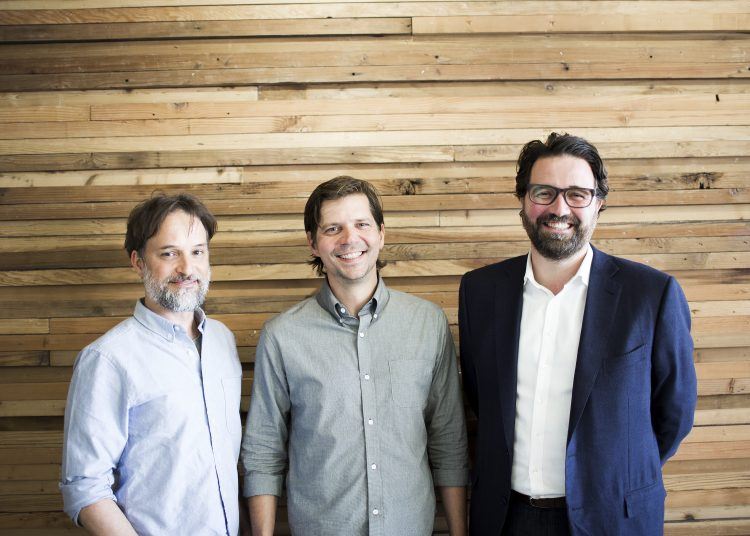
Zendesk’s founding team (left to right): Alexander Aghassipour, Morten Primdahl, and Mikkel Svane. Photo credit: Zendesk.
In the media world, there’s a tendency to talk about startups and big corporates in David and Goliath rhetoric (we’re guilty of it too). Startups are lean, flexible, and bold; big corporates are clumsy and risk-averse. But what happens when David scales into Goliath?
“Everything is a pain,” says Mikkel Svane, the CEO of Zendesk, a US-based customer service company. “When you’re growing so quickly, you have to rethink a lot of things all the time and you have to start over in many ways.”
Founded nine years ago by three Danes – Mikkel Svane, Morten Primdahl, and Alexander Aghassipour – Zendesk is no longer the scrappy, bootstrapped startup that it was in 2007. The company went public in 2014 and is today valued at US$2 billion. It has 1,600 employees scattered across the globe and competes with both traditional players like Salesforce, as well as startups like India’s Freshdesk.
But the scaling process hasn’t been pretty.
In expanding its business, the company has experienced various growing pains, from increasing bureaucracy to an entire rebranding of the company. And the pain hasn’t stopped. Nine years into Zendesk, Mikkel still doesn’t feel like the company is on stable ground.
“Right now, [there’s] just a ton of stuff we have to figure out – where we are, where we want to go,” he says.
Keep your company culture simple
Maintaining company culture becomes all the more critical once your teams are spread across the globe. At the same time, you don’t want to be too cheesy, says Mikkel.
“When I come out to a company and I see they have the ten company values written on the wall, I’m just like, god,” he says, laughing. “But you need to find a way to have a narrative for your company.”
Mikkel estimates that about half of Zendesk’s workforce – roughly 800 employees – have been with the company for less than a year. That means a lot of bright-eyed recruits who know nothing about the company’s history and culture. Sometimes word-of-mouth rumors about how the company conducts business or what Zendesk’s culture entails can get out of control.
“Suddenly you have these people coming to you and saying: but this is how we do business,” says Mikkel. “And I’m like, why? Who says that? Where does that come from?”
To maintain a consistent company culture across different locales and generations, Zendesk tries to keep things simple. The company’s “three key values” – transparency, responsiveness, and empowerment – help define not only Zendesk’s culture, but also its attitude towards product development and customer service.
“Instead of creating a very elaborate story, we try to tie it back to the key values,” he explains.
In addition, Mikkel’s role as the company’s CEO since the beginning has helped keep the company together. There’s value in having a founder as the CEO, he says. In 2014, Mikkel published a book, Startupland: How Three Guys Risked Everything to Turn an Idea into a Global Business, documenting the origins and early days of the company. It wasn’t meant to be an official record of the company by any means – “that book could be told in ten different ways” – but now it is.
Rebrand carefully – and only if you have to
Beware of policy bloat





Stay updated on the go with our mobile app.
Get latest insights with smoother, more personalized experience through TIA mobile app.