- Insights This article was written by a TIA community member. Insights pieces undergo the same rigorous editorial process that newsroom-produced articles have.
 Jay Kim · · 7 min read
Serial entrepreneur, best-selling author on how to ‘choose yourself’
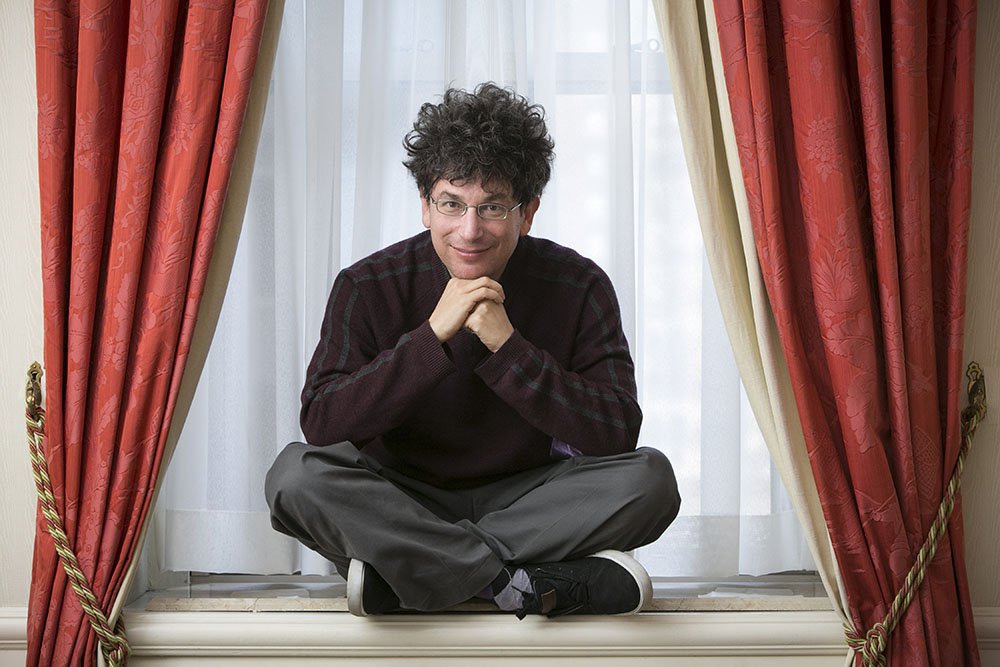
This article is part of Tech in Asia’s partnership with The Jay Kim Show where we publish the revised transcripts from the show’s podcast interviews with top entrepreneurs. This is heavily revised from the original show transcripts. For the full interview, go here.
James Altucher is a brilliant entrepreneur. He used to work at HBO and then he got into tech, starting a company that designed websites for the likes of American Express, Con Edison, Time Warner, and even the Wu-Tang Clan. After that, he became a hedge fund manager because he’s a very savvy investor. Along the way, he also became a best-selling author, a famous podcaster, and a highly sought after public speaker. His last book, Choose Yourself, was a Wall Street Journal bestseller, and that’s only because he decided to self-publish and not go the traditional publishing route. That book alone has sold more than half a million copies to date. USA Today named the book among the 12 best business books of all time.
I know you guys are going to get a ton of value out of this.
Can you give us an introduction to who you are and how you became a successful entrepreneur?
“I’ve been involved in a lot of different businesses. I mean I’ve gone all over the place—probably more than most people should. I started close to 20 companies, most of them have failed abysmally. I’ve made money, I’ve lost money. […] I’ve written 18 books. I have my own podcast [where] I’ve had people like Mark Cuban, Peter Thiel, Arianna Huffington—all sorts of people on my podcast. Also, I’m a very active investor.”
Your last book, Choose Yourself, was a great one. Could you tell us what self-publishing it was like?
“Choose Yourself was interesting because I kept feeling for decades—and I’m not that old—[that] if I want to get something done, I have to get approval or permission from this boss or this publisher or this TV person or this investor. I always was trying to get permission from people.
“With Choose Yourself, I really wanted to figure out all the ways in which I could just choose myself without having to rely on other people. You mentioned the book was self-published. I did that on purpose. I’ve been published by regular publishers. I could’ve published Choose Yourself with regular publishers, but then I wouldn’t be choosing myself. When you write a book and you want to get published, if you go the traditional route, you need an editorial assistant; you need an editor; you need a marketing department; you need a publisher; you need the bookstore purchasers. They all have to say yes. […] They all have to approve. They all have to choose you.
“Now when you self-publish, you can write the book, you can hire someone to edit the book, you can hire someone to design the cover, you can hire someone to do the design or you can do it yourself. […] You didn’t need any permission at all to do these.
“Now it’s not just about knowing the techniques. You also have to say, ‘Hey, I don’t need someone else to validate me.’ We very much […] want other people to validate us and say, ‘James is great, so I’m going to publish his book.’ We feel good when that happens, but we also [have to] work on [ourselves] […] psychologically and emotionally and with your health and everything. It’s like you’re in training to choose yourself. That’s important as well.”
A lot of people are living someone else’s dream as opposed to choosing themselves.
“There’s a huge element of what I call corporatism in Asia and in America too, but it’s dying down more in America, where it’s not necessarily a capitalist society—it’s a corporatist society, where big corporations kind of rule your day-to-day decision making. That’s kind of dying out in America. In fact, most of the jobs created in the past few years have been part-time or freelance jobs or lifestyle entrepreneur jobs. In Asia, I still think there’s a very big emphasis on the corporatist culture. That’s still very influential.
“Again, you can be an employee and still choose yourself. It really all boils down to who you […] let choose your own life vision. Are you going to let your boss do it? Are you going to do it? Once you take more and more control over your own life vision and your life purpose, then things start to change. Whether you’re an employee or an entrepreneur or whatever, things change. It’s not necessarily about just being an entrepreneur.”
I love your lesson on 10 ideas a day.
“If you don’t exercise your idea muscle or your creativity muscle every day, it’s going to atrophy just like any other muscle. I always encourage people to write down 10 ideas a day. Write down 10 bad ideas a day; they don’t have to be good ideas [and] you don’t have to use them. You don’t have to look at them ever again. Just do it. Within six months, you’ll be an idea machine. It works. You’ll start being much more creative, whether you’re an employee or an entrepreneur.
“Now if you’re a creative employee, you might say, ‘Oh my boss crushes all my ideas. He never listens to me anyway.’ Well, it’s just not going to be true. You’ll suddenly start talking to people in other divisions or other companies. […] Magic things happen when you start choosing yourself. Again, whether you’re an employee or an entrepreneur.”
People want to take the safe route
“There are two ironies. The first [one] is it’s not really safe anymore. The world is changing. Just one industry that’s about to change hugely is the auto industry. Once everybody’s driving around in self-driving cars, 90 percent of the auto industry’s going to disappear. Those jobs aren’t going anywhere. They’re not being replaced.
One of the chapters [from your book] was on Elon Musk. You basically said being an entrepreneur sucks.
At what point did you realize that it’s OK to be honest as opposed to having a front?





Stay updated on the go with our mobile app.
Get latest insights with smoother, more personalized experience through TIA mobile app.