
For years now, Xiaomi has been eyeing the US market. Many thought the company was about to take the plunge when it hired Hugo Barra, formerly Android product spokesperson at Google, back in 2013. But three years later, the company still has only a tiny presence in the US. And with growth not looking great on the home front, outsiders are increasingly wondering whether the US might be the answer to Xiaomi’s prayers.
It might be, but not in the way many people are expecting.
Why it won’t be smartphones
Xiaomi is going to launch a smartphone in the US for the first time this fall (probably October). I’ve already written quite a bit about what it would take for Xiaomi to achieve success in the US smartphone market, and what that success might look like. But long story short, even in the most optimistic scenarios, it’s hard to imagine Xiaomi doing much more than carving out a small niche as an Android bit-player in the US. The demand for low-cost smartphones just isn’t that high, and even among consumers looking to cut costs, Xiaomi has no brand recognition and faces a lot of stiff competition (including from some of the same Chinese companies hurting its smartphone sales numbers back in China).
Frankly, Xiaomi getting a big slice of the US market in the next few years is very unlikely.
That’s not to say Xiaomi won’t make money selling phones in the US, but let’s put things into perspective: Apple and Samsung are the only companies that have double-digit shares of the US smartphone market, which they collectively control over 70 percent of. So even if Xiaomi was somehow able to fight its way into third place (which is pretty improbable), it would still be looking at less than a ten percent share of the US market. Ten percent of a US$55 billion market would be nothing to sneeze at, of course. But Xiaomi’s very unlikely to get to ten percent in the US anytime soon. Even four or five percent seems like a very optimistic short term goal.
To understand what a Xiaomi success in the US might look like, it’s important to understand what the company has lost in China. Going by Statista numbers for overall market value, and comparing early 2015 and mid-2016 Xiaomi data, Xiaomi’s 12.5 percent share of the market in 2015 was worth about US$14.5 billion, whereas its 9.5 percent share of the 2016 market is worth about US$12.5 billion. So even if we don’t account for the fact that China’s smartphone market grew significantly over that time, Xiaomi would still need to grab more than US$2 billion (or about 4 percent) of the US smartphone market to make up for that hole. And frankly, Xiaomi getting that big a slice of the US market in the next few years is very unlikely.
What else has Xiaomi got?
If smartphones aren’t going to save Xiaomi, then the company needs to look at what else it has in its arsenal. The good news is that there’s good news there… if the company can actually get itself up and running quickly in the US.
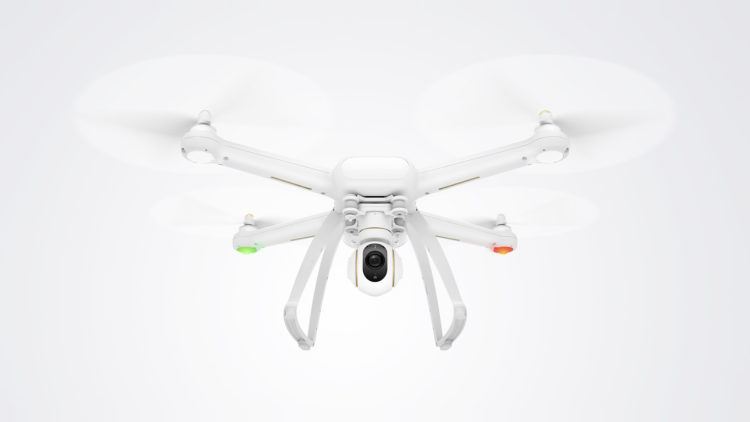
Americans may not be particularly interested in low-cost smartphones, but many are interested in saving a bit of money when it comes to less essential gadgets like action cameras, drones, and smart home systems. Xiaomi already makes all of those things. They’re pretty good quality, and they cost less than what major players in the US are charging. This could be a major opportunity.
The Yi camera’s biggest problem is that most of its American target demo has never heard of it.
Consider, for example, the American action camera market. This is dominated by GoPro, a US$2.5 billion company. Xiaomi already has a competitor with its Yi 4K camera, which even Wired grudgingly admitted is “the better buy for most consumers” when compared with the equivalent GoPro. The Yi 4K is available in the US on Amazon, but it doesn’t have anything like GoPro’s presence. You’ll never find it in a retail store (whereas the GoPro and GoPro accessories are available in virtually every outdoor equipment and sports shop in the US). Heck, you won’t even find it in Xiaomi‘s US store. If Xiaomi could make the Yi camera more visible and up its marketing game in action sports circles, it’s not at all inconceivable that it might be able to take a significant chunk of GoPro’s market, as well as stealing away market share from the other minor players in the action cam market.
Unlike its smartphones, which simply aren’t a good fit for the US market’s demands, the Yi camera’s biggest problem is simply that most of its American target demo has never even heard of it.
(And yes, the Yi camera is actually produced by a separate company, not Xiaomi itself. It’s one of what Xiaomi calls its “ecosystem companies.” Xiaomi may need to lean heavily on these to grab up market share in the US, and it wouldn’t be unwise to acquire several of them wholesale).
TL;DR





Stay updated on the go with our mobile app.
Get latest insights with smoother, more personalized experience through TIA mobile app.