 Stefanie Yeo · · 7 min read
The wonders of holistic identity management: Sarah’s journey

Meet Sarah, a web developer at a multinational tech firm called Company X. She likes playing puzzle games, enjoys discovering interesting new lifestyle brands online, and runs a YouTube channel where she does coding tutorials and livestreams.
Just like you and me, she has many different user accounts across the internet services she uses – social media, online shopping, food delivery, ride-hailing, video streaming, gaming… the list goes on.

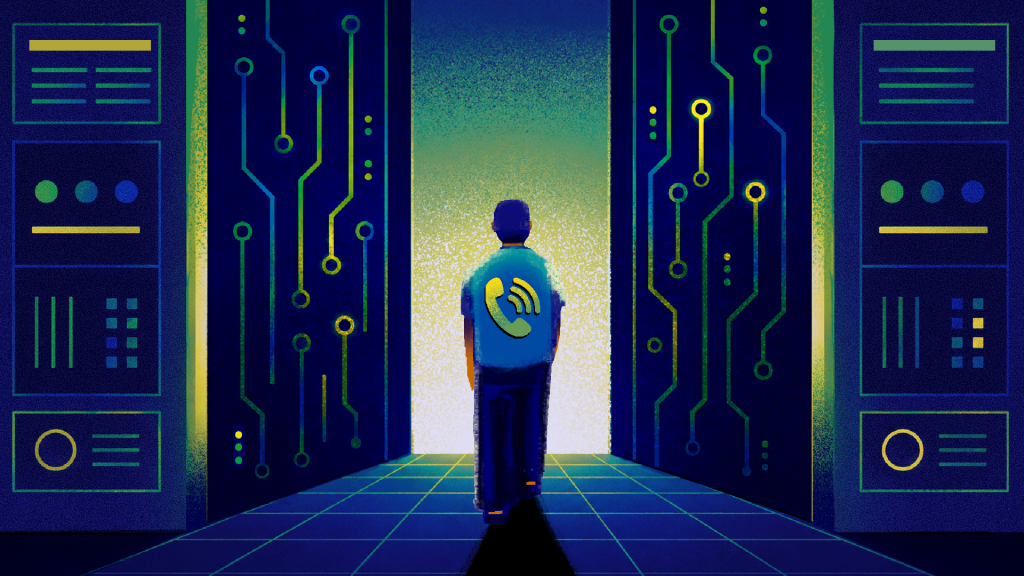
Meet Sarah / Image generated with Midjourney
Each account represents one fragment of her “identity” online, and she has to remember the right username and password combinations in order to log in and manage these different identities. It’s also how a business trusts that the person signing in is her, and not someone else.
However, this traditional means of identity management isn’t the best.
“The digital world is trying to acquire trust in transactions through the exchange and validation of passwords,” says Priyanka Sharma, solution architect lead at Affinidi, a technology firm offering data and identity management solutions.
“Where passwords are insufficient, multifactor authentication has come up as a solution, but it’s just using additional factors like something you have, such as a trusted device. We are inherently missing the magic of ‘identifying’ someone in order to trust them digitally.”
This extends beyond logging in. Establishing trust online is hard in general – how does Sarah know that someone online is really the data scientist at a particular company that they claim to be?
But it doesn’t have to be this way. A new concept called holistic identity management aims to change how people manage their identities. Users can collect their fragmented online identities and credentials and securely store them in a “vault,” which they can share across different systems and platforms.
How would this play out in a day in Sarah’s life? Let’s have a look.
The life of Sarah
During Sarah’s time as a developer for Company X, she gained certifications in various programming languages. She also won Developer of the Year for leading a novel software project and has several patents under her belt.
After several years in the workforce, she wants to apply for a scholarship to pursue a master’s degree. Instead of cobbling together the disparate certificates and awards she’s gotten over the years, she can simply share her tamper-evident online portfolio – where her credentials have been stored – with the university to show her skills and why she’s deserving of a scholarship.
“When you collect these credentials, you may not know yet where or how you will use them, but you can store them safely and have it ready for use when needed,” explains Giriraj Daga, director of solutions architecture at Affinidi.

Giriraj Daga, director of solutions architecture at Affinidi / Photo credit: Affinidi
“With holistic identity management, you can have credentials issued from diverse authoritative and verified sources that describe something about you. You can pick out these different credentials, in the same way you pick out clothes from your closet, and put them together to achieve a particular goal while only sharing what you want to share.”
This concept also applies to shopping for groceries. Let’s say Sarah wants to try out a new online store that specializes in cruelty-free cleaning products – if she wants personalized recommendations, she has to fill in questionnaires about her shopping and cleaning habits, which would be tedious and even intrusive.
However, with holistic identity management, consent-based sharing is possible. Sarah can choose to share specific elements of her identity, such as what cleaning products she’s purchased online in the last 12 months, enabling the store to make recommendations immediately.
This “portability” of Sarah’s online behavior enriches her experience, as she can get the personalization she wants without exposing herself to unnecessary sales pitches or feeling like she has to divulge too much information. This method ensures that she is engaged by the company in a relevant way.
The benefits of holistic identity management get pushed even further when Sarah’s professional and personal lives come together.
When a developer platform asks for help to tackle a problem with an app it’s building, she can provide suggestions and prove her expertise by agreeing to share some aspects of her identity – like her YouTube channel and her employment status at Company X. This adds credibility to her responses and elevates her as an influencer within the developer community.
She can even add feedback from the developer platform to her professional portfolio, enhancing her reputation with bite-sized credentials. This way, her holistic skills are displayed and her position as a subject matter expert is established, making her the prime candidate for a new internal training program that Company X is rolling out and creating a kind of virtuous cycle with her identity.

Photo credit: Matej Kastelic / Shutterstock
“In holistic identity management, you can have different personas based on the different information that you have – your professional persona, financial persona, gaming persona, etc.,” says Daga. “Your identity is contextual, but it is all still a part of you, and you should be able to bring it with you and use it as needed.
Identity is “multiple aspects about yourself that you bring together for a transaction,” he says. For example, one’s personal reputation or professional credentials and membership in an organization could allow access to a client’s infrastructure.
In his view, holistic identity management would bridge the gap between the physical and digital world, providing seamless contextual experiences. Imagine if Sarah could walk into a pet store, and then scan a QR code and agree to share some information about herself with the shop, like the fact that she has a pet dog with arthritis and that it prefers beef-based treats, without needing to share her contact information. She could then be offered recommendations that meet her dog’s needs, resulting in a positive offline experience.

Image generated with Midjourney.
“Consumers will have more flexibility to engage with brands and express their intents, and they can seamlessly transition from physical to digital world and vice versa. That way, there will be more trusted relationships in this digital-powered ecosystem,” Daga adds.
Putting the pieces together
A world where our digital identities are all unified in one place and can be accessed freely and shared the way we want to may seem like a distant dream. But companies like Affinidi are working to make it a reality.
“We’re building a suite of products for customers to easily collect, store, and share data about themselves and for businesses to easily request this data,” explains Daga. “It’s contextual data sharing – also known as zero-party data – for all transactions, reimagining both physical and digital customer experiences.”
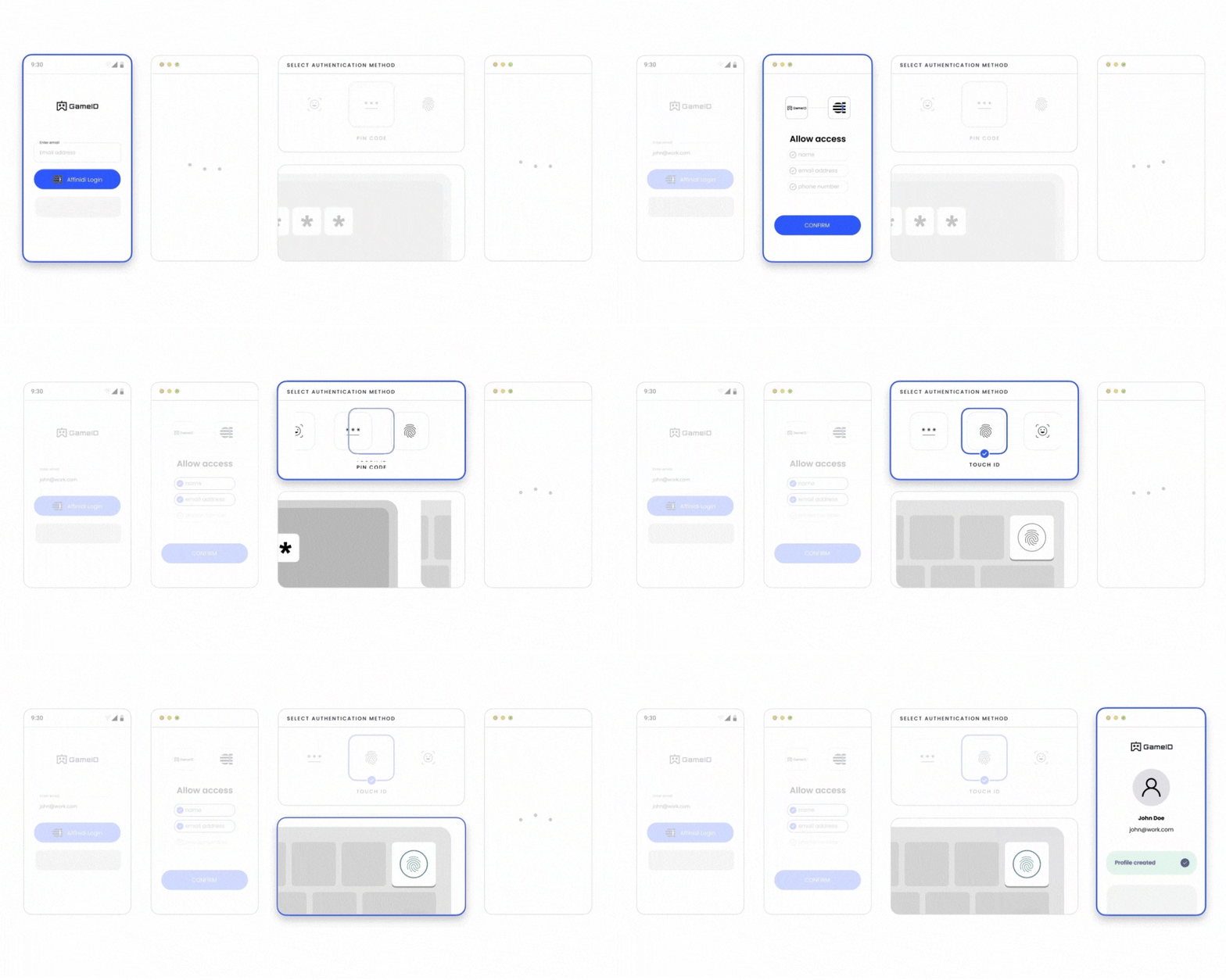
Known as the Affinidi Trust Network, this suite comprises solutions laying the foundations for holistic identity management. These include services such as the Affinidi Vault; which allows users to discover, store, collect, share, and even monetize their data; Affinidi Login, which enables passwordless authentication; and Affinidi Concierge, a private AI personal assistant that helps users optimize how they use their stored data.
Using technology such as zero-knowledge proofs, the network also has systems in place to ensure the data shared is accurate and gives individuals the means to provide consent for data sharing while verifying the identities of all parties involved.
To a better future
Holistic identity management certainly seems ideal for users like Sarah, but actually implementing the concept can be daunting for businesses. Daga recommends that they start with something simple, such as enabling passwordless logins.
“Passwordless is resonating a lot with consumers and businesses, and it’s better than passwords – it is one more choice given to users without adding too much cognitive load,” he shares. “It also improves user experience and reduces onboarding friction.”
It’s still early days for holistic identity management, but Daga and Sharma are both positive on the benefits that it can bring to companies and customers alike.
“Users can consent to share their identity with service providers in lieu of better services; and monetize their personal data in a data-driven digital economy,” says Sharma
“Businesses can harness this consent-based personal data to create hyper-personalized experiences in order to stand out in a crowded marketplace, while being on the right side of data protection laws. Holistic identity enables personalization in a way that makes things better for all parties involved.”
Sounds like a win for Sarah, and for the rest of us.
Affinidi is a technology company dedicated to changing data ownership for good. It envisions a world where everyone can effortlessly and securely control, manage, and extract value from their data.
Learn more about Affinidi and its mission on its website.
This content was produced by Tech in Asia Studios, which connects brands with Asia’s tech community. Learn more about partnering with Tech in Asia Studios.
Stay updated on the go with our mobile app.
Get latest insights with smoother, more personalized experience through TIA mobile app.
Recommended reads
 Life’s a game, and AI agents are Animoca’s new play
 Indonesian AI startup goes global
 Forrest Li on scaling Sea, building smarter bots, and founder grit
 An AI assistant that joins sales calls and scores team skills
 Beyond the check: Why VCs need more than capital
 SGX’s CEO says it doesn’t need a unicorn to win
 SMEs want AI too, but not the kind Big Tech is selling
 Oatside’s alt-milk rise hits a profitable gear
 Alibaba’s financial health in 12 charts
 Asia’s telcos bundle AI into mobile plans. Will it pay off?





Editing by Winston Zhang and Dhania Putri Sarahtika
(And yes, we’re serious about ethics and transparency. More information here.)






