 Glenn Kaonang · · 9 min read
What if AI knew you better than you?
Welcome to The Prompt, your Monday dive into the world of AI that puts Asia front and center. From Big Tech’s power players to the region’s scrappy disruptors, we cover it all. Want full access to all our AI reporting? Subscribe to us here.
Hello reader,
US-based AI startup Aaru has a pitch that sparks instant skepticism. It says it can simulate human behavior better than surveys or focus groups, without interviewing anyone in the process.
AI simulation has largely been used to model physical systems with clearer constraints, such as robots and cars. Aaru is trying to model people, which have always been inconsistent.
Still, Aaru deserves some attention, not just for the audacity of the claim but for the logic behind it. Its case rests on actions rather than stated intentions: what people bought, clicked, watched, or voted for, rather than what they told a researcher they might do.

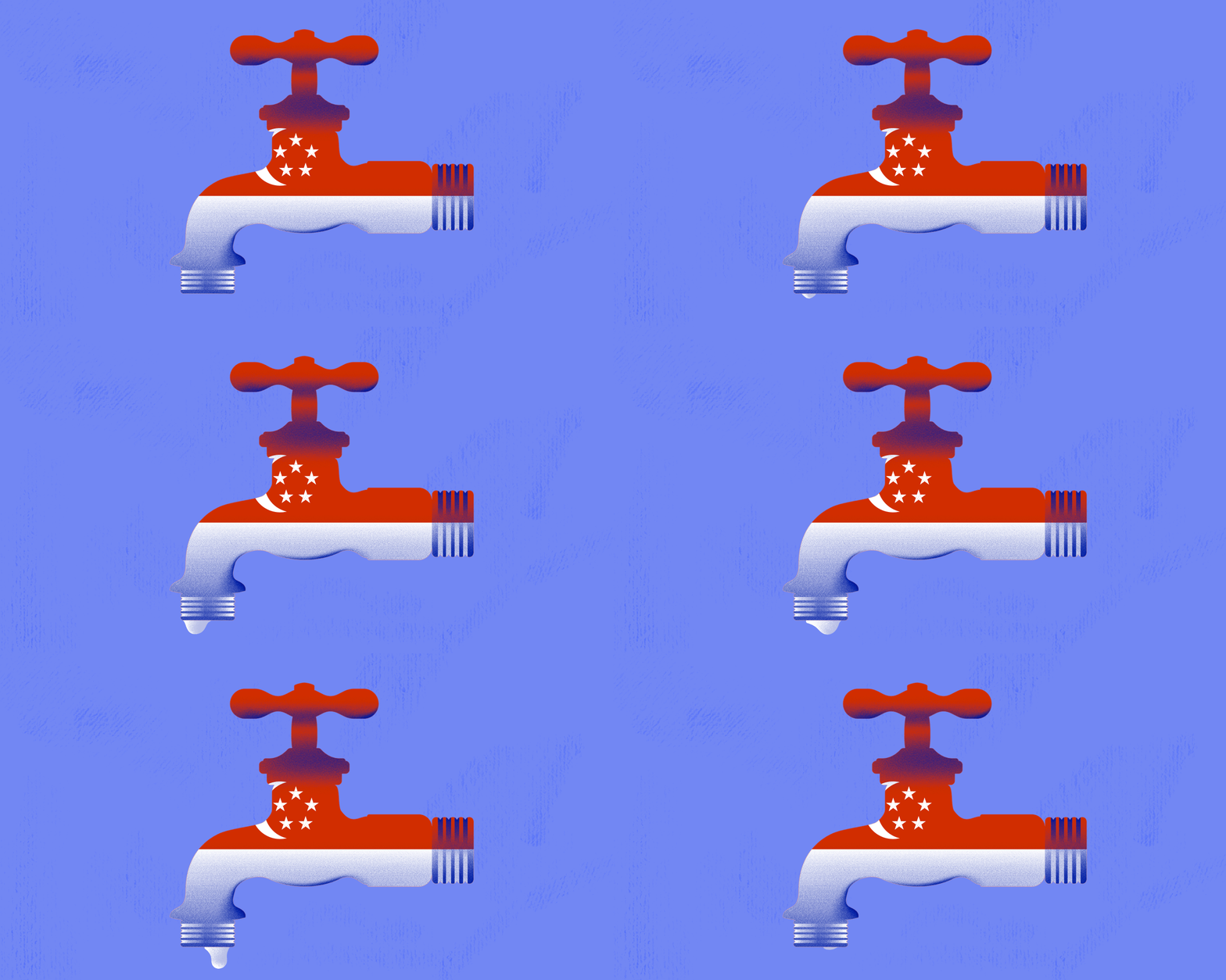
Image credit: Made by Tech in Asia with the help of AI
The company says this approach can work even in more conservative markets across Asia, where AI-generated respondents remain a largely unfamiliar concept. My editor Huong has more about Aaru from her conversation with its co-founder, Ned Koh, in this week’s Founder Focus.
That emphasis on execution over aspiration was also a recurring theme at the second edition of the Asia Economic Summit (AES) held by Tech in Asia in Jakarta last week.
AI was still the dominant topic, but the conversation has matured. Most people have stopped debating grand ambitions and started focusing on what they can actually do with the tech.
This week’s featured AI stories follow the same logic. Southeast Asia has land, power, and permitting speed, but our latest insights piece shows that none of that is bankable without real customers and deals made in advance.
My colleague Scott also has an interesting report about how Cerebras may technically have better chips than Nvidia. But it can’t escape the fact that export controls determine who actually gets access to those chips.
The pressure isn’t limited to chipmakers. Accenture’s recent revenue forecast cut sent Indian IT stocks lower, adding to growing anxiety over what AI could do to the tech services industry.
In China, AI labs appear to be responding to a different constraint. As compute becomes harder to come by, companies are narrowing their focus, carving out distinct niches instead of competing across every frontier at once. More on that shift below.
Glenn Kaonang, journalist
WHAT WE THINK
TOP AI READS FROM OUR DESK
FOUNDER FOCUS





Stay updated on the go with our mobile app.
Get latest insights with smoother, more personalized experience through TIA mobile app.









📅 Upcoming Events
22 October 2026
Payoneer x CSPN Summit 2026