 Jum Balea · · 8 min read
Winners and losers in Amazon’s entry into Southeast Asia
The Amazon logo on its office building in Santa Clara, California. Photo credit: wolterk / 123RF.
After a long wait, Amazon has finally landed in Singapore, with this week’s launch of its two-hour delivery service Prime Now.
While it’s tight-lipped about any plans to expand beyond the city-state, the rollout is believed to be just a first foray – a prelude to big push into Southeast Asia, a market of over 600 million consumers.
Currently, online shopping accounts for less than 5 percent of all retail in this region, but it’s projected to multiply on the back of surging smartphone use and a rising middle class. A 2016 report by Google and Singapore’s sovereign fund Temasek pegs ecommerce spend in the region at US$88 billion by 2025, from only US$5.5 billion in 2015.
Amazon’s entry has taken Southeast Asia’s ecommerce wars to a whole new level. There will be winners and casualties. Here’s a list based on the insights we’ve gathered from people closely watching this space.
Winners: consumers, merchants, online shopping
Consumers benefit whenever new players join the fight. It means more choices, better quality, prices and services, and more attractive promotions.
“The standard of fulfillment will be higher – especially with Amazon’s Prime features,” said Mevira Munindra, research manager at IDC Indonesia, to Tech in Asia.
Third-party merchants also stand to gain if Amazon introduces its marketplace.
“Amazon will need to find partners with local knowledge, offer incentives to persuade them to join its platforms and invest in capturing market share. One way it may be able to lure Asian vendors is by offering them easier access to Western markets where it has a strong footing and established infrastructure,” said Thompson Teo, an associate professor at National University of Singapore Business School, in a column on The Straits Times.
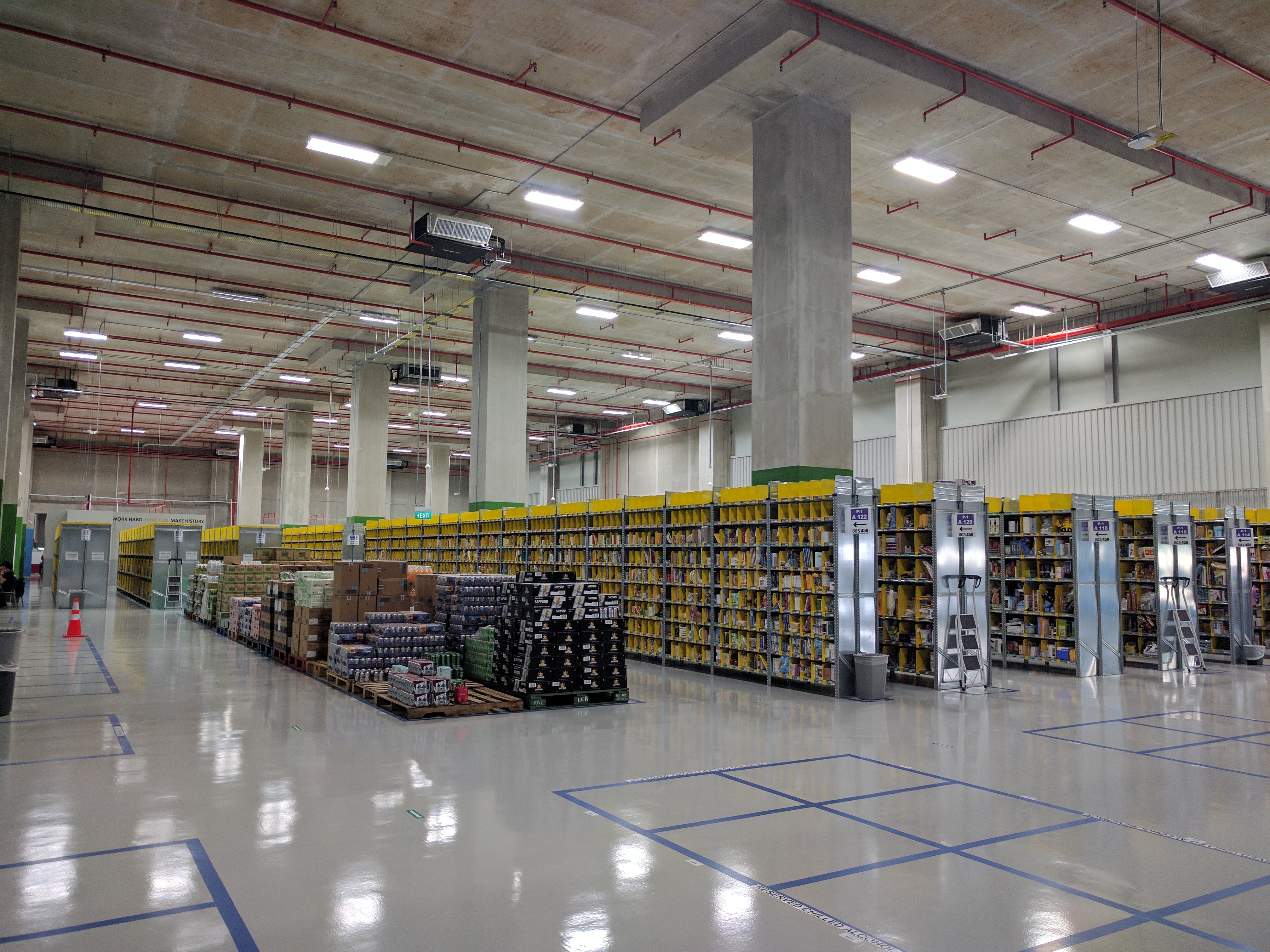
Amazon’s 100,000-square-foot fulfillment center in Jurong East, Singapore. Photo credit: Tech in Asia.
But the best thing in Amazon’s entry is the expected acceleration of the speed of innovation in the online retail space, according to David Chmelar, CEO of ecommerce aggregator iPrice. “As most Southeast Asian consumers have never shopped online, it should further accelerate adoption of online shopping.”
Hyun Wook Cho, country manager of Qoo10, one of Amazon’s competitors in the region, shared a similar view. “The launch of Amazon Prime will have a major impact on the transition from brick-and-mortar retail to online.”
That means the market could grow even bigger than that US$88 billion prediction, certainly a huge opportunity for ecommerce players in general.
Losers: traditional retail, small ecommerce firms
The epic battle





Stay updated on the go with our mobile app.
Get latest insights with smoother, more personalized experience through TIA mobile app.









📅 Upcoming Events
22 October 2026
Payoneer x CSPN Summit 2026