 Terence Lee · · 5 min read
How Styleprofile and other ‘mobile blinders’ could displace Asia’s fashion magazines
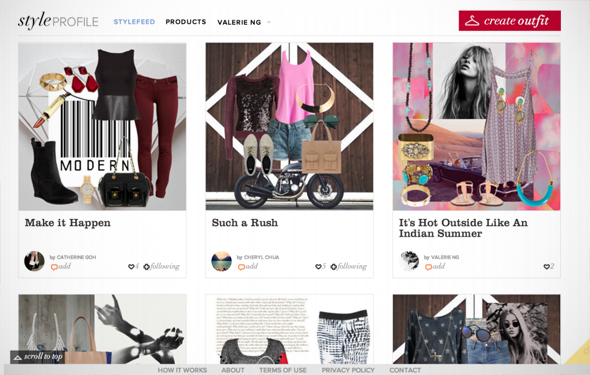
Styleprofile uses crowdsourcing to generate content at no cost.
Magazine circulation has been declining in the United States, due in part to a phenomenon called ‘mobile blinders’, where consumers ignore magazine racks at the supermarket because they’re too busy looking at their phones.
This trend underscores the archaic nature of the magazine industry, which is essentially a giant marketing funnel for the products that show up in its pages, be it in fashion, technology, or sports.
Fashion magazines like Vogue, in particular, have enjoyed a vaulted status as tastemakers for millions of women around the world due to their close ties to industry elites. Yet even it isn’t immune to the digital evolution: Vogue publisher Condé Nast has lost USD 500M between 2007 to 2009, leaving the company reeling and figuring out ways to evolve along with changing reader behavior.
In Asia, a combination of tech-related events are converging that may eventually threaten the dominance of fashion magazines. The process of discovering, choosing, and buying fashion goods is being made more efficient by an ecosystem of online services, each fulfilling different but complementary needs for their customers.
At one end of the spectrum are the fashion e-commerce sites. Once dominated by small businesses and individual lifestyle entrepreneurs, the region is now being shaken up by Zalora, Reebonz and a bunch of larger, more well-financed companies which can take advantage economies of scale.
These sites generate demand and create awareness about the convenience of online shopping. Zalora alone has made USD 62.5M in revenues last year, a figure that could continue to rise on the backs of Southeast Asia’s rapidly growing economies like Indonesia and the Philippines.
While Southeast Asia’s poor logistics and payments situation could undermine these businesses, Zalora has the financial muscle to tilt things in its favor: Its recent cash-on-collection trial with 7-Eleven stores in Singapore is a good example.
By enabling users to pick up and pay for their items at these ubiquitous convenience stores, Zalora is in fact turning a disadvantage on its head by utilizing Singapore’s urban density and its tight network of convenience stores and housing estates.
Democratizing fashion
These online shopping destinations are creating a natural demand for marketing that would drive shoppers to them. Print magazines have been fulfilling these roles and more: They’re also curators that pick out matching pieces, put them on models, and present them in a visually arresting manner.
But magazines have many limitations. They’re not interactive, which means readers who are interested in a particular dress would not be immediately directed to a shop that carries these goods. They are also rather dumb in that they can’t really help buyers who don’t know what they’re looking for.
Web services are not bound by paper, and as such, has a usefulness that is only limited by the ingenuity of its creators.
User-generated content has been a big theme with the Internet, and the story is the same for fashion content. Styleprofile, a new Singapore-based startup that enables users to create their own outfits and share it with others, is harnessing the wisdom of the crowds to generate recommendations for the fashion-curious.





Stay updated on the go with our mobile app.
Get latest insights with smoother, more personalized experience through TIA mobile app.












📅 Upcoming Events
22 October 2026
Payoneer x CSPN Summit 2026