Grace Priscilla Teo · · 4 min read
Why revenue should come before VC money
This article summarizes an episode of YourStory’s video series featuring Prateek Maheshwari, co-founder of Physics Wallah.
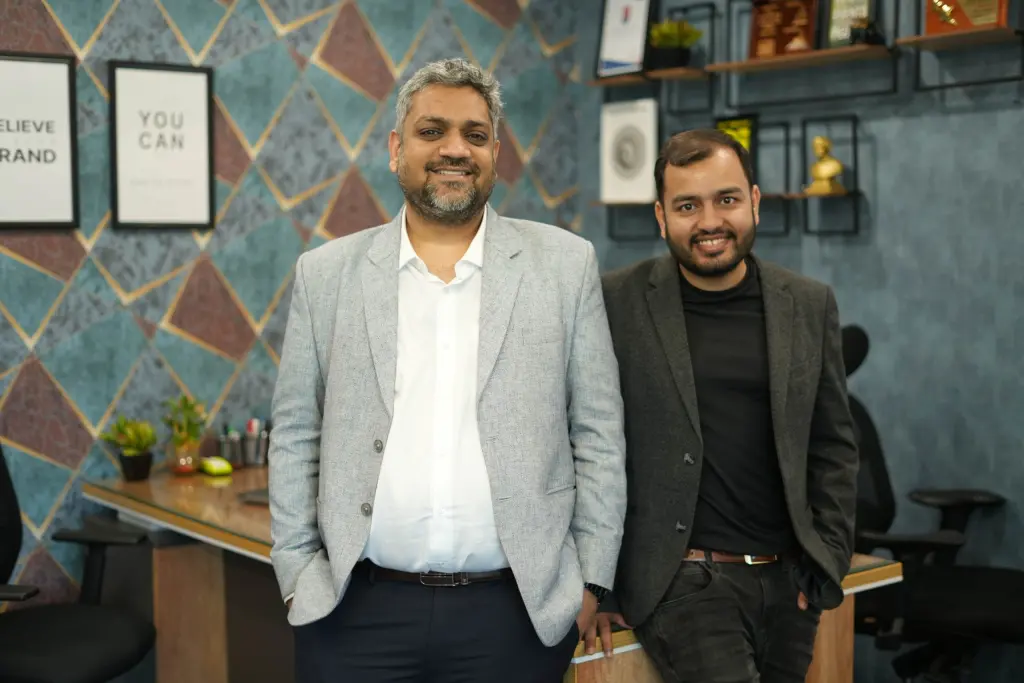
Prateek Maheshwari, co-founder of Physics Wallah (left). Photo credit: Physics Wallah
Physics Wallah co-founder Prateek Maheshwari has a warning for entrepreneurs running a startup today: don’t rely too heavily on investor money to grow. He believes businesses should be built on revenue from customers, not capital from venture funds.
Specifically, he questions the common startup playbook of scaling with outside funding, pointing out the risks of building companies that depend on investors instead of paying users.
That customer-funded philosophy has paid off. In late 2025, Physics Wallah launched a 3,480 crore rupee (US$ 377.5 million) IPO and grew its paid base to over 4.4 million students. Now, Physics Wallah become one of the country’s largest test-prep platform.
The company’s stability, he argues, comes from focusing on customers first. For Maheshwari, the best proof that an idea works is simple: people are willing to pay for it.
Rethinking overnight success
Fast growth often hides years of early work. Maheshwari calls this the “Chinese Bamboo” effect, where you have to work for a long time without being noticed before you see results.
“People think that Covid came, and suddenly Physics Wallah became India’s biggest education platform,” he explains. “But people haven’t seen the blisters on our feet from the story of Alak [Pandey, co-founder] from 2014 to 2020. It was years of hard work that got monetized in 2020.”
That long, largely unnoticed grind also shaped the company’s funding philosophy. Growth in 2020 was not accidental, but was built on years of teaching and community-building.
For years, his co-founder would prepare for 12 hours to deliver a two-hour lecture, building a loyal student base long before the company formally scaled.
Staying motivated with small wins
Sustaining that level of effort required constant motivation. Celebrating small steps helps. You also need to share the long-term plan with everyone, from employees to customers.
“An entrepreneur should be a very good storyteller,” Maheshwari argues. “You have to sell the story to your teams. You have to sell the story to your customers, your parents, your wife. You get motivation from your customers.”
Building on this, you keep moving forward by celebrating small wins. He advises entrepreneurs to celebrate each new customer and every active user, as these successes build belief, even during hard times.
Maheshwari remembers times when the company could not afford to pay salaries for months. “But the team felt we were moving in the right direction,” he says, showing that believing in the company’s goal was more important than getting paid on time.
Defining a customer-funded model
Adopting an AI-first approach





Stay updated on the go with our mobile app.
Get latest insights with smoother, more personalized experience through TIA mobile app.