SingTel’s mWallet: Hype or substance?
There’s a lot of noise recently about the wonders of mobile money and how smartphones will bring about a dawn of the cashless society. Google Wallet has been at the forefront of this push in the United States, and here in Singapore, SingTel’s recently launched mCash is touted as a reinvention of money.
Facetious claim indeed, considering how credit cards and cash are still how people prefer to pay — even online.
But a lot of resources have been pumped into making mobile wallets work. The NFC Forum has the backing of some of the world’s top technology companies, and it’s quite possible that the technology will become ubiquitous in smartphones.
The Singapore government has also thrown its weight behind NFC, and it is working with SingTel and other telcos to enable NFC payments in over 20,000 merchants, which is no mean feat.
Nonetheless, while NFC is a significant piece of the mobile wallet puzzle, the promise of the concept can easily be fulfilled without it — just look at what Square is doing with geofencing, and what Singapore startup Mogi is attempting with its mobile wallet app.
Whatever form it might take, it does seem that mobile wallets is the wave of the future.
The question is how long it will take. For now, I’m still not buying the hype, and here’s why: Until we see an universal standard that applies across the mobile payment spectrum, mobile wallets will fail to take off.
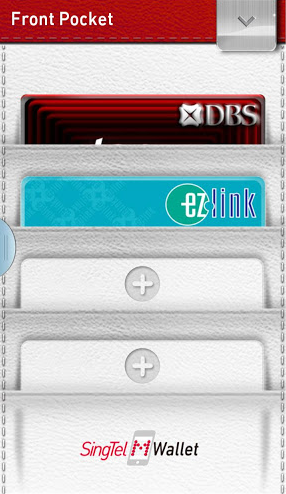
And I’m not sure if we’re any closer to reaching such a standard. As it stands, everyone is trying to build their own proprietary mobile wallet, which means I would need a whole bunch of apps on my phone just to live a truly cashless lifestyle.
It’s a nightmarish scenario for consumers: I may be forced to used one app when paying my mobile phone bills, another app when paying at the restaurant, and yet another when going to the gym.
And that’s on top of the cash and credit cards that I’m already used to, tucked neatly in my leather wallet.
Instead of simplifying our lives, mobile wallets may end up adding unneeded complexity and confusing consumers.
Unfortunately, given the nature of the free market where competition and egos outweigh cooperation, companies have no incentive to work together either on a truly universal app or at least a universal standard that allows seamless transfer of funds between apps.
Payment gateways like PayPal and Stripe are best positioned to achieve this feat in places like Singapore and Hong Kong, where everyone owns a credit card.





Stay updated on the go with our mobile app.
Get latest insights with smoother, more personalized experience through TIA mobile app.