
It all goes back to my first Android phone, the HTC Desire. The Desire – like so many Android phones – came jam-packed full of bloatware. This didn’t really worry me because I’d heard that Android was Linux-based and so assumed I could just wipe the thing and put a fresh install of whatever I liked on there. I soon found out from a friend of mine that this was in fact the case and so at his suggestion, I started with CyanogenMod.
Now, CyanogenMod is still excellent to this day and most of the reason for this is that it furnishes Android as it was intended: quick, with only the necessary features. An added bonus is that it’s fully customizable. Of course, once I’d gone down that route there was no turning back.
From Cyanogen, I probably tried at least 10 or 20 different Android derivatives until I finally stumbled across the strange software acronym MIUI. At the time, all I knew about it was that it was Chinese and that it happened to be the second most popular Android derivative over on the XDA Developer forums. I switched over to MIUI and there I stayed.
Now for those of you who aren’t in the know, MIUI is the Xiaomi version of Android. As well as being available on Xiaomi’s phones, MIUI is widely available for a whole host of other manufacturer’s phones and this is a large part of the reason many people knew about Xiaomi before it started getting mainstream press.
Coherent
I’ve long since moved on the from the Desire and have tried several manufacturers on the way. From Samsung to iPhone to OnePlus, all have their pluses and minuses, but I still have a special place in my heart for Xiaomi.
When I arrived in China, I very quickly did one of the few Chinese things I knew and bought myself a Xiaomi Mi2S. Unlike the Desire and the Samsung Galaxy S2 that I had owned before, Xiaomi’s ecosystem was coherent. I got the greatness that was MIUI pre-installed and fully supported on a Xiaomi branded product. Something I now, (having spent more than a decade despising them) begrudgingly respect about Apple, is the premium they place on a tightly woven software experience. Apple’s software ecosystem and Apple’s stock applications are well designed, well integrated, and feel like they’re sourced according to the requirements of their users.
Similar to the Apple ID that ties in iCloud and your iTunes account and other things all seamlessly together in your iUniverse, Xiaomi provides a similar experience, albeit at a much reduced price and in a much less restricted fashion. That was essentially the draw for me. A 300 buck phone that whilst not being the prettiest thing around, had software that was solid, with an ecosystem that was cleverly planned out and at a price that made it practically disposable.
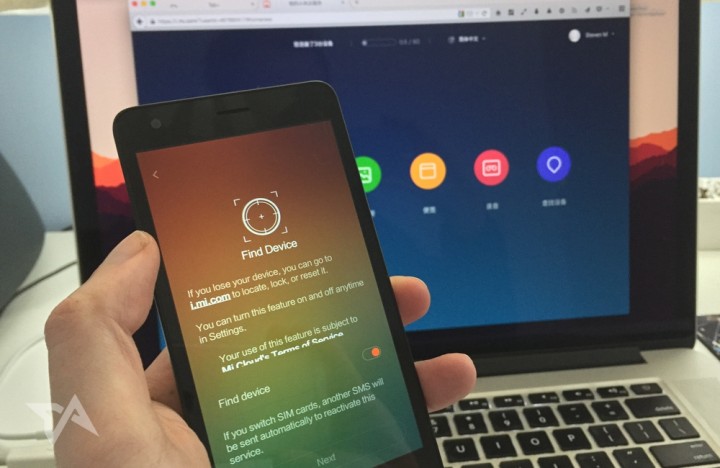
MIUI’s ‘find my phone’ feature on a Xiaomi Redmi 2
In the present age of computing where the price of functional hardware is extremely cheap, I see no reason that I should have to approach US$1,000 for a good quality MP3 player, Google machine or GPS unit. For the most part I still think smartphones are useful toys, but the premium end of computing remains with the desktop experience for me – and even for that I refuse to touch the US$1,000 mark.
Enough about me, What about you? Would you consider a Xiaomi? Have you taken the plunge already?
Perhaps you began with a Xiaomi and have since moved on? Share your thoughts below.





Stay updated on the go with our mobile app.
Get latest insights with smoother, more personalized experience through TIA mobile app.