Jack Ellis · · 4 min read
Haulio pulls in seed funding from 500 Startups and PSA to disrupt shipping in Singapore

Shipping containers piled high in a Singapore port / Photo credit: delcreations / 123RF
Anyone who’s seen the container terminals at Tanjong Pagar, Pasir Panjang, and Jurong will know that shipping means big business in Singapore. At any time of day or night, there’s a constant stream of trucks entering and exiting the dockyards. Mazes of containers are stacked improbably high and stretch as far as the eye can see.
In fact, Singapore is the world’s second busiest container port after Shanghai, handling 33.7 million twenty-foot equivalent container units (TEUs) – a metric for container ship capacity – last year. It’s also the top global transhipments hub – in other words, the busiest intermediate stop-off point for goods coming from another port and ending their journey elsewhere.
This is a complicated affair. There is a litany of stakeholders in the process, from customs officials and shipping firms, to the freight forwarders that organize shipments from source to destination, and the hauliers that move containers on land.
It’s the last of these segments that Haulio is trying to disrupt. The Singaporean startup has just raised US$747,000 in seed funding to expand its tech-driven “truck-sharing” platform.
The pain points of managing container haulage on land today are so real.
The seed round was led by PSA Unboxed – the incubator run by Singapore-based port operator PSA – with participation from 500 Startups, NUS Enterprise, and several angel investors from the logistics industry. The startup had previously raised US$56,000 pre-seed funding from PSA Unboxed and NUS Enterprise.
Co-founder and CEO Alvin Ea said that Haulio’s platform “offers visibility of container statuses on land through our IoT solutions” – including “smart trailers” and scheduling algorithms – to “ensure the hauliers’ fleet of trucks and drivers are best optimized.”
Haulio seeks to make the most of the peaks and troughs in haulage volume at different times by connecting customers to a marketplace of hauliers. With information from ports on container movements thrown in, it’s able to match customers’ hauling requirements to available hauliers, on demand.
This contrasts with the traditional way of doing business, where end customers and their freight forwarders have to contact individual hauliers directly to arrange transportation. If the haulier happens to be extra busy at that particular time, it could lead to delays in shipment. It is then up to customers to decide if they want to find and contact alternate hauliers, negotiate prices with them, and so on. In turn, this adds up to more time lost in a business where timing is crucial.
All aboard
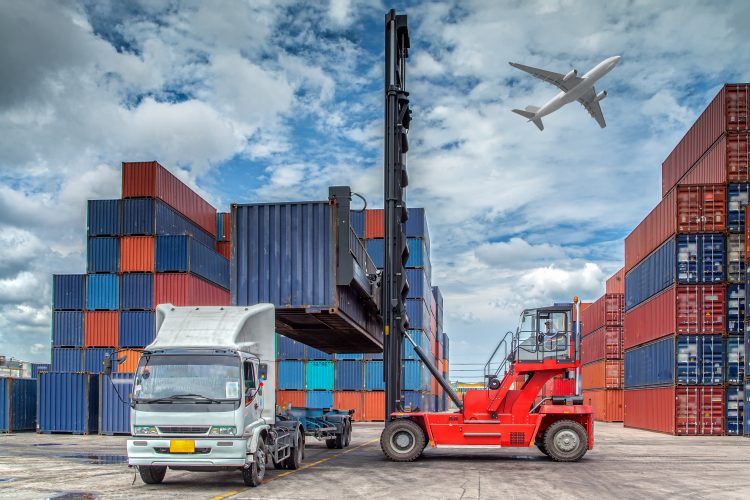
A shipping container is loaded onto a haulier’s truck. / Photo credit: anekoho / 123RF
However, selling a collaborative solution like Haulio to an industry where players rely on fiercely protected customer relationships is no simple task.
“Industry players love what we do, because the pain points of managing container haulage on land today are so real,” said Ea. “However, the key problem that we’re facing today is more on mindset shift towards learning to share your assets and pool your jobs in order to maximize efficiency. [This] requires a lot more convincing, since the industry is largely made up of bosses from the older generation.”





Stay updated on the go with our mobile app.
Get latest insights with smoother, more personalized experience through TIA mobile app.