- Insights This article was written by a TIA community member. Insights pieces undergo the same rigorous editorial process that newsroom-produced articles have.
 Bill Liao · · 5 min read
Do you know how to craft a memorable pitch? It only needs 3 parts
This article is part of Tech in Asia’s partnership with SOSV, where we publish articles that feature the firm’s valuable insights. For more articles in this series, go here.
I can’t tell you the number of times I’ve seen someone lose an audience by starting their pitch with their company name, some inane pleasantry, or worst of all “umm” (one of my personal sins is “so”).
You only have a couple of seconds to grab people’s attention before they stop listening to you and start fiddling with their smartphones. You need to hit them hard with an interesting first word or phrase and a crisp story that is full of credibility and surprises.
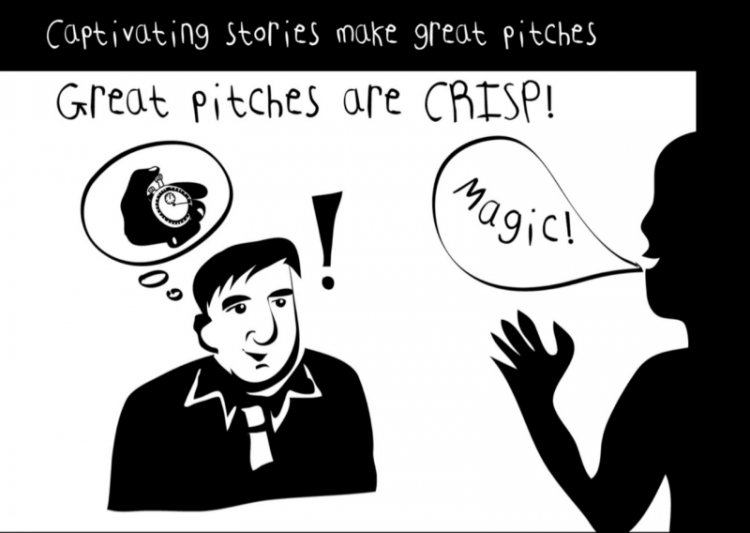
A story-filled pitch
I am a trained listener, and I spend my days coaching startup CEOs into telling their stories.
Nothing hurts my brain more than a pitch without a story. Time after time, I see CEOs making passionless public service announcements and condescending lectures instead of story-filled pitches. They only light up to describe the minutiae of some technical breakthrough that no one else cares about. (This is another personal sin. And just because I love geeking out on tech myself doesn’t mean anyone—and I mean anyone else—is even slightly interested.)
The key to a great pitch is a believable narrative — a story. We are pre-programmed to listen to stories and to suspend our disbelief. And if there is one thing you need people to do around a startup, it’s to suspend their disbelief. Without the reality distortion field, literally nothing new would happen in the world, and no startups would ever get funded.
So, how do you tell a great and crisp story? Only by standing on the shoulders of giants do we truly see the answer to this question.
The rules of a good story were pretty much defined a while back by a Greek dude who you may have heard of: Aristotle. Around 350 BCE, he wrote The Poetics, which is as relevant today as it was back then.
Here is the super abbreviated version of the three-act play:
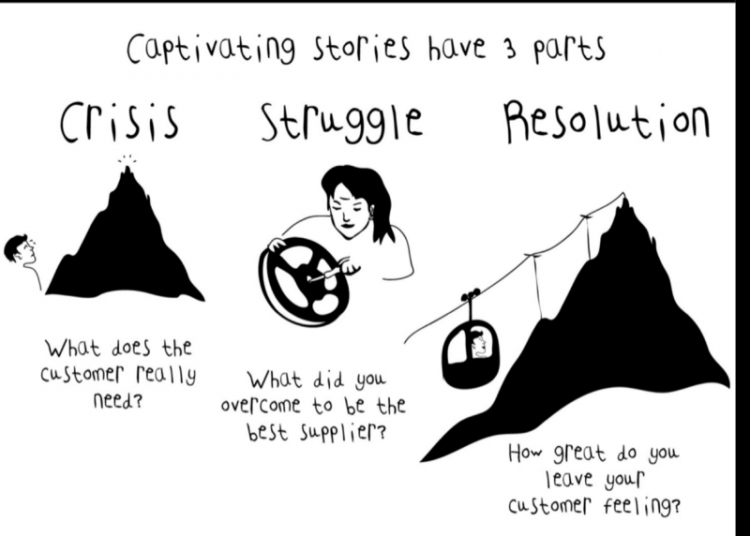
Act I: The crisis
If it bleeds, it leads. News (and fake news) people share one thing in common: they grab your attention by showing that there is something really wrong. This use of crisis is the basis for so many stories, and it never fails because humans are curious about calamities. We know instinctively that we might learn something important from the bad news and that we will learn nothing from the good news. Anyone who tells you otherwise is selling something badly.





Stay updated on the go with our mobile app.
Get latest insights with smoother, more personalized experience through TIA mobile app.