Meghna Rao · · 6 min read
Who will be the WeChat of India? And what will it do to Flipkart and Snapdeal?
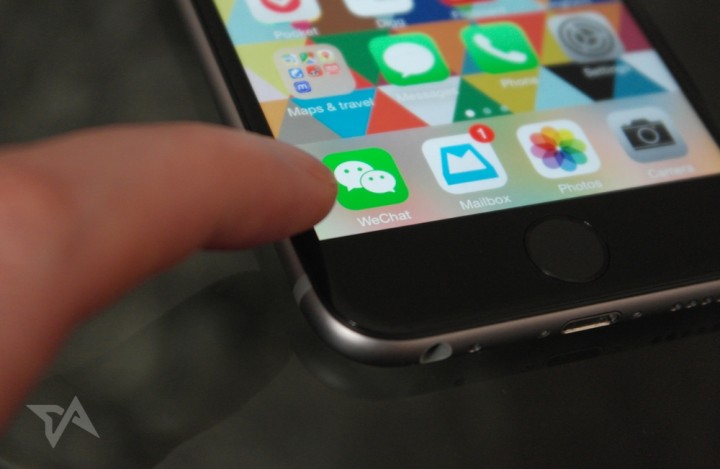 The trend of buying things through chat has taken off in such a big way in China that some wonder if it’s a sign that chat commerce will pose a threat to conventional ecommerce around the world.
The prime example of this trend is WeChat, China’s most popular messaging app that just turned five years old. Some of our writers have spent entire days using nothing but the chat app – and have all lived to tell the tale.
See: The amazing ways WeChat is used in China
It was valued at US$83.6 billion in August, nearly half of its parent company Tencent’s market capitalization. Tencent owns a payment wallet, Weixin Payments, and has also tied up with plenty of other payment methods, meaning that users can make weekend trip plans with their friends, browse new hiking boots to wear from sellers, and pay for them all within the same app. Companies like Starbucks, Xiaomi, and McDonald’s have corporate WeChat accounts. Last year, Tencent took a 15 percent stake in Chinese ecommerce site JD.com – Alibaba’s biggest domestic rival – in order to integrate it into WeChat, allowing users to click a “shopping” tab within the app. In China, WeChat seems to do everything under the sun from helping people pay utility bills to providing loans.

And yet, when WeChat launched in India a few years ago, it failed miserably. Smartphone penetration was shallow and internet access was limited. Few in India had access to online payments, so the chat app had no realm to expand its services. Most importantly, its entrance came with the strange feeling that WeChat just didn’t understand the notoriously enigmatic country.
Can WhatsApp change its spots?
As of January 2016, 12 percent of India’s 136 million active social media users were using WhatsApp. That’s not a big percentage, but it makes it the most used messaging platform in the country. For many, WhatsApp is the first – and sometimes final – point of interaction with the internet. Facebook messenger captured 11 percent of the market, while WeChat only took up six percent.

Photo credit: Stefano60.
Still, naysayers have come up with plenty of reasons why WhatsApp won’t be able to transition into the next huge chat commerce app. It hasn’t shown any inclination to want to tie up with mobile wallets and many believe that an app where they talk to their friends should be different than one where they chat with businesses.
WhatsApp suffers from something I call “mission stagnation”: because it focused so much on creating a social chat network, it may have missed the small sliver of an opportunity that it had to change consumer behavior, turn itself into a commerce app, and become heavily monetizable. It will be tough for the social chat app to change its identity – even if it wants to at some point.
“It’s true, WhatsApp groups have popped up for people to talk to their local kirana [a small neighborhood shop] stores. In my opinion, this just shows that there’s a need for better communication between customers and merchants,” explains Varun Bhalla from Khosla Impact. Khosla Impact considers itself a “social investor”, meaning that it puts money in startups that gainfully impact the lives of the economically disadvantaged in India. It participated in chat app Lookup’s latest round of funding. “These groups are limited to those that they’ve shared their phone numbers with. The level of privacy that comes with personal chat apps is not easily translatable to commerce chat.”
Other apps rush in, but can they scale?
It’s the absence of a WeChat-like ‘chat commerce’ platform in India that’s left a space for apps like Lookup to fill. “For us [Khosla Impact], the investing thesis for Lookup was that there was no platform that directly connected consumers to their merchants,” says Varun. “We really see chat as empowering the merchant.” With Lookup, merchants have the power to send offers directly to their consumers. “They can think along advertising lines. A merchant can say to himself: ‘Hey, there’s a 4 kilometer radius where I want these consumers to know that I have this product in stock, let me send them a message.’”
Bots, APIs, and who knows what else





Stay updated on the go with our mobile app.
Get latest insights with smoother, more personalized experience through TIA mobile app.