- Premium Content It takes our newsroom weeks - if not months - to investigate and produce stories for our premium content. You can’t find them anywhere else.
 Jum Balea · · 8 min read
Wavecell: from a small bootstrapped team to a $125m exit
US$125 million.
That’s the second-largest reported Southeast Asian startup exit in 2019 so far.
The startup: Singapore-headquartered communications platform-as-a-service (CPaaS) provider Wavecell. The buyer: New York Stock Exchange-listed cloud communications provider 8×8.
It may not be huge enough in a world obsessed with unicorns, but the July buyout is a big win for the region’s startup ecosystem.
And there’s a lesson or two to be gleaned from Wavecell’s story.
Lean but killing it
That story begins in 2010. Like most startups, Wavecell kicked off lean. Yet in contrast to many startups, Wavecell’s 10-member team bootstrapped for the first five years to create a sustainable company while keeping full control. Besides, it couldn’t easily raise funds as there wasn’t as much capital going in enterprise deals as there was in consumer deals at the time.
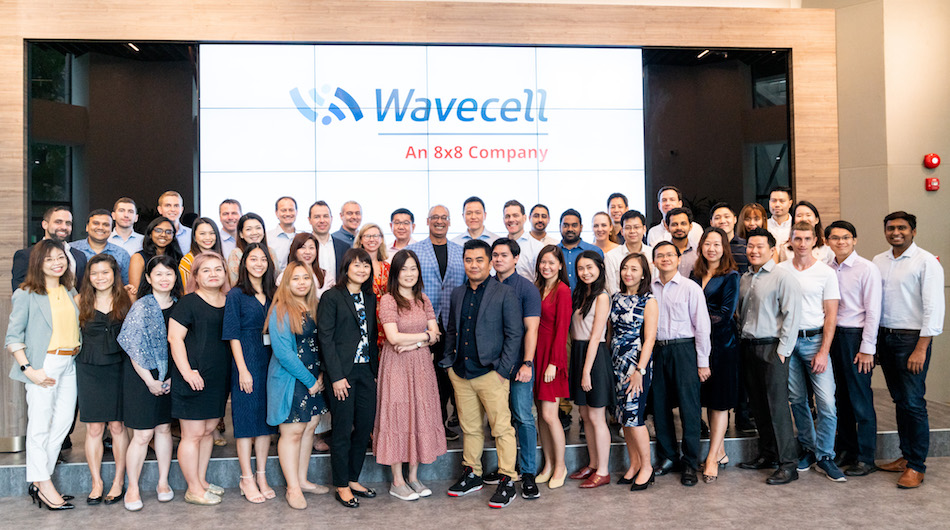
The Wavecell team with 8×8 executives at a townhall event / Photo credit: 8×8
The whole idea was to build a super network of carriers through which companies can send updates to customers’ mobile devices, such as an alert that a package is about to be delivered or that a sale promo is ongoing.
Even at that early stage, the team’s eyes were firmly set on profits, says co-founder and CEO Olivier Gerhardt.
That kind of mindset didn’t come out of nowhere. Before striking out on his own, Gerhardt served as sales director at a European-US mobile messaging company called Mobile 365 that was acquired by a larger US player for US$425 million in the 2000s. With his nearly decade-long stint at said firm, Gerhardt had some sort of a playbook for growing a business with a clear exit path.
In fact, the idea for Wavecell came about due to that experience.
Mobile 365 enabled brands and media companies to deliver billions of messages and other content to users around the globe via an extensive network of mobile operators like Verizon Wireless, Vodafone, and T-Mobile, to name a few. People could get football scores on their phones, for instance, or the latest news.
“After working there, I decided to relocate to Singapore and started exploring the same space to address the enterprise market,” Gerhardt tells Tech in Asia.
“As a brand, when you want to communicate or interact with users over SMS, you’d need to make deals with all mobile operators in each country you want to address, which is very complex work. What we did was simplify that complexity,” explains the Wavecell boss, who at the time was armed with a vast network of telecom contacts.
Thinking bigger
In the crosshairs
Little money, big exit
Stay ahead in Asia’s tech landscape
This is premium content. Subscribe to read the full story.
The deal may not be huge enough in a world obsessed with unicorns, but it’s a big win for Southeast Asia.
We know this is not ideal. ⌛ Sign up in 20 seconds. Cancel anytime.
Our subscriber community includes professionals from these companies:





Stay updated on the go with our mobile app.
Get latest insights with smoother, more personalized experience through TIA mobile app.













📅 Upcoming Events
22 October 2026
Payoneer x CSPN Summit 2026