 Nikita Puri · · 4 min read
The key actors in Southeast Asia’s soaring healthtech space
Charts and visuals, only for subscribers
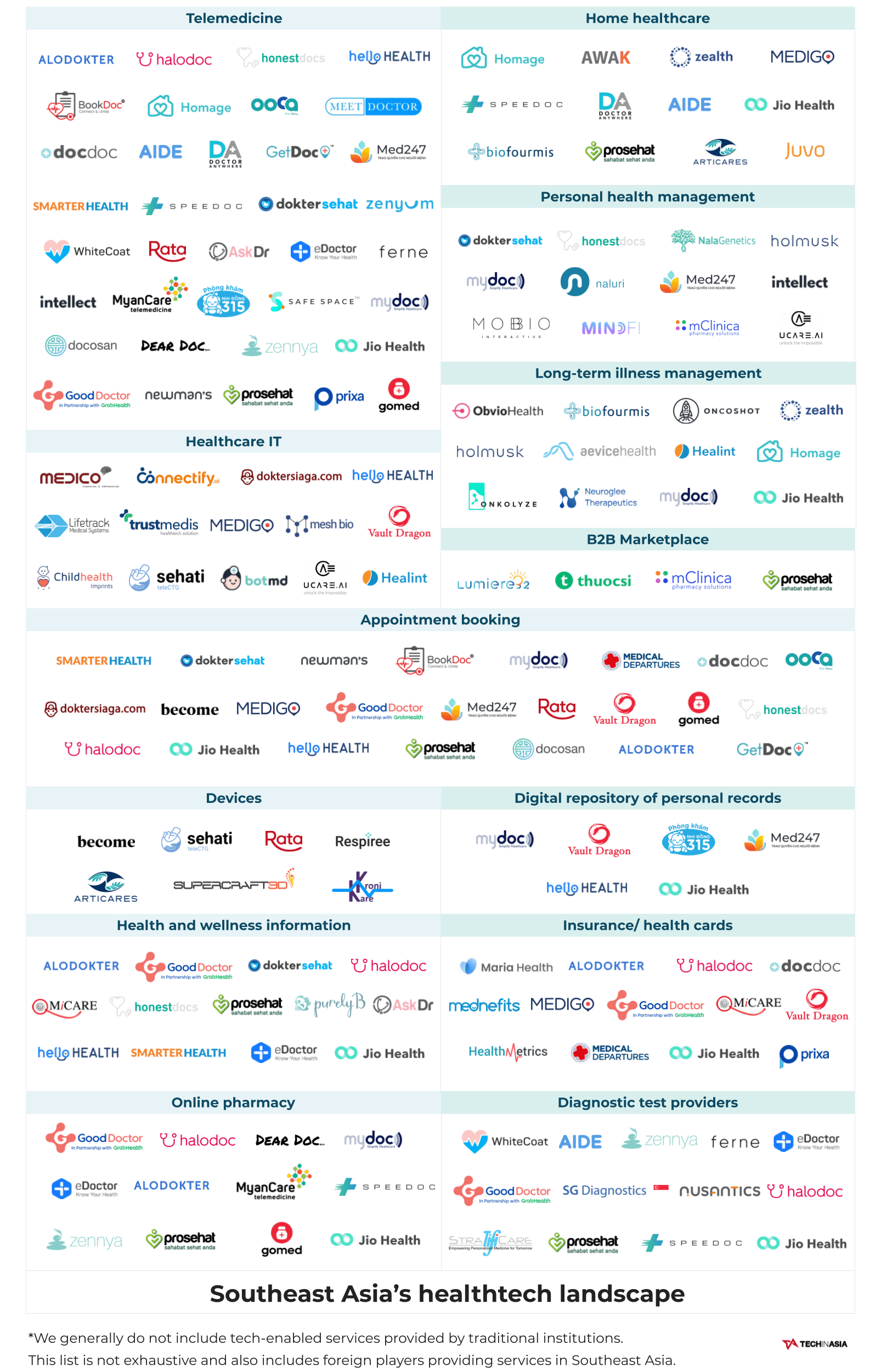
Keeping Southeast Asia healthy is no laughing matter, and the task is getting a little more serious every year. This isn’t just our opinion, but it’s a claim backed by data.
While 2020 might be remembered as the year Covid-19 made all things health-related popular, 2019 was the year Southeast Asia’s health landscape truly flourished. That’s when the segment’s total deal value leapfrogged 4x from what it was the year prior.
The trend has been encouraging to say the least. The industry raised around US$180 million in over 33 deals in 2020. This year, healthtech has seen a little over US$276 million in deal value from only 16 deals. And there’s still half the calendar year to look forward to.
The timing for this gush in investments couldn’t be better. According to a report by Insead, healthcare expenditure in Southeast Asia is on the rise, growing faster than the region’s gross domestic product. At the rate it’s going, total healthcare spending could go up to US$740 billion (from the current US$425 billion) by 2025, says the report.
Sequoia Capital, Monk’s Hill Ventures, SG Innovate, Wavemaker, and East Ventures are some of the funds that have actively invested in the space recently, notes Insead.
A majority of Southeast Asia’s healthtech companies are headquartered in Singapore, with the next significant base in Indonesia. According to the report, the most prominent companies in the archipelago are Halodoc and Alodokter, both of which bagged two out of the five biggest healthtech deals in 2019. The two firms have also gone on to raise more money.
Investors and healthtech entrepreneurs have repeatedly said that there’s no global playbook to succeed in the sector, as challenges vary from region to region.
See more: How Indonesia’s healthtech startups aim to democratize access to healthcare
On top of that, healthtech companies – telehealth firms in particular – face external pressures. As Justin Hall of Golden Gate Ventures (an investor in Alodokter) previously told Tech in Asia, these pressures include “overzealous policy makers and regulators and a legal and medical system that understandably wants to ensure the public is protected.”
In Cambodia, for instance, regulations in the telehealth space are still catching up with those implemented in the rest of Southeast Asia. Cambodia-based MeetDoctor, for one, is still asking the government for an experimental sandbox for it to operate in.
That said, trust in the industry is soaring overall – the surge in funding points to that. Here are the details of the deals we’ve tracked:
Share, tag us, and land on our Wall of ❤️ !
Stay ahead in Asia’s tech landscape
This is premium content. Subscribe to read and use our charts, graphics, and other visuals legally
Despite having challenges galore, Southeast Asia’s healthtech space is healthy and flush with funding. It’s also becoming highly competitive.
We know this is not ideal. ⌛ Sign up in 20 seconds. Cancel anytime.
Our subscriber community includes professionals from these companies:





Stay updated on the go with our mobile app.
Get latest insights with smoother, more personalized experience through TIA mobile app.