- Premium Content It takes our newsroom weeks - if not months - to investigate and produce stories for our premium content. You can’t find them anywhere else.
 Vincent Fernando, CFA · · 6 min read
Analysis: FMCG ecommerce set to boom in Asia
Covid-19 has been a major catalyst for ecommerce adoption, catapulting digital shopping from a convenience to a necessity for households all over the world. In particular, fast-moving consumer goods (FMCG) appear to be having a moment as consumer behavior and purchasing habits permanently shift to ordering groceries and daily necessities online.
In China, however, only 6.3% of fresh food and 8.8% of alcoholic beverages are currently ordered online vs. 44% ecommerce penetration for broader retail.
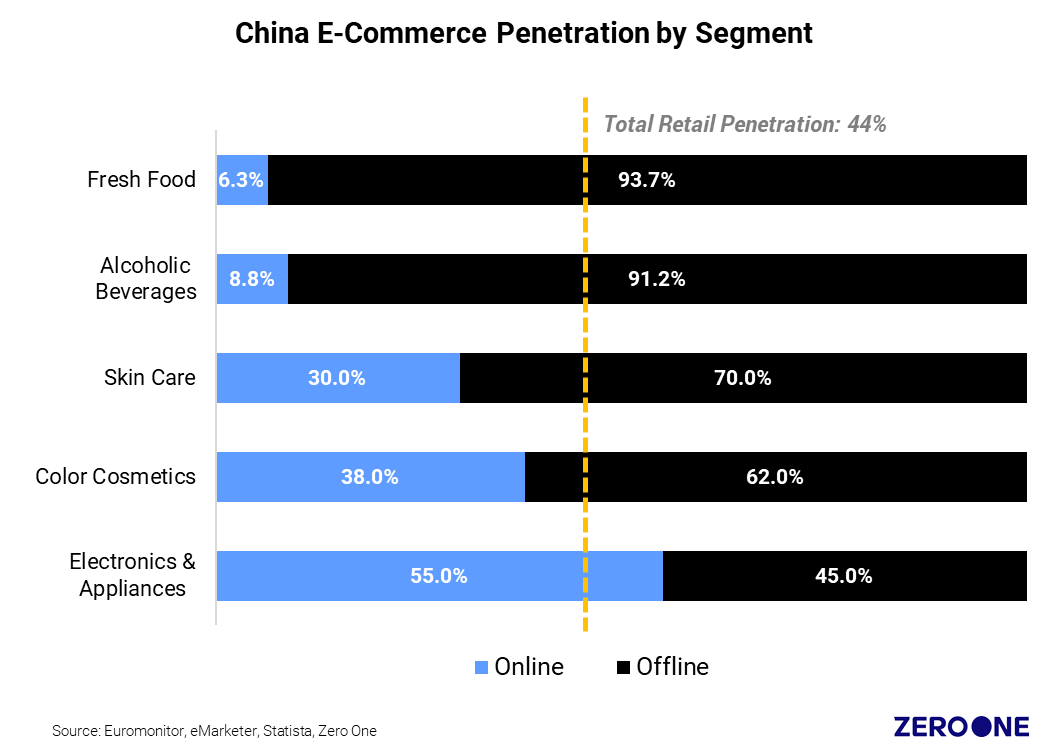
This gap represents a huge opportunity for the country’s ecommerce companies, given that they can ride on this “catch-up effect” to grow gross merchandise value (GMV). For example, assuming the ecommerce penetration for fresh food rises to become equal with broader retail ecommerce, it would imply a ~7x GMV uplift for the category.
This uplift potential is supported by large shifts in consumer behavior.
The present crisis, for one, is a catalyst of such shifts. According to a recent survey by Nielsen, 67% of Chinese consumers shopped for fresh food and daily necessities more than twice a week amid the pandemic, with 89% saying they would be willing to purchase these goods online even after the effects of Covid-19 ease.
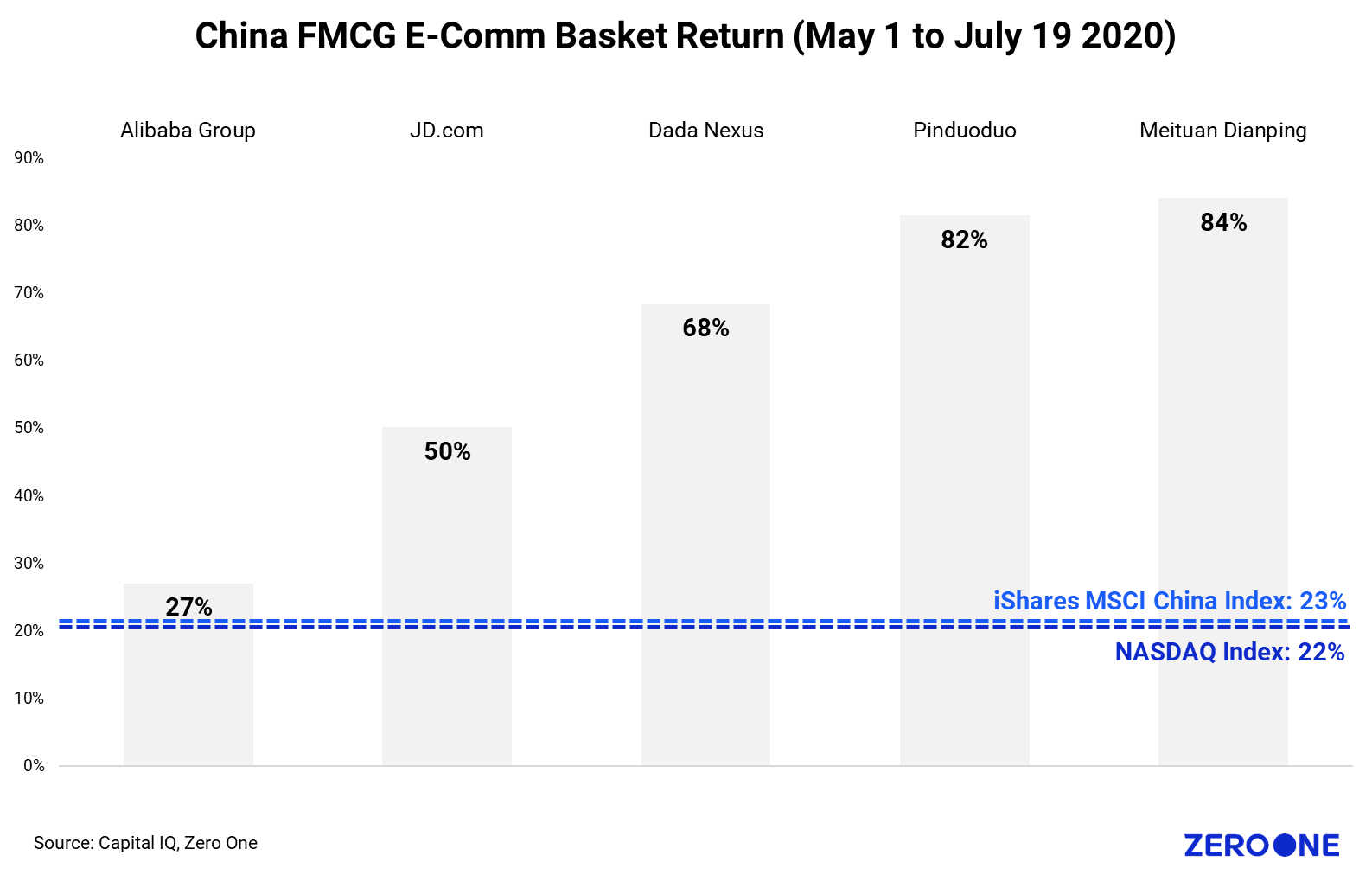
Already, companies like Alibaba, JD.com, and Pinduoduo have taken note of this structural trend and have doubled down on their FMCG investments via services like Freshippo and JD Supermarket. Firms like Tencent have also backed online grocery startups such as Missfresh and Xingsheng Youxuan in a greater push toward ecommerce.
These companies that have invested in their FMCG ecommerce offerings have easily outperformed broader indices such as the MSCI China and NASDAQ.
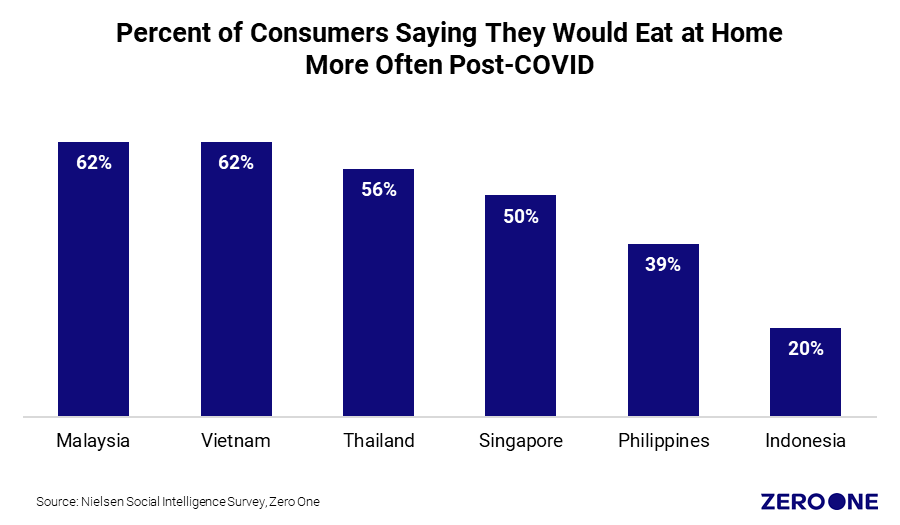
The FMCG phenomenon is not unique to China; consumers across Southeast Asia are also emerging from Covid-19 with more homebody attitudes
It’s not just people in China who are emerging from the pandemic with more “homebody” mentalities; Southeast Asians are, too. According to research firm Nielsen, more than half of consumers in several countries across the region plan to eat at home more often even after the crisis blows over.
Stay ahead in Asia’s tech landscape
This is premium content. Subscribe to read the full story.
Covid-19 has been a major catalyst for ecommerce adoption, especially in the FMCG sector.
We know this is not ideal. ⌛ Sign up in 20 seconds. Cancel anytime.
Our subscriber community includes professionals from these companies:





Stay updated on the go with our mobile app.
Get latest insights with smoother, more personalized experience through TIA mobile app.