Jum Balea · · 3 min read
UberEats enters Seoul’s highly competitive online food delivery space
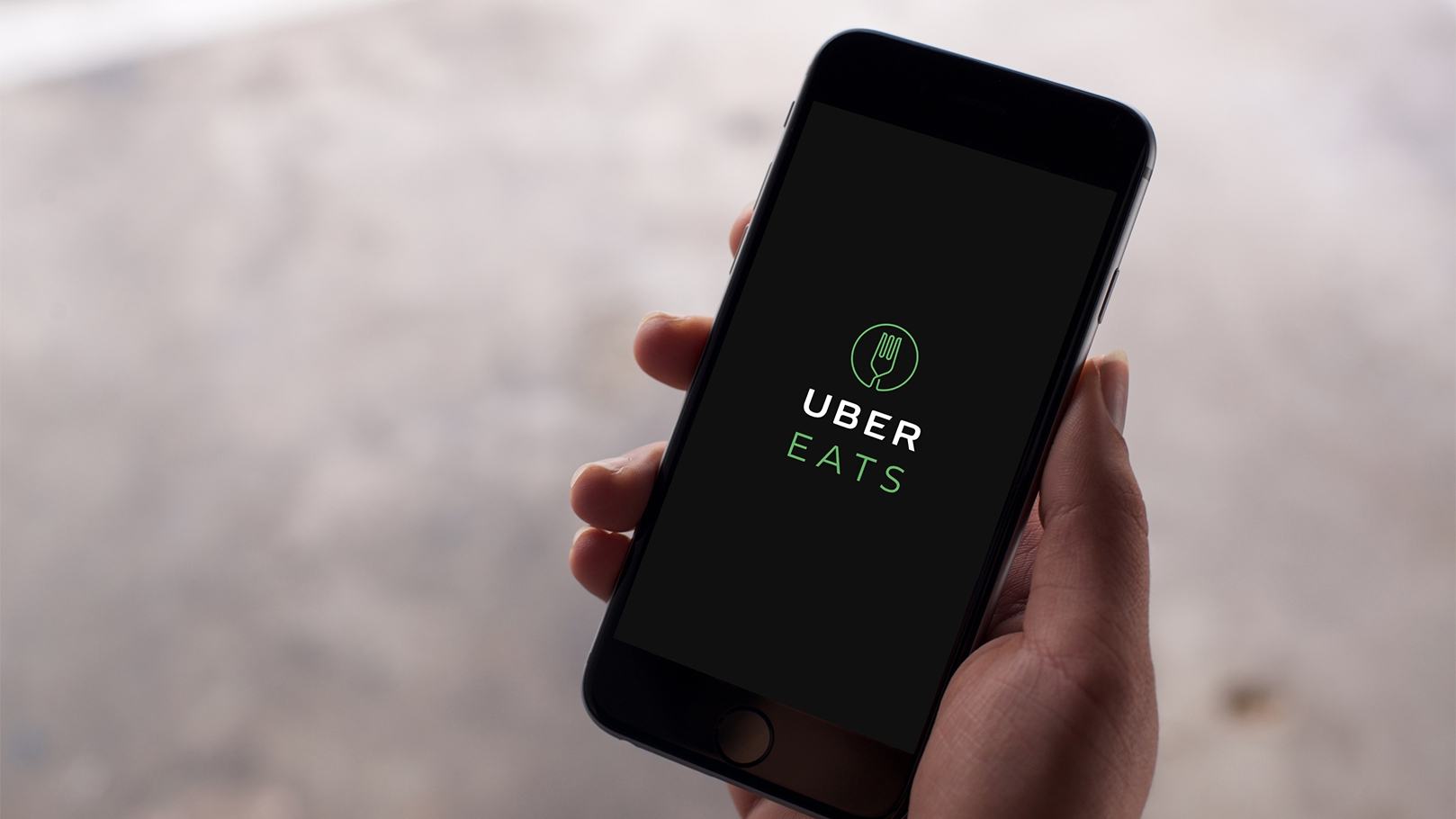
Photo credit : Uber.
Uber has launched its UberEats service in Seoul, home to a booming online food delivery industry.
This takes the service to more than 112 cities across 28 countries, where it has 60,000 restaurant partners, the company said in a statement. UberEats began as a feature inside the ride-hailing app in the US before spinning off. In Asia, it first made a foray in Singapore last year. Now it’s available in seven other cities – Bangkok, Tokyo, Hong Kong, Taipei, New Delhi, Mumbai, and Dubai.
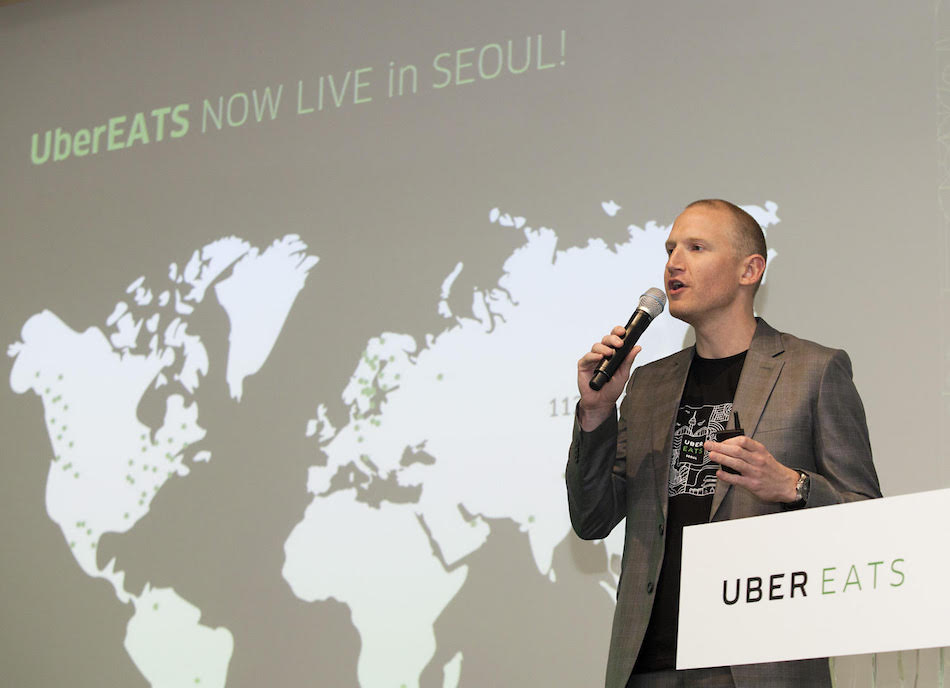
Allen Penn, regional general manager for UberEats Asia-Pacific, said the company chose Seoul as its next stop because it is “one of the most desired travel destinations in the world” and it “boasts one of the most vibrant food cultures.”
Allen Penn. Photo credit: UberEats.
Indeed, South Korea is a lucrative market. Revenue in its food delivery sector amounts to US$1.22 billion as of this year and is tipped to grow by an annual rate of 23 percent to hit US$2.8 billion in 2021, latest data from Statista shows. The majority of this is accounted for by online takeaways, at US$1.14 billion.
UberEats faces several players in the country, where the likes of Woowa Brothers and Delivery Hero – both heavily funded – have been competing for quite some time. In fact, rivalry between the two had grown so strong that it forced the companies to resort to TV commercials to grab more customers, apart from the usual marketing promos.
One of Korea’s most valuable startups, Goldman Sachs-backed Woowa owns food delivery app Baedal Minjeok, which is leading in app rankings for both App Store and Google Play in South Korea, according to data we gathered from analytics firm App Annie. Woowa has raised US$98 million in total funding to date.
Trailing close behind are Baedaltong and Yogiyo, both owned by Berlin-headquartered Delivery Hero.
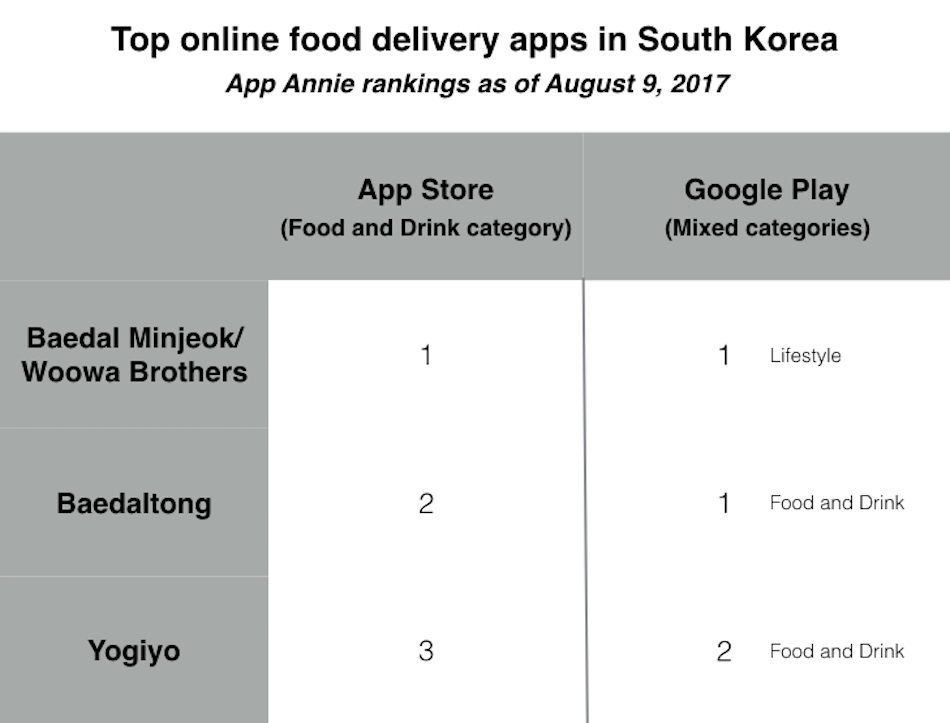
The rankings are believed to factor in not just downloads, but things like uninstalls, ratings, and usage.
Delivery Hero, with US$1.8 billion in gross funding before its recent IPO, consolidated its position in South Korea in 2014 by acquiring Baedaltong, which is being run separately from its flagship business Yogiyo because of their different models. The company now also owns Foodpanda, which isn’t as popular as the two other brands, after buying it from German startup builder Rocket Internet last year.
A local report citing Korean mobile app tracker WiseApp pegged Baedal Minjeok’s users at 2.98 million in February, outpacing rival Yogiyo, which had 1.78 million users.





Stay updated on the go with our mobile app.
Get latest insights with smoother, more personalized experience through TIA mobile app.