Thu Huong Le · · 3 min read
Vietnamese staffing platform for blue-collar workers shifts gears to weather Covid-19
As the former head of operations for Tiki, one of Vietnam’s largest ecommerce marketplaces, Phan Xuan Canh encountered major difficulties when he had to hire hundreds of shift-based temporary workers for the company’s warehouse and events. Typically, this type of enlistment was handled by staffing agencies or Tiki’s own human resources department, involving lengthy spreadsheets containing the contact information of people who might take up these gigs.
Canh saw an opportunity to build a tech-enabled platform that is similar to Uber Works, which was launched in October 2019 and described by TechCrunch as a platform that matches shift workers with shifts. Beyond Tiki’s case, there was a good reason for Canh’s vision to come into being. In Vietnam, the demand for temporary work is extremely high, as a major part of the labor force constitutes what is known as the informal economy.
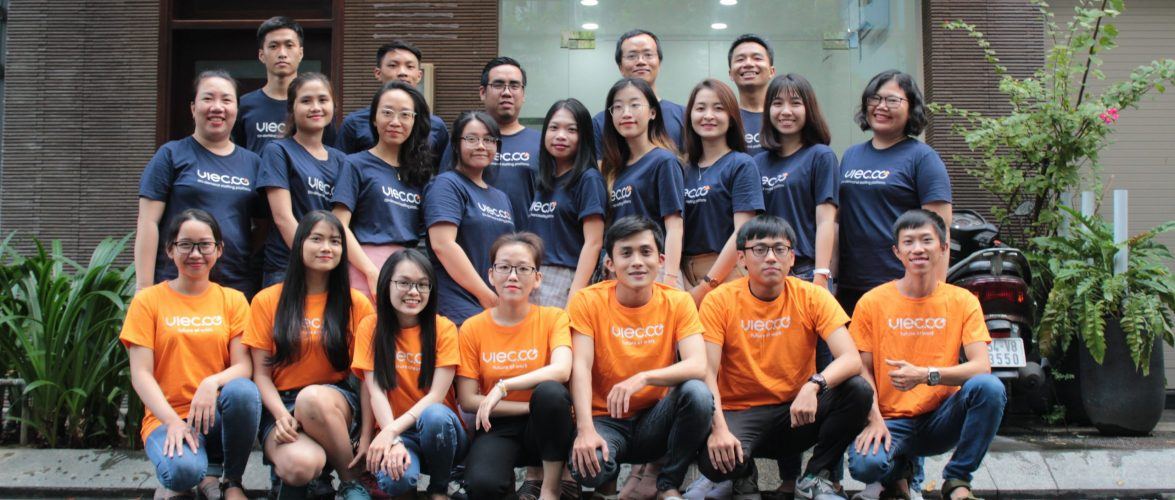
Photo credit: Viec.co
A winning proposition
Canh left Tiki in 2017 to serve as the fulfillment project director for GHN, a parcel delivery service that is part of logistics firm Scommerce, which last year raised US$100 million in a round led by Singapore’s Temasek. Canh’s experience at GHN again showed him the need for a platform that enables efficient, quick, and large-scale hiring for temporary blue-collar workers who form the foundation of fulfillment centers.
In 2018, the core team for Viec.co was formed. It included co-founder and chief technology officer Nguyen Son Tung, who was previously the head of technology for Tiki and chief technology officer for bus ticketing platform Vexere.
“Similar to Uber Works, we wanted to build an on-demand staffing platform, which is different from a typical job listing or job matching site,” Canh said. “Clients can just fill out their hiring request on our platform, and Viec.co will handle the rest, from recruitment to hiring paperwork to provide training.”
Since the workers are hired for shift-based tasks, Viec.co’s automation frees up HR and recruitment resources that were once tied down by repetitive processes. Additionally, conventional staffing agencies typically prefer clients whose staffing demands do not fluctuate constantly, so Viec.co is able to fill the gap, according to Canh.
Viec.co applies technology to authenticate and vet qualified workers at a massive scale, relieving the burden of maintaining large rosters of staff, particularly if turnover is frequent. The firm’s clients benefit from real-time shift schedule management and automated payroll, similar to how drivers get paid when they offer services on ride-hailing platforms such as Grab. Workers can also upload their profiles to be matched with staffing requests in the future.
Viec.co claims that its clients include some of the biggest ecommerce players in the country, such as Tiki, Shopee, and Lazada. With the booming demand for ecommerce and logistics services in Vietnam, Viec.co said the platform has recorded a monthly growth rate of 30%, with 40,000 freelance workers from 24 provinces using the platform.
Last year, Viec.co was crowned as the winner of Vietnam Startup 2019, a competition organized by the popular online news portal VnExpress with the theme “Unicorn to be.” Viec.co has also raised money from angel investors, investors from Shark Tank Vietnam, as well as early-stage investment firm Access Ventures.
When the going gets tough, the tough gets going
Canh knows well that Viec.co is nowhere near attaining unicorn status, especially with the Covid-19 pandemic affecting businesses over the world, including Southeast Asia. Now, for the startup and the workers who rely on the platform to earn a living, it’s about survival. In times of crisis, temporary workers are vulnerable. The Vietnamese government estimates that at least 5 million workers in the country have lost their jobs as of mid-April due to Covid-19.
The startup is considering a strategy shift by focusing on partnerships with staffing agencies, specifically those that can benefit from Viec.co’s platform and scale up employment for temporary workers.
“I believe there’s still a growing demand for hiring flexible workers, especially as Covid-19 has forced many companies to rethink how they use existing resources,” Canh said. “At this time of crisis, we want to focus on ensuring that our tech can further accommodate our existing and future B2B clients, anticipating that hiring demand will soon return.”
This report was first published on KrAsia.





Stay updated on the go with our mobile app.
Get latest insights with smoother, more personalized experience through TIA mobile app.